
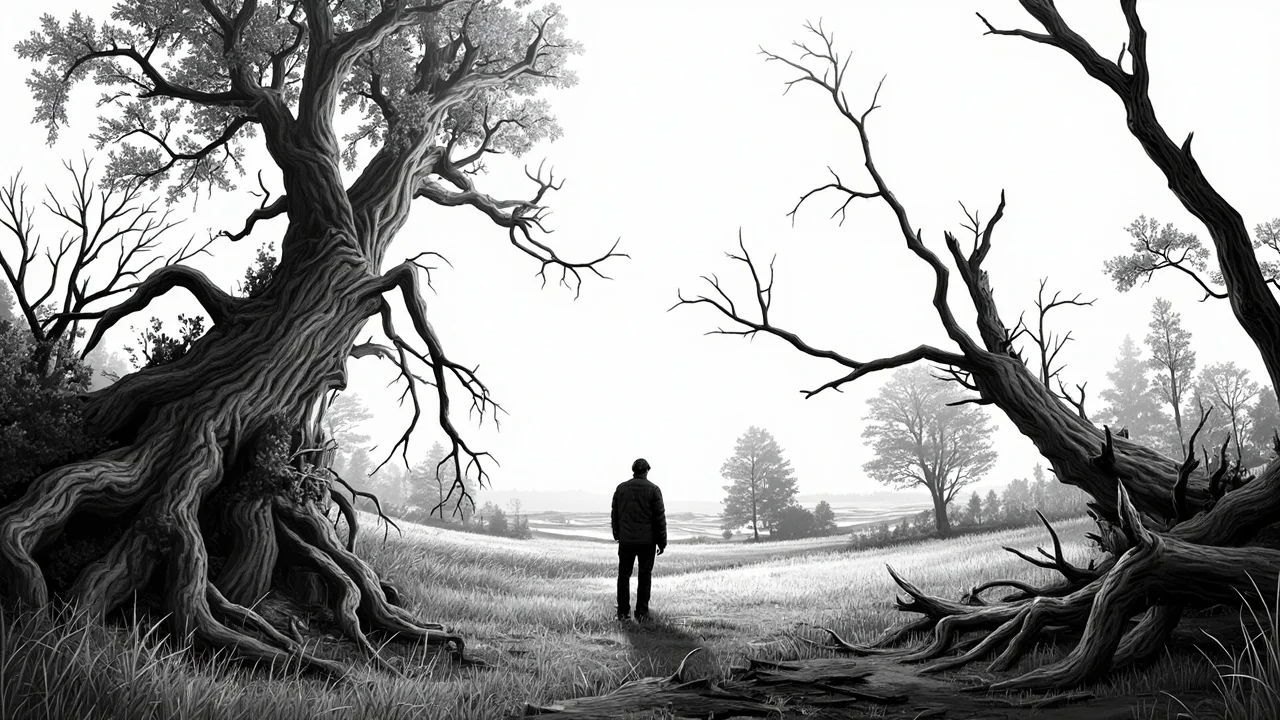
Sweden's most extensive storm in a decade has left an estimated 10 million cubic meters of fallen forest in its wake. For Gunnar Ängström, a forest owner in Hörneå, Västerbotten, the damage is personal, scattered, and deeply worrying. "It is a concern," he says, having inspected about 80 percent of his woodland to find trees downed here and there. His quiet anxiety echoes across central and northern Sweden, where Storm Johannes struck on December 27-28, reshaping landscapes and livelihoods.
This was no ordinary winter gale. The Swedish Forest Agency confirms Storm Johannes is the most significant forest storm in ten years. The counties of Dalarna and Gävleborg were hit hardest. But the ripple effects stretch north. In areas like Nordmaling and Hörnefors, the scene is chaotic. "Trees are lying like pick-up sticks," describes Kristofer Lindblom, the diocesan forester for Luleå Diocese, capturing the disorder with a vivid Swedish phrase.
For Gunnar and thousands like him, the storm's aftermath is a slow-motion crisis. The snow arrived right after the winds, blanketing the damage. This complicates everything. "Many trees have been snowed over because the snow came just after the storm," explains Patrik Jonsson at the forestry cooperative Norra Skog. "That means a risk to work now when there is snow." The clean-up is on pause, buried under a white layer. The full scale remains hidden, making planning difficult.
A Landscape Transformed Overnight
The contrast between the serene, snow-covered Swedish winter and the hidden devastation beneath is stark. In normal times, this season is for planning, not panic. Forestry is a long-term business in Sweden, woven into the national identity and economy. But Johannes has forced a recalculation. The 10 million cubic meter estimate—a volume that's challenging to visualize—represents a potential glut of timber that could disrupt markets and demand careful management to prevent financial loss for landowners.
Different actors see different scales of impact. While smaller owners and the church report significant damage, larger industrial forest companies present a calmer front. Mattias Gustafsson, production manager for Region North at Holmen Skog, states the storm "has not had a huge extent" for them and is being "handled within ordinary operations." This disparity highlights how storm damage can be patchwork. One property is ravaged; the neighboring one, spared.
The Long Road to Recovery
There is no quick fix. The immediate danger has passed, but the operational challenge has just begun. Forestry experts stress there is time. The window to harvest this wind-felled timber extends through spring and early summer before the wood degrades or becomes infested by insects. "There is no major panic," Patrik Jonsson notes, pointing to this timeline. The strategy is one of managed response, not emergency salvage.
Yet, for the individual forest owner, this is cold comfort. Gunnar Ängström's inspection walks are likely filled with mental calculations: the cost of harvesting, the current price of pulpwood and timber, the accessibility of each damaged stand. This is a financial blow that will unfold over months. It affects retirement plans, family legacies, and the careful balance of managing a living resource. The storm impacts not just ecology, but a way of life deeply connected to the allemansrätten—the right of public access—and the Swedish relationship with nature.
Cultural Resilience in the Face of Nature's Force
Swedes have a word for this: ståndaktighet—steadfastness. It's the quality needed when nature reminds you of its power. From the great storm of 2005 to the devastating wildfires of 2014, modern Sweden has faced increasing climatic extremes. Each event sparks a national conversation about preparedness, forest management, and climate change. Storm Johannes fits this pattern. It is a cultural moment as much as an environmental one, testing systems and resilience.
In towns across the affected regions, conversations in cafes and community centers (folkets hus) will turn to the storm. People will share stories, compare damage, and discuss the best forward. This communal aspect is key. Forestry cooperatives like Norra Skog will be central in coordinating efforts, ensuring their members' wood reaches market efficiently. The response is collective, reflecting the Swedish model of cooperation.
Looking Ahead: Spring Reveals the Truth
The coming thaw will be a moment of truth. As the snow melts in April and May, the full extent of Johannes's wrath will become visible. Foresters like Kristofer Lindblom will have a clearer picture of the damage to church-owned lands, which often include culturally significant and historic woodlands. For Gunnar Ängström, the final 20 percent of his inspection will be complete. The real work—the noisy, mechanical work of harvesters and forwarders—will begin in earnest, transforming the tangled mess into orderly stacks of timber by the forest road.
This storm, while severe, is part of the natural cycle of Sweden's vast forests. It creates clearings for new growth, for light-demanding species like birch and aspen. But in an era of climate uncertainty, the frequency and intensity of such events are a growing concern. Does ståndaktighet need to evolve into a new form of adaptation? The clean-up from Johannes will provide data, stories, and lessons that will inform Sweden's forestry policy and cultural approach to its wild spaces for years to come. For now, the people of the forests wait, watch the snow, and plan for the spring.