
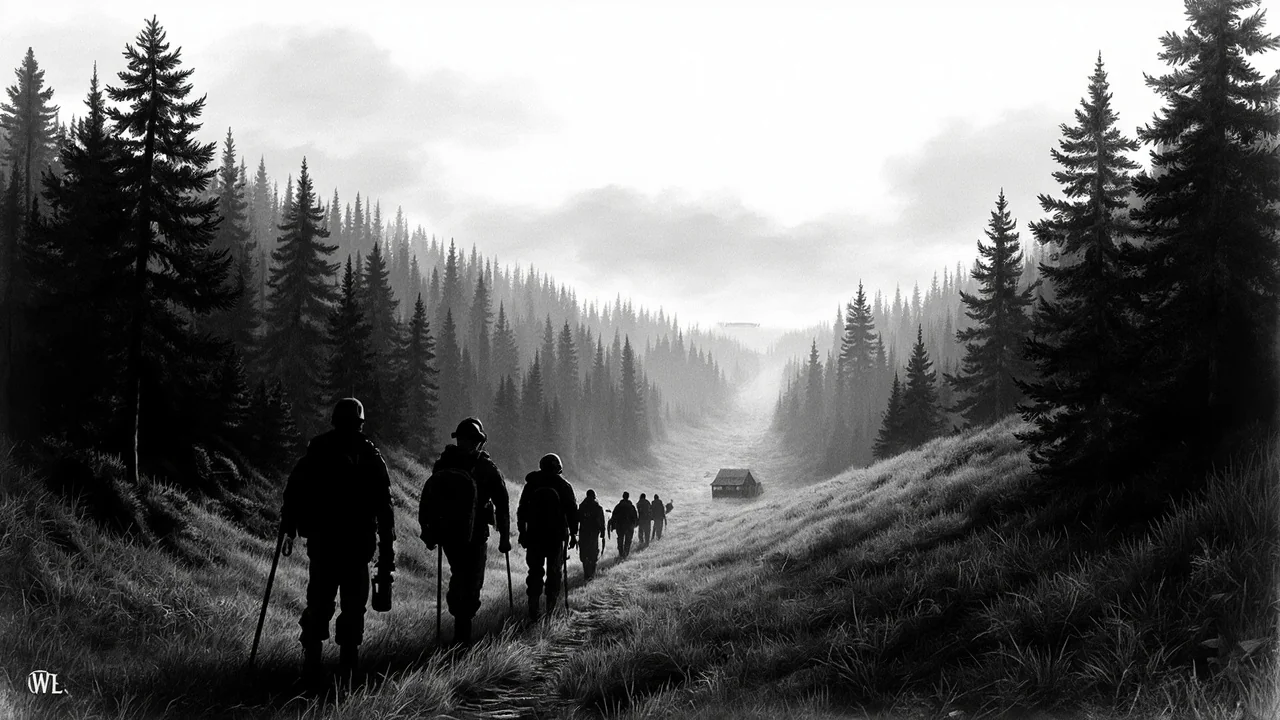
Swedish police have suspended the large-scale ground search for Hanna, an 18-year-old woman missing since Tuesday from Uddevalla. Authorities confirmed the decision late Sunday after five days of intensive efforts involving police, military personnel, and volunteer organizations. The search operation utilized dog patrols, helicopters, and drones despite challenging heavy snowfall conditions. Investigators will now focus on the criminal investigation and pursuing new public tips.
"The person could be alive, if she is not in the search area," said Morten Gunneng, the police officer in charge of the operation. "She could have been outdoors somewhere else." Police confirmed that clothing found in the initial search area belonged to Hanna. This discovery prompted the concentrated effort in that specific terrain. The suspension of the physical search marks a critical shift in the case's operational phase.
A Search Hampered by Winter
The decision to halt the ground search follows a complex and physically demanding operation. Western Sweden experienced significant snowfall during the search window, complicating efforts across the rugged terrain. Police resources were stretched across multiple technologies and personnel groups to maximize coverage. The Swedish Armed Forces provided crucial support, highlighting the severity with which authorities treated the disappearance.
Forensic confirmation that the located clothing belonged to Hanna provided the only solid lead. This evidence justified the intensive focus on that particular area. Without further concrete evidence pointing to a specific location, continuing the wide-area search became operationally difficult. Police strategy now depends heavily on new information from the public to redirect physical resources.
The Investigation Shifts Gears
With the terrain search concluded, the case moves into a sustained investigative phase. The Uddevalla police district's investigation unit will take the lead, reviewing all gathered evidence and witness statements. This phase involves digital forensics, analyzing Hanna's known movements, and interviewing friends and family. The change does not indicate a reduced priority but a different methodological approach.
"If police receive new tips that point to another area, it could become relevant to search outdoors again," a police statement clarified. This leaves the door open for future targeted searches. The public appeal for information remains active and is considered more vital than ever. Investigators are likely examining CCTV footage, mobile phone data, and social media activity to build a timeline.
The Role of Public Information
Public tips have been a cornerstone of the investigation since Hanna was reported missing. Police are urging anyone with information, no matter how insignificant it may seem, to come forward. In missing person cases, early public engagement often provides critical breakthroughs. The shift from a physical search to an information-driven investigation increases reliance on community assistance.
International best practices in missing person cases emphasize maintaining public awareness. Continued media coverage and social media attention can jog memories or encourage witnesses to report sightings. Swedish police have extensive experience with these protocols, often collaborating with national media outlets. The goal is to keep Hanna's face and story in the public consciousness to generate new leads.
The Emotional Toll on a Community
The disappearance of a young person sends shockwaves through any community. In Uddevalla, a mid-sized coastal city, the event has dominated local concern. Volunteer organizations that assisted in the search represent a community mobilizing to support one of its own. This collective action reflects a broader Swedish societal response to personal crises, where civic engagement complements official efforts.
Families and friends of missing persons endure an agonizing limbo. The suspension of the active search, while logical from a resource perspective, often compounds this anxiety. Support groups and victim assistance organizations typically engage at this stage to provide psychological support. The case underscores the human tragedy behind police statistics and operational decisions.
Analyzing Police Methodology and Resources
From a policy perspective, this case demonstrates standard Swedish police procedure for high-risk missing persons. The immediate deployment of significant assets—dogs, helicopters, drones, military aid—follows established protocols. The decision to scale back is equally procedural, based on a cost-benefit analysis of available intelligence. Resources are finite and must be allocated where they are most effective.
Swedish police face ongoing challenges with staffing and budgetary constraints across many districts. A major search operation requires diverting officers from other duties, impacting overall district capacity. The collaboration with the Swedish Armed Forces is a formalized process for providing extra manpower and technical support in civil emergencies. This inter-agency cooperation is a key component of national security strategy.
What Comes Next for the Investigation?
The investigation's future now hinges on two potential paths: a breakthrough from digital evidence or a new tip from the public. Detectives will meticulously reconstruct Hanna's last known hours, examining her communications and interactions. They will also look into her personal state of mind and any potential reasons for leaving voluntarily, however unlikely that may seem given the circumstances.
Cold case units in Sweden have a strong track record, but time is always the enemy in missing person investigations. Forensic evidence degrades, memories fade, and digital trails grow cold. The pressure on the investigating team is immense, balancing thoroughness with urgency. The ultimate goal remains to locate Hanna and provide answers to her family and a concerned nation.
A National Conversation on Safety
While focused on Uddevalla, Hanna's disappearance resonates across Sweden. It prompts difficult questions about the safety of young adults, particularly women, in public and private spaces. Each high-profile missing person case renews debates about preventative measures, policing priorities, and social support systems. These discussions often reach the halls of the Riksdag, influencing future policy and budget allocations.
The case is a sobering reminder of the vulnerabilities that persist even in societies with low crime rates. It tests the responsiveness of state institutions and the strength of community bonds. As the police investigation continues quietly, the public's role shifts from active searchers to vigilant observers and potential informants. The hope for a resolution remains, sustained by the relentless work of investigators and the collective will of a community refusing to forget.