
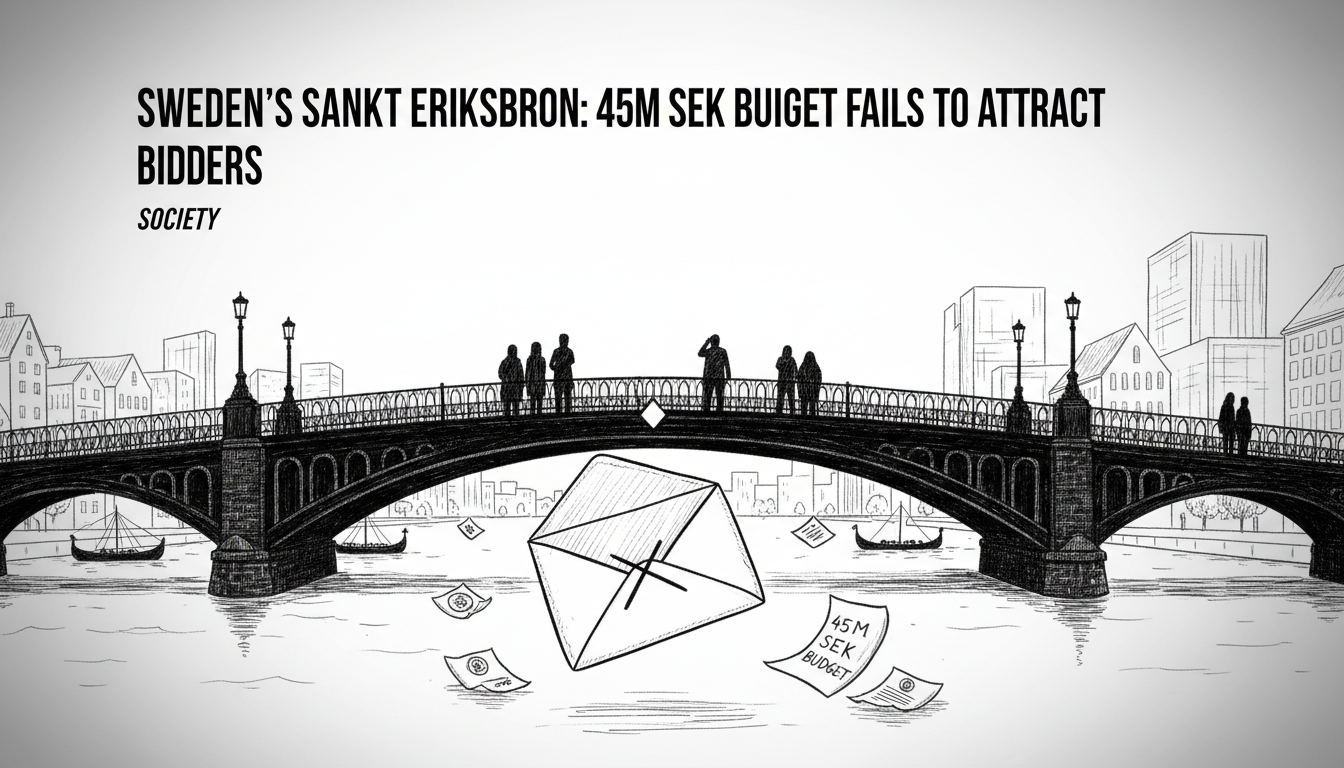
Stockholm's Sankt Eriksbron renovation project has stalled after no contractors bid on the work. The city's initial 45 million SEK budget for the vital bridge repair and cycle lane expansion was deemed insufficient by the construction industry. This failure to attract bids forces a significant budget revision and delays a key piece of the city's sustainable transport plan.
Traffic Councilor Lars Strömgren (MP) confirmed the setback. "We always do a risk calculation," Strömgren said. "Even though we were generous here, companies have assessed that the costs are underestimated." The project aimed to repair the rusting bridge connecting Vasastan and Kungsholmen while widening bicycle lanes in both directions. Work was scheduled for 2024-2025 but has not started.
A Critical Link in Stockholm's Transport Network
Sankt Eriksbron is more than just a river crossing. It is a central artery for cars, cyclists, and pedestrians moving between two dense inner-city districts. Its deterioration poses both a maintenance challenge and a bottleneck for the city's push to increase cycling. The planned lane widening was a direct component of Stockholm's strategy to promote cycling as a primary mode of transport.
The procurement failure highlights a growing disconnect between municipal budgeting and market realities. When the city's tender was published, not a single construction company submitted a bid. This silent rejection from the entire industry sent a clear message: the project's financial framework was not viable. It now returns to the drawing board for a costly reassessment.
The Rising Cost of City Infrastructure
Experts point to systemic issues behind such budget shortfalls. "This is a classic case of municipal optimism clashing with contractor risk aversion," said Karl Jensen, a professor of infrastructure economics at the Stockholm School of Economics. "Material costs have been volatile, skilled labor is in short supply, and renovating a century-old bridge in a busy urban center carries immense hidden risks. Contractors simply won't take that gamble on a fixed, low price."
Jensen notes that initial public project budgets are often set during early planning phases, sometimes years before procurement. Soaring costs for steel, concrete, and specialized labor in the intervening period can render those figures obsolete. The silence from bidders is a market correction, albeit a painful one for the city's timeline and finances.
Impact on Stockholm's Cycling Ambitions
The delay directly affects Stockholm's green transition goals. Wider, safer cycling lanes on major bridges are crucial for encouraging commuters to switch from cars. Sankt Eriksbron's current narrow paths are a known pinch point, especially during rush hours. Each year of delay postpones these improvements and maintains a barrier to cycling for many residents.
"It's frustrating," said Anna Bergström, a daily cyclist who crosses the bridge. "You feel the bridge shake when buses go by, and the cycle path is too narrow to pass safely. We were promised an upgrade, and now it's vanished. It makes the city's cycling promises feel empty." Her sentiment reflects a common concern: can infrastructure keep pace with policy promises?
The Path Forward: Re-tendering and Revised Costs
The Stockholm City Council must now decide how to proceed. The mandatory next step is to revise the project's financial allocation and re-issue the tender. Councilor Strömgren indicated this process is underway but offered no new timeline or estimated cost. Industry analysts suggest the budget may need to increase by 20% to 40% to attract competitive bids.
This revision process itself consumes time and resources. New geological surveys, updated construction methodologies, and fresh risk assessments will be required before a new price tag can be set. The 2024-2025 construction window is definitively closed, pushing the project into 2026 at the earliest.
A Broader Pattern of Project Delays
The Sankt Eriksbron issue is not isolated. Similar delays and budget overruns have affected other major Swedish infrastructure projects, from railway expansions to new hospital builds. The pattern suggests a national challenge in accurately pricing complex public works in a turbulent economic climate.
Some critics argue the procurement model needs reform. "The traditional low-bid-wins model encourages municipalities to set artificially low budgets," said construction industry analyst Mia Lind. "It's a dance that leads to exactly this outcome: no bids, or later, costly change orders. More collaborative models, where contractors help define scope and risk early, could prevent this waste of time."
What the Stalemate Means for Stockholm
For now, commuters will continue to cross the aging bridge. The city must manage the structure's integrity with interim maintenance while scrambling to finance its proper renewal. The financial gap will likely be filled by reallocating funds from other transport or infrastructure budgets, creating a ripple effect of delays elsewhere.
The stalemate also carries political weight. The governing coalition, which includes the Green Party (MP), has staked its credibility on delivering green infrastructure. Visible failures in core projects like this provide ammunition for opposition parties and test public patience.
Ultimately, the story of Sankt Eriksbron is a lesson in modern urban governance. It underscores the difficulty of maintaining century-old infrastructure while simultaneously adapting it for future needs like cycling. The bridge's physical state symbolizes a larger tension: the cost of maintaining the old while building the new is rising faster than many cities anticipated. Stockholm's response to this failed tender will set a precedent for how it manages this tension across its entire infrastructure portfolio. Will it lead to more realistic planning, or simply higher costs and longer waits for essential upgrades? The city's next move on this single bridge will offer an answer.