
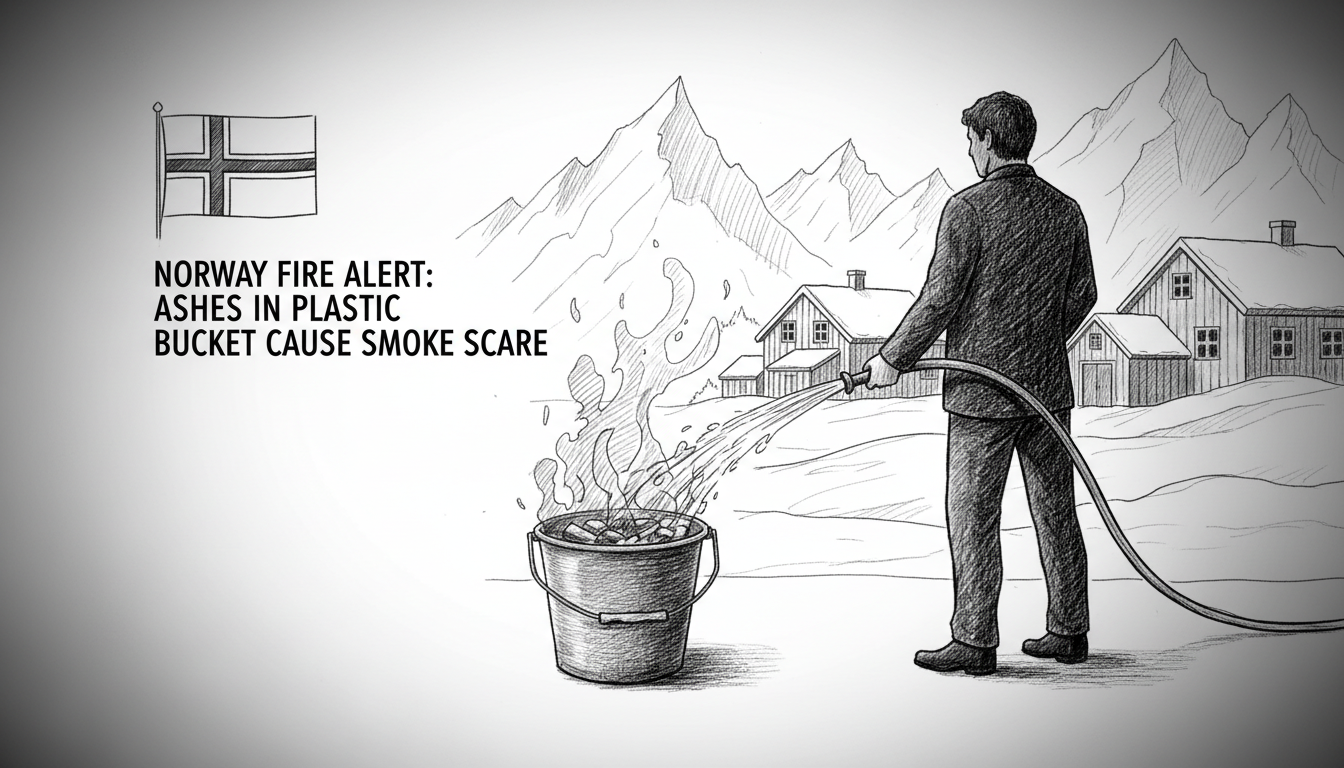
Norway fire safety protocols were tested in the early hours in Hommersåk, Rogaland, when a melting plastic bucket filled with ashes caused significant smoke development in a residential home. The incident in Kvitlåveien prompted a multi-agency emergency response after neighbors helped a homeowner who was woken by a blaring smoke detector.
"The homeowner was alerted by the smoke alarm. Neighbors assisted with gaining entry to the house," said duty officer Svein Nesse. He confirmed the source was a plastic container of ashes that had melted, generating dense smoke. Several people required medical assessment for smoke inhalation, though there was no active fire. Police operations manager John Ask stated that firefighters quickly contained the smoke development.
This seemingly minor domestic incident underscores a persistent and dangerous fire safety blind spot across Norway. Experts warn that improper ash disposal remains a leading cause of residential fires, particularly during colder months when wood-burning stoves are in frequent use.
A Common Hazard with Serious Consequences
The event in Hommersåk, a village in Sandnes municipality east of Stavanger, follows a familiar and preventable pattern. Fire safety authorities consistently campaign for ashes to be placed only in non-combustible, sealed metal containers stored well away from structures. Yet, the use of plastic buckets, cardboard boxes, or simply dumping ashes outside remains common.
"Ashes can retain intense heat for days, even when they appear cold to the touch," explains Lars Hansen, a senior advisor with the Norwegian Directorate for Civil Protection (DSB). "Placing them in any combustible material is an invitation for a smoldering fire. The smoke from melting plastic is also exceptionally toxic and fast-acting."
In this case, the system worked as designed: a functioning smoke detector provided the critical early warning. The response from neighbors and emergency services was swift. However, the initial risk creation was entirely avoidable. Norwegian fire statistics show that improper ash handling causes hundreds of fires annually, resulting in significant property damage and, in worst-case scenarios, loss of life.
The Critical Role of Early Detection
The Hommersåk incident serves as a powerful testament to the importance of operational smoke alarms. Norwegian law requires smoke detectors in all homes, and their effectiveness is undeniable. The homeowner was awakened, allowing for early intervention before a smoldering ignition could turn into a structural blaze.
"This is the textbook example of why we have these alarms," says fire safety engineer Kari Møller. "The alarm did its job perfectly. It detected the smoke, alerted the resident, and initiated the chain of response that prevented a much worse outcome. Without that detector, the scenario likely ends with the fire brigade battling a full house fire hours later."
Authorities recommend testing smoke detectors monthly and replacing them every ten years. The DSB also advises having multiple detectors, particularly outside sleeping areas and on every floor of a home.
Smoke Inhalation: The Invisible Threat
While the absence of open flame is positive, the medical response highlighted another danger. "Ambulances were also dispatched. Several people had inhaled smoke," Officer Nesse reported. Smoke inhalation injuries can be severe, causing damage to the lungs and airways from toxic chemicals and particulate matter.
Plastic combustion produces a complex mixture of hazardous compounds, including hydrogen cyanide and carbon monoxide. Symptoms may not be immediately apparent. This is why emergency services always recommend medical evaluation after significant smoke exposure, even if individuals feel fine initially.
"People often focus on the burn threat from fire, but smoke is a silent, rapid killer," notes Dr. Ingrid Selmer, an emergency medicine specialist. "It displaces oxygen and poisons the body at a cellular level. In a confined space like a home, becoming unconscious can happen within a few breaths."
Broader Implications for Norwegian Households
This event in Rogaland is a microcosm of a national safety issue. As Norway continues to use wood as a popular supplementary heat source, the proper management of ash waste is a recurring seasonal challenge. The DSB's annual fire prevention messages tirelessly repeat the guidelines: use a metal ash can with a tight-fitting lid, let ashes cool for several days, and keep the container on a non-combustible surface like stone or gravel far from the home, garage, or deck.
Many municipalities offer specific guidance and even subsidized metal ash containers. Yet, complacency and convenience often override this knowledge. The plastic bucket is readily available; the specialized metal can requires a specific purchase and storage space.
"We see it after every weekend of cozy fires," says a veteran firefighter from the Stavanger region, who asked not to be named. "People clean out their stoves, see no glowing embers, and dump the ashes into whatever is handy. By Monday morning, we're sometimes called to a shed or balcony that's burned down. The Hommersåk family was fortunate."
A Narrow Escape and a Clear Warning
The successful resolution of this incident does not diminish its value as a cautionary tale. It combined a common mistake with a best-practice response, showcasing both a vulnerability and the system designed to protect against it. The emergency services from police, fire, and medical units performed a coordinated operation, addressing the immediate hazard and the resulting health concerns.
For residents across Norway, the message is unambiguous. The simple act of disposing of fireplace or stove ashes demands respect and strict procedure. Investing in proper equipment and adhering to safety protocols is a minor inconvenience that prevents major tragedies.
As the seasons turn and wood-burning increases, will this near-miss in Kvitlåveien lead to more households checking their smoke alarms and purchasing a metal ash can? Fire safety is a continuous practice, not a single action. This incident in Hommersåk provides a stark reminder that vigilance is the true key to prevention.