
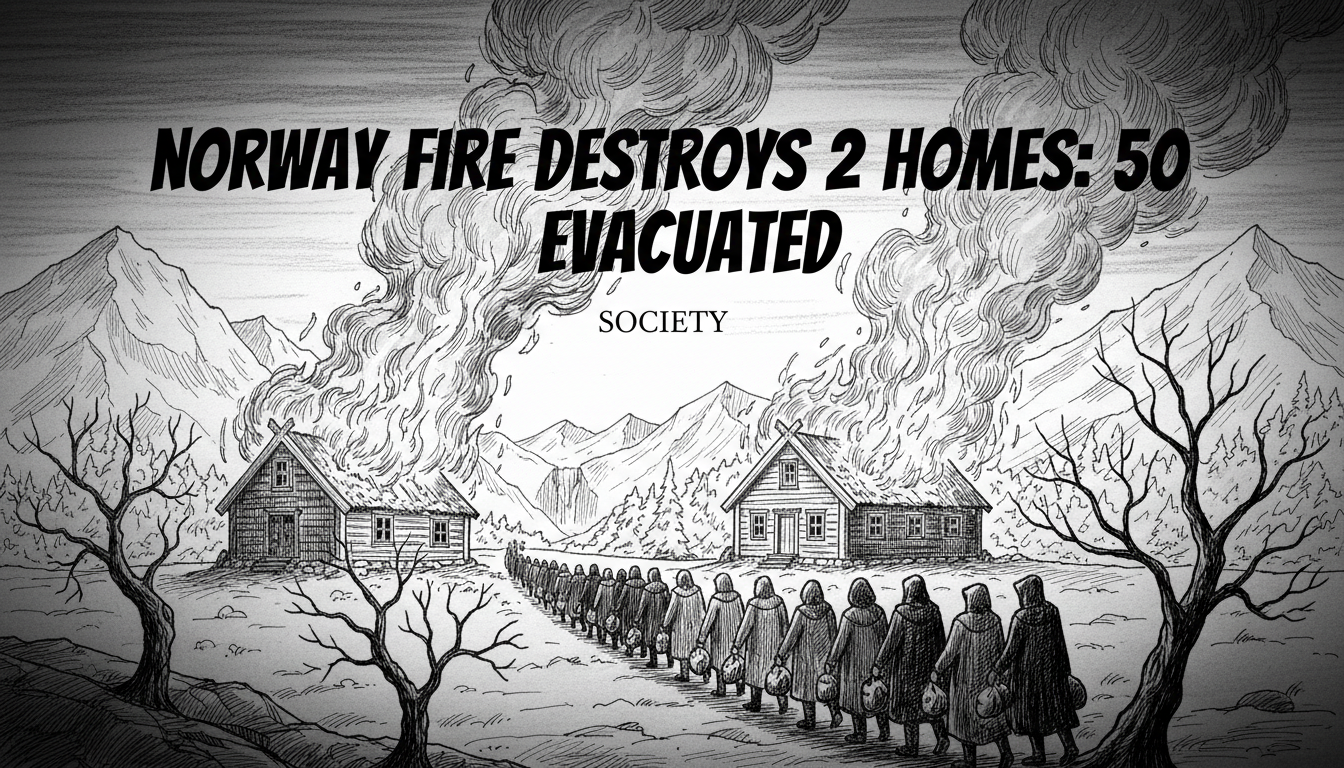
Norway fire in Sandnes destroyed two homes and forced 50 evacuations Friday night, with emergency crews battling the blaze for hours. The fire spread rapidly through a residential area, damaging a third house before containment. No injuries were reported, but 18 housing units were affected in the Rogaland county city.
Brannmester Stein Pedersen of Rogaland brann og redning confirmed control was gained late Friday. He stated crews were engaged in mopping-up operations through the night. The fire service remained on site into early Saturday.
Sandnes Mayor Kenny Rettore called it a dramatic evening. He emphasized that no one was harmed despite the scale. The municipality activated its emergency plan and crisis team promptly.
The Friday Night Inferno
Flames erupted in a residential building Friday evening. Firefighters received reports of a fully involved structure. Strong winds pushed the fire to two neighboring houses.
Two homes were completely destroyed. A third sustained significant damage. The close proximity of wooden buildings in older neighborhoods fueled the spread.
Approximately 50 residents from 18 units were evacuated. Many left with only the clothes on their backs. Local authorities provided temporary shelter and support.
Emergency Response in Action
Rogaland fire and rescue deployed multiple units to Sandnes. Their quick response prevented further casualties. Pedersen praised the coordination among teams.
Sandnes commune established its emergency plan immediately. This allowed for efficient evacuation and resource allocation. Mayor Rettore highlighted the community's resilience.
Firefighters worked tirelessly through the night. They focused on preventing reignition in the damaged structures. The cause of the fire remains under investigation.
Sandnes: A City at Risk?
Sandnes is a municipality near Stavanger in southwestern Norway. Its older residential areas feature tightly packed wooden homes. This construction style is common in many Norwegian towns.
Dense housing increases fire spread risk. Historical building codes allowed narrower gaps between structures. Modern regulations mandate greater spacing and fire-resistant materials.
Rogaland county has experienced similar fires in the past. Climate change may elevate risks with drier summers. Local authorities are reviewing preparedness measures.
Fire Safety Lessons from Rogaland
Expert analysis points to key vulnerabilities in residential fires. Fire safety consultant Arne Larsen, based in Oslo, explains the challenges. He notes that wood construction requires robust suppression systems.
Larsen emphasizes maintaining functional smoke alarms and extinguishers. He advocates for community fire drills in dense neighborhoods. Regular inspection of electrical systems is crucial.
Norwegian building standards have evolved since the 1990s. Newer homes incorporate more stone and fire-retardant materials. Retrofitting older properties remains a costly but necessary step.
Emergency protocols in Norway are highly developed. The Sandnes response demonstrated effective inter-agency cooperation. Quick evacuation likely prevented injuries.
Investigating the Blaze's Origin
Authorities have launched a formal investigation into the fire's cause. Electrical faults are a common culprit in Norwegian house fires. Human error or appliance malfunction are other possibilities.
Forensic teams will examine the debris once it is safe. The process may take weeks due to the extensive damage. Insurance assessments for affected residents are already underway.
Norwegian insurance companies report rising claims from fire damage. They attribute this to aging infrastructure and increased home electronics use. Premiums in high-risk areas may adjust accordingly.
Community Support and Recovery
Local organizations mobilized to aid evacuees. The Red Cross provided blankets and meals. Sandnes church opened its doors for temporary refuge.
Mayor Rettore assured residents that rebuilding support is available. Government programs offer loans and grants for fire damage. Psychological counseling services are also accessible.
The displaced families face uncertain months ahead. Many will stay with relatives or in temporary housing. Community solidarity has been strong, with neighbors offering help.
Broader Implications for Norwegian Housing Policy
This fire reignites debate on national fire safety standards. The Storting has discussed stricter retrofit requirements for old wooden homes. Progress has been slow due to cost concerns.
Energy Minister Terje Aasland has linked fire safety to energy efficiency upgrades. Retrofitting homes for climate goals could include fireproofing measures. This synergy is gaining political attention.
Opposition MPs from the Conservative Party call for immediate action. They cite similar fires in Bergen and Trondheim over the past decade. A cross-party committee may review building codes this autumn.
The Path Forward for Sandnes
Sandnes municipality will review its emergency response after this incident. Lessons learned will be shared with other Rogaland communes. Fire department training may intensify for urban blazes.
Residents are advised to check their home fire safety features. Local fire stations offer free inspections upon request. Public awareness campaigns will launch in coming weeks.
The destroyed homes represent not just property loss but community disruption. Rebuilding will focus on modern, safer construction standards. Sandnes aims to emerge more resilient from this tragedy.
Norway's fire services face evolving challenges with climate and urbanization. This Sandnes fire underscores the need for continuous vigilance and investment in safety. As communities grow closer, protecting them requires smarter planning and swift action.