
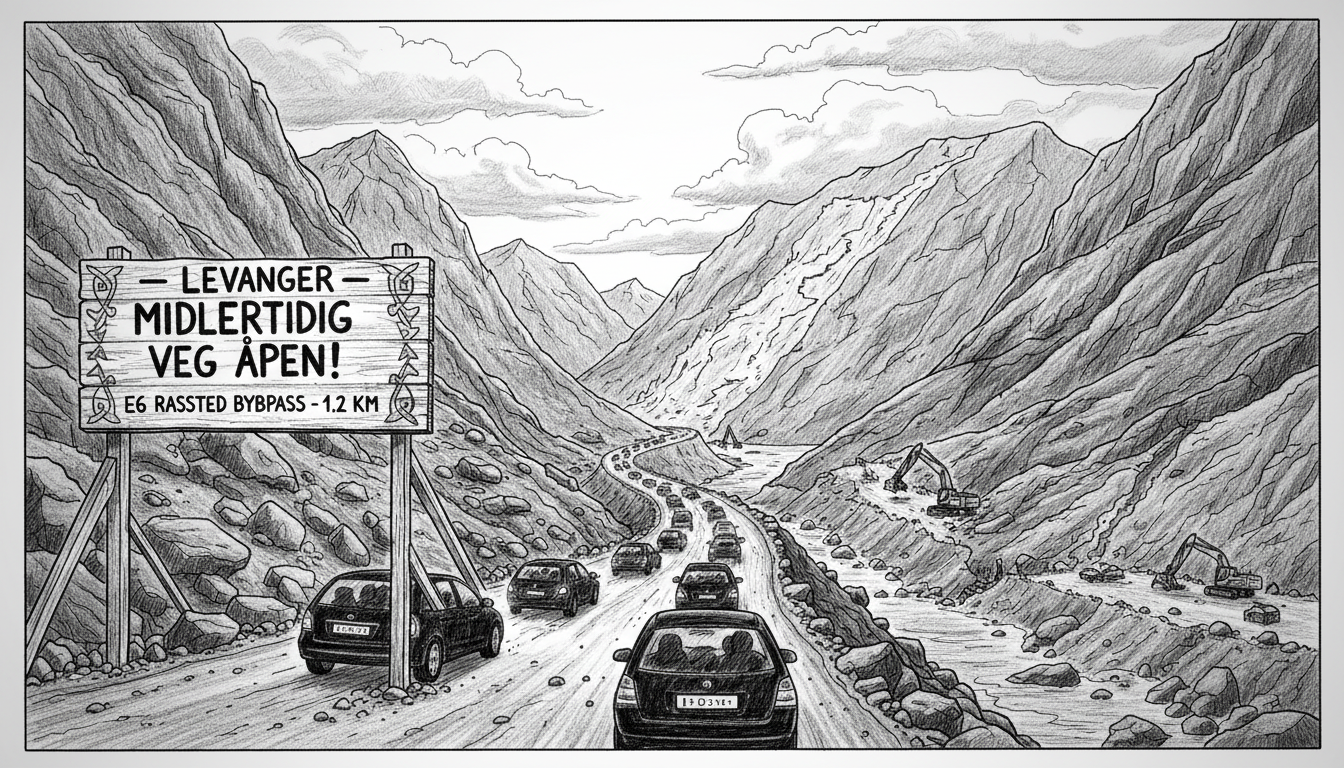
A temporary road bypassing the massive landslide on Norway's E6 highway opens this Saturday. The new route offers relief to travelers facing long detours since late August. That is when a major rockslide at Nesvatnet swept away both the new and old E6 routes plus railway tracks. One person died in the incident.
The Norwegian Public Roads Administration expects to open the temporary road around 2 PM on Saturday. Construction crews have worked intensively since early October. They have been racing against time day and night in recent weeks to complete the project. Officials described the effort as round-the-clock work in their announcement.
This temporary solution measures 1.2 kilometers long and nine meters wide. It will accommodate all vehicle types, including heavy modular trucks. The new alignment runs close to the mountainside with solid rock separating it from the landslide zone. This positioning provides additional safety for travelers.
The original E6 reconstruction continues in coordination with railway authorities. That permanent repair will take considerably longer because road and rail construction must happen simultaneously. The complex engineering challenge requires careful coordination between transportation agencies.
For international readers, this situation highlights Norway's unique infrastructure challenges. The country's dramatic terrain creates constant landslide risks, especially along crucial transportation corridors like the E6. This major north-south artery connects Trondheim to northern regions, making its closure particularly disruptive for commerce and daily life.
The temporary road represents a practical Nordic solution to an immediate problem. Norwegian infrastructure management typically prioritizes finding workable interim solutions while planning permanent fixes. This approach minimizes economic disruption and maintains essential connections between communities.
What does this mean for travelers and local residents? The temporary route will significantly reduce travel times compared to current lengthy detours. However, drivers should still expect some delays and exercise caution on the new road. The situation also underscores the ongoing geological risks in Norway's mountainous regions, particularly during periods of heavy rain or rapid temperature changes.
The continued collaboration between road and rail authorities demonstrates Norway's integrated approach to infrastructure management. This coordination becomes especially important in a country where limited transportation corridors often force roads and railways to run parallel through challenging terrain.