
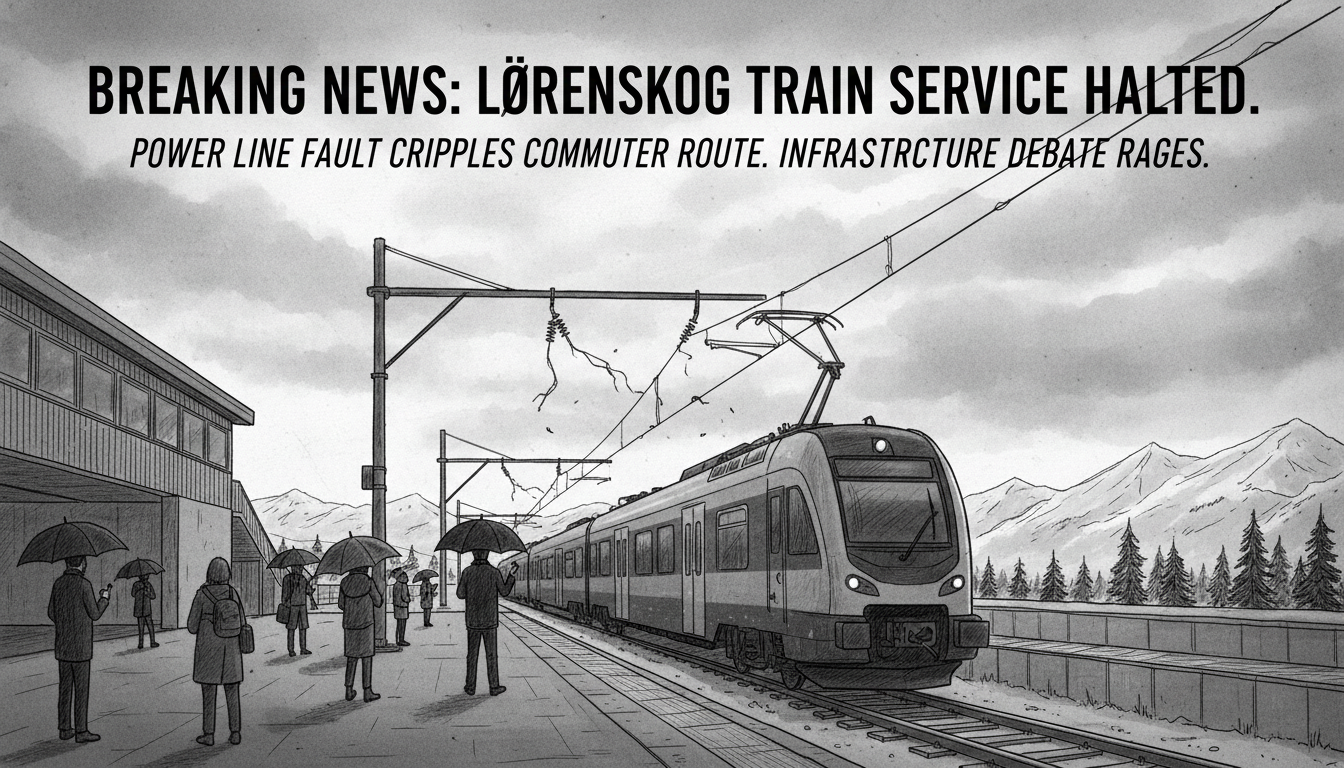
Norwegian rail operator Bane Nor has suspended all train traffic between Bryn and Lørenskog. The closure stems from a fault in the overhead power line system. Officials are working to repair the damage. A new update is expected later today, according to the operator's statement.
This disruption impacts a key commuter corridor in the eastern Oslo region. The Bryn to Lørenskog stretch is part of the vital Østfold Line. It connects suburban communities to the capital's central network. Thousands of daily commuters rely on this service for work and education. The halt creates immediate logistical challenges during the workweek.
Rail infrastructure reliability is a persistent political issue in Norway. The Storting has debated funding for Bane Nor's maintenance backlog for years. MPs from the Labour Party and the Conservative Party often clash over investment priorities. Some argue for more spending on existing lines versus new mega-projects. This incident will likely fuel those debates again.
For international observers, this highlights a tension in Norwegian policy. The nation champions green mobility and public transit. Yet its infrastructure sometimes shows signs of strain. The government promotes railway expansion to reduce car use. Simultaneously, it manages a vast sovereign wealth fund built on oil revenues. This creates a complex energy and transport policy landscape.
What happens next for commuters? Bus replacement services are a common but imperfect solution. They often struggle with capacity and travel time. The repair timeline depends on the fault's complexity. Overhead line issues can range from simple fixes to major component replacements. Bane Nor's evening update will provide crucial clarity.
The broader context matters. Norway's rail network faces unique challenges. Harsh weather, difficult terrain, and long distances test the system. Reliability on suburban lines near Oslo affects public trust in national climate goals. If frequent disruptions occur, people may revert to private car use. That undermines emission reduction targets.
This is not an isolated event. Similar faults have occurred on other lines in recent years. Each incident prompts calls for more resilient infrastructure. The question is always about funding and political will. The current government, led by Prime Minister Jonas Gahr Støre, has pledged to improve transit. Concrete results from such pledges are what commuters experience during disruptions like today's.
The immediate economic impact is localized but real. Delayed workers, disrupted schedules, and potential lost productivity are the direct costs. There is also a reputational cost for the transit system. Norway invests heavily in its public services. Citizens expect correspondingly high reliability. Events like this test that social contract.
Looking ahead, the repair work will be the immediate focus. Long term, the discussion will return to systemic investment. How Norway maintains its infrastructure while pursuing ambitious environmental goals remains a central puzzle. Today's fault on the line to Lørenskog is a small but telling piece of that larger picture.