
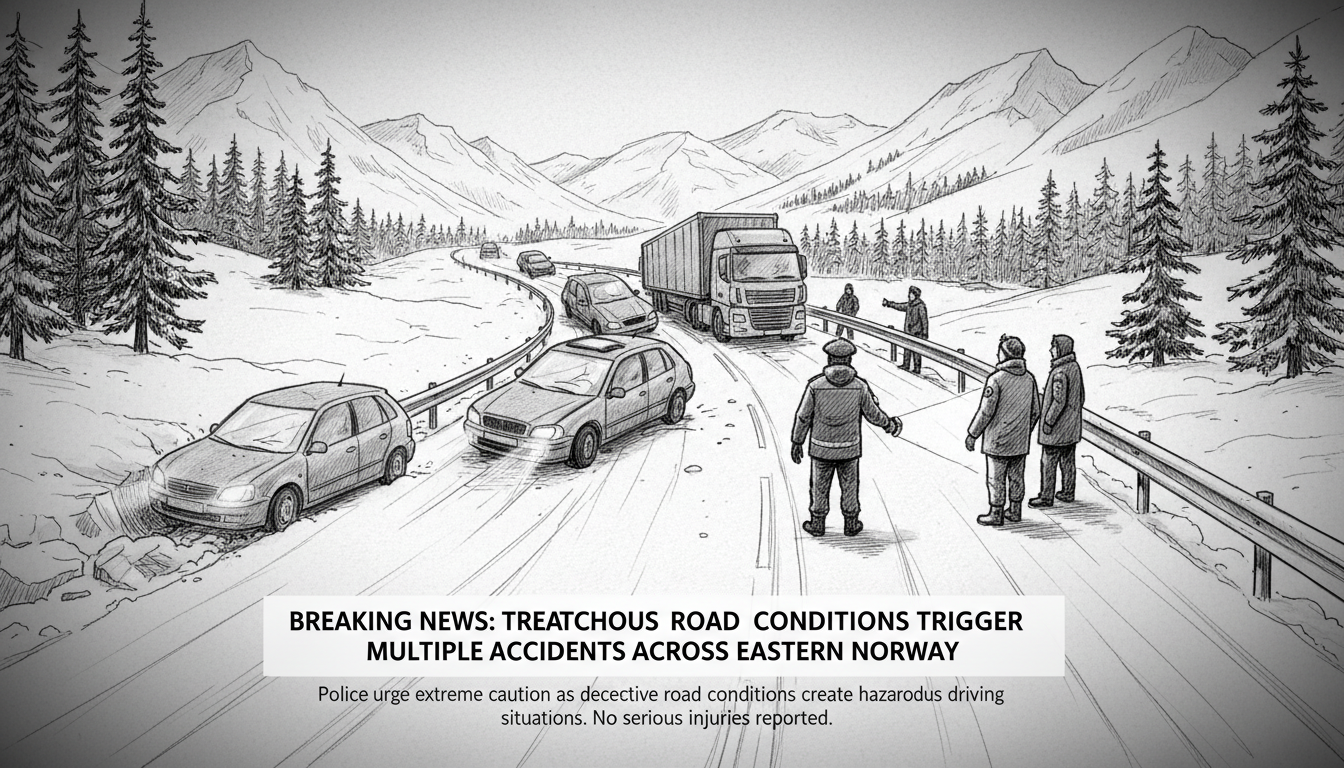
Dangerous driving conditions created chaos on eastern Norwegian roads Friday morning as multiple accidents were reported across several regions. The Innlandet Police District received numerous alerts about slippery roads, particularly on the E6 highway between Hamar and Moelv. Police operations manager Pål Gjestvang urged drivers to exercise extreme caution amid the hazardous conditions.
The East Road Traffic Center documented three separate collisions at the Åkersvika intersection in Hamar alone. Traffic operator Vegard Hornes Halvorsen described the situation in a morning briefing. He confirmed one accident in the exit lane, another in the roundabout, and a third in the entrance lane. The rapid transition from freezing temperatures to milder weather created deceptive road surfaces that appeared wet but concealed dangerous ice layers beneath.
Halvorsen explained the meteorological phenomenon creating these hazardous conditions. The underlying ground remains frozen while surface temperatures rise, creating invisible ice sheets beneath thin water layers. This creates what officials described as genuinely frightening driving conditions that catch many motorists unprepared.
National Road 25 in Hamar also saw weather-related accidents during the morning commute. Police reports indicated extremely slippery conditions at the accident site. Fortunately, no injuries were reported in these initial incidents, though material damage occurred.
The dangerous conditions extended beyond the Hamar area. Elverum and routes toward Trysil also reported slippery roads according to traffic center updates. Inner Østfold faced similar challenges, though officials noted better control measures in the Asker area as the morning progressed.
One serious incident occurred on the E6 at Midtstranda in Hamar where a vehicle left the road entirely. Police confirmed the driver registered a blood alcohol level of 1.8 per mille. While the driver emerged unharmed, substantial damage occurred to both the vehicle and a lamppost.
Eastern Norway's topography contributes significantly to these dangerous winter conditions. The region's numerous valleys and fjords create microclimates where temperature fluctuations occur rapidly. This particular weather pattern—transitioning from deep freeze to near-thaw conditions—commonly creates what Norwegians call 'skummelt føre' or frightening driving conditions.
Norwegian road authorities maintain sophisticated winter maintenance systems, but these rapid weather changes present exceptional challenges. The country invests heavily in road safety infrastructure, yet such conditions test even the most prepared drivers. International visitors should note that Norwegian winter driving requires special tires and heightened awareness of changing conditions.
Local authorities continue monitoring the situation as temperatures fluctuate throughout the day. Drivers are advised to reduce speed, increase following distances, and remain alert for changing road conditions, particularly in valley areas and near frozen waterways.