
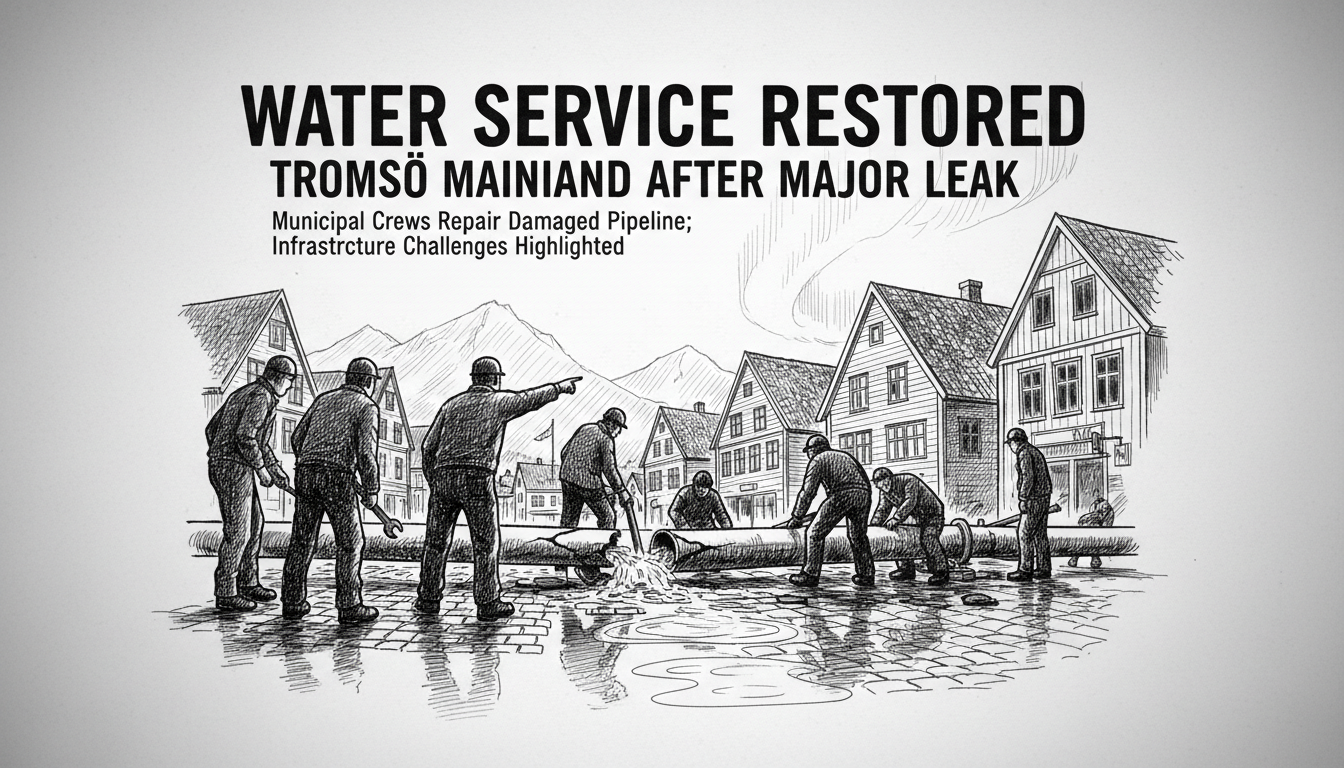
Water has returned to the Reinen area of mainland Tromsø after a major leak disrupted service for thousands of residents. Municipal authorities confirmed the restoration in a text message to affected households. The breakthrough comes after hours of uncertainty for local families and businesses.
Earlier today, a significant pipeline failure left numerous properties without running water. Crews worked throughout the day to locate and repair the damaged section. Water also flooded several streets in the affected neighborhood, creating additional challenges for repair teams and residents.
Kjell Christian Røshol, the municipal water and sewage coordinator, acknowledged the extensive water flow into local streets. His team prioritized both stopping the leak and restoring service to the community.
Northern Norway's infrastructure faces unique challenges from Arctic conditions. The region's water systems must withstand extreme temperature fluctuations and challenging terrain. This incident highlights the vulnerability of essential services in remote northern communities.
For international readers, Tromsø represents one of Norway's northernmost urban centers with approximately 77,000 residents. The city serves as a major hub for Arctic research, tourism, and education. Reliable infrastructure remains crucial for both permanent residents and the growing number of international visitors.
Water outages in Nordic countries typically trigger rapid response protocols. Municipalities maintain emergency teams specifically for infrastructure failures. The quick restoration in Tromsø demonstrates Norway's generally effective public utility management systems.
Local businesses dependent on water service faced operational challenges during the outage. Restaurants, hotels, and healthcare facilities implemented contingency plans. The incident serves as a reminder of how quickly modern urban life can be disrupted by infrastructure failures.
What does this mean for Tromsø residents moving forward? Municipal authorities will likely conduct a thorough investigation into the cause of the leak. They may also review maintenance schedules for aging water infrastructure throughout the city. Such evaluations help prevent similar incidents during harsh Arctic winters when repairs become more difficult.
The restoration brings relief to families who spent hours without basic water services. It also allows businesses to resume normal operations without further disruption. The incident nevertheless raises questions about infrastructure investment in northern regions where environmental conditions pose constant challenges.