
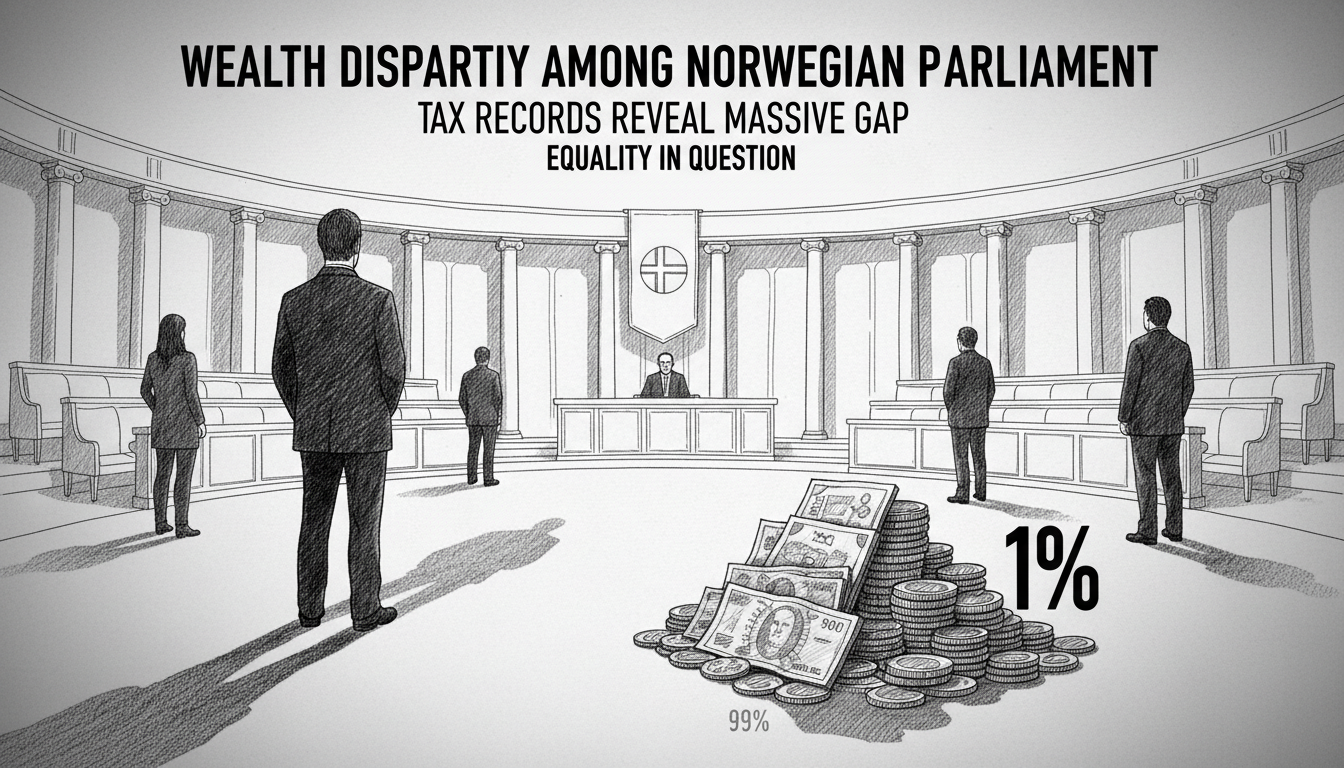
A new analysis of Norwegian tax records reveals stark wealth differences among members of the Storting. The data shows a small group of politicians with fortunes far exceeding their colleagues and the average citizen. This disclosure comes from the annual public tax lists, a transparency measure unique to Norway. The lists detail income, wealth, and tax payments for every citizen.
Conservative Party member Nikolai Astrup tops the list as the wealthiest parliamentarian. His declared fortune exceeds the combined wealth of the other 168 representatives. This represents a substantial increase from the previous year. The scale of his assets is unprecedented in modern Norwegian politics.
Health Minister Jan Christian Vestre and Prime Minister Jonas Gahr Støre, both from the Labour Party, hold the second and third positions. Their fortunes are also notably high compared to the parliamentary average. The concentration of wealth among these three individuals skews the overall party averages significantly.
The Conservative Party has the highest average wealth due to Astrup's holdings. The Labour Party follows, primarily because of its two senior ministers. When these three outliers are excluded, the picture changes dramatically. The Centre Party's nine representatives then have the highest average wealth. The Green Party and the Progress Party follow in the rankings.
The average wealth for the general Norwegian population is just over one million kroner. This places several parliamentary groups close to the national average. The data prompts questions about economic representation in a country known for egalitarian values. Norway's political system is built on broad participation and a strong welfare state.
Wealth disclosure is mandatory for all public officials in Norway. The system aims to prevent conflicts of interest and maintain public trust. Observers note that while personal wealth is not illegal, it can influence political perspectives. The debate often centers on taxation policies and capital gains regulations.
The Storting handles critical issues like Arctic sovereignty and oil fund management. These decisions directly impact Norway's future economy. Some analysts ask if vast personal wealth affects policy priorities on taxation or resource management. The Norwegian oil industry, centered on fields like Johan Sverdrup, generates massive state revenue. How this wealth is distributed remains a core political question.
The release of these lists is a major media event each year. It fuels ongoing discussions about equality, privilege, and political power in one of the world's richest nations. The data provides a clear snapshot of who governs Norway and their personal financial standing.