
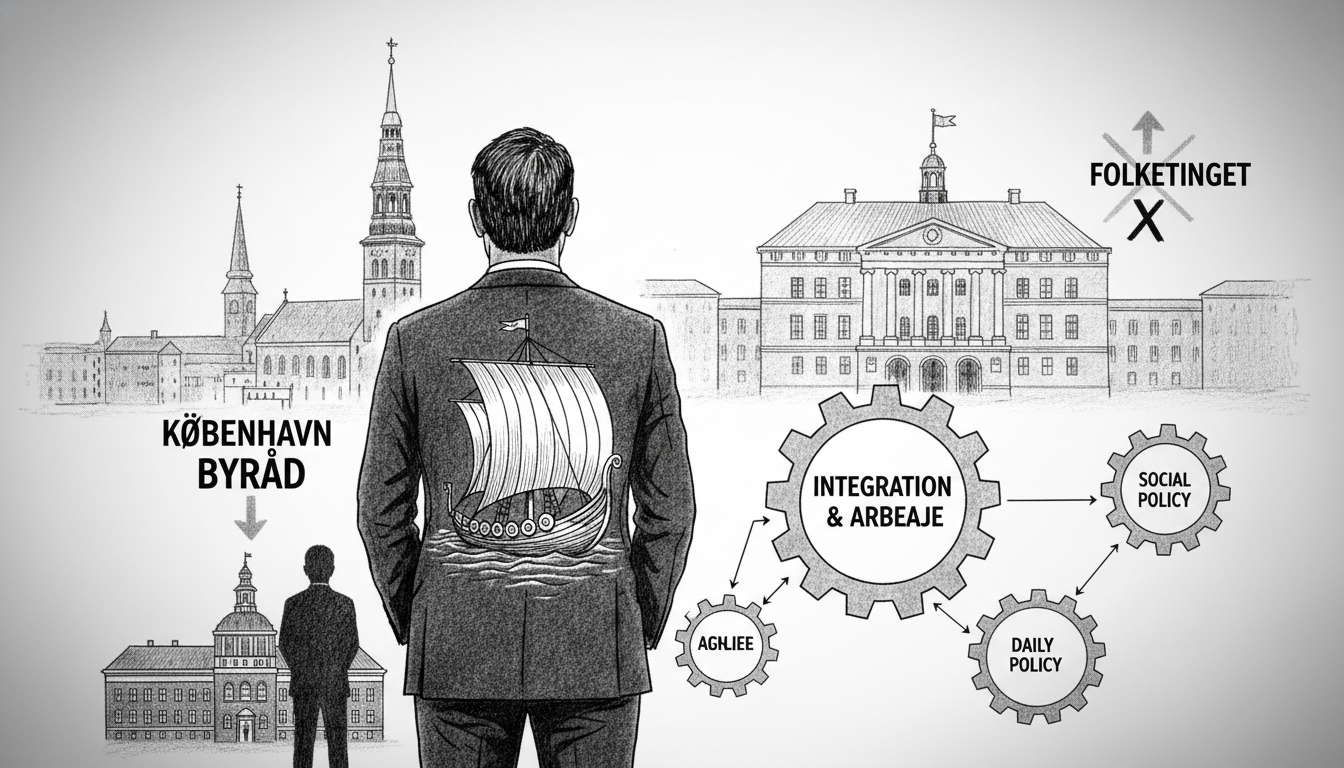
Lars Aslan Rasmussen has made a definitive choice that resonates through Copenhagen's political circles. The Social Democrat will take his seat in the city's Citizen Representation, the municipal council, even if a position opens for him in the national parliament, the Folketing. This decision clarifies a political puzzle involving several high-profile figures. It also highlights the ongoing tension between local governance and national influence within Danish politics, a tension felt acutely in matters of Copenhagen integration and social policy.
Rasmussen received 4656 personal votes in the recent municipal election. This strong personal mandate seems to have guided his choice. He stated that voters expect him to serve a full four-year term locally, and he intends to honor that expectation. His stance provides a clear answer where his party colleagues, Mette Reissmann and Yildiz Akdogan, have remained publicly undecided. Both currently sit in the Folketing but were also elected to the Copenhagen council. The Social Democratic party rules prohibit holding dual mandates at the city and national levels simultaneously.
The immediate context is a pending internal party vote for a key municipal position. The role is the Employment, Integration, and Business Mayor, a powerful post shaping Copenhagen integration policy directly. The candidates are Andreas Keil, Laura Rosenvinge, Mette Reissmann, Lars Aslan Rasmussen, and Yildiz Akdogan. Should Reissmann or Akdogan win this mayoral post, they would have to leave the Folketing. Rasmussen is next in line to fill that vacant national seat, but he has preemptively declined. This would then pass the opportunity to Nikoline Prehn, daughter of former minister Rasmus Prehn.
This political maneuvering is more than just personnel changes. It reflects deeper currents in the Danish welfare system and Denmark immigration policy. The contested mayoral portfolio oversees critical areas like job placement for newcomers and business development. The person in this role directly impacts how integration policies are implemented on the ground in neighborhoods and social centers. They work with city districts and local organizations to translate national social policy into local action.
Rasmussen's choice to prioritize local work is noteworthy given his experience. He served in the Folketing from 2016 to 2022 and on the Copenhagen council from 2006 to 2016. His return to local politics suggests a belief that substantive change often happens closer to citizens. For international observers, this underscores a feature of Danish society news: municipal governments hold considerable power over daily life, from schools to social services. The Copenhagen council manages a budget larger than some national ministries, making these roles highly influential.
The outcome of the mayoral vote will reshape the political landscape. It determines whether a seasoned parliamentarian like Reissmann or Akdogan brings national experience to city hall, or if a figure like Rasmussen dedicates his full focus to municipal affairs. The decision will influence how Copenhagen tackles its ongoing challenges related to housing, employment, and community cohesion. The focus now shifts to the party's internal meeting, where local delegates will decide who takes on one of the most demanding jobs in Danish municipal politics.