
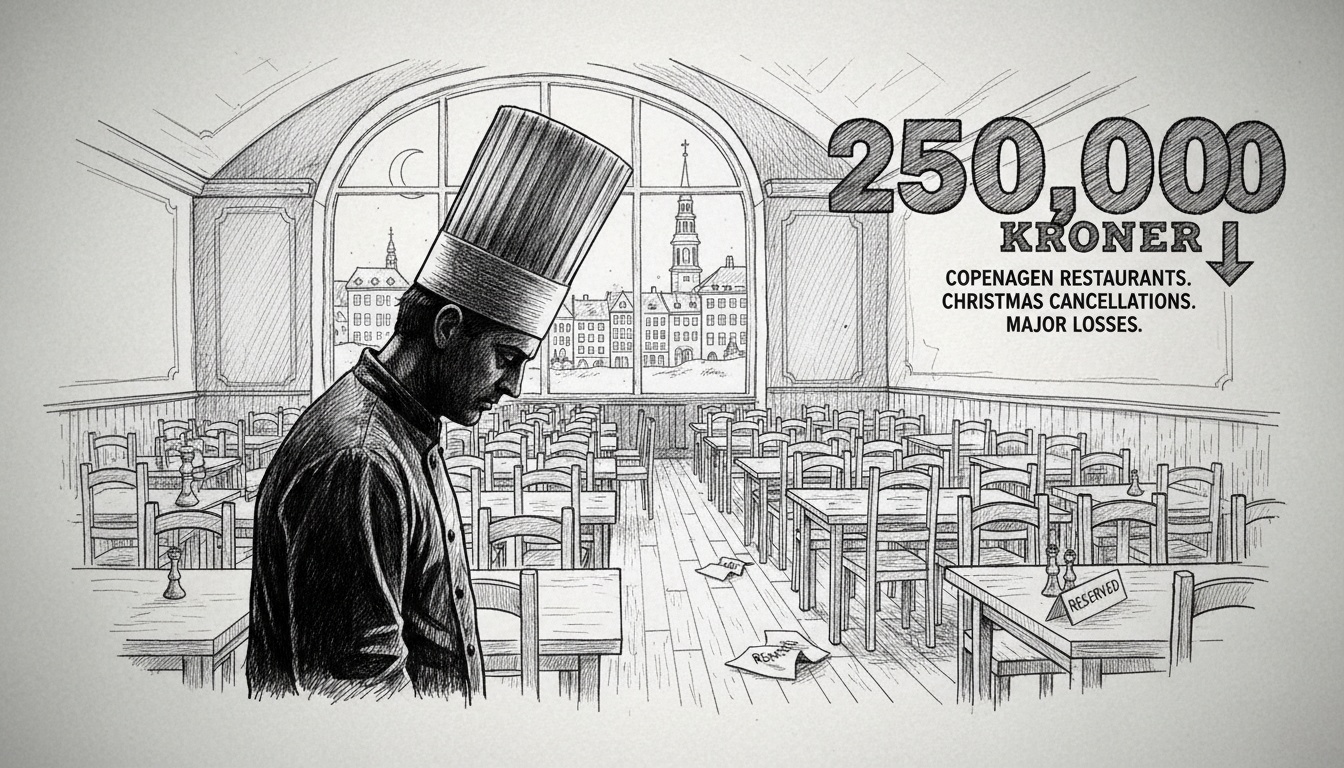
Copenhagen's restaurant sector is grappling with a costly and disruptive trend this holiday season. Multiple establishments report significant revenue losses due to last-minute corporate Christmas party cancellations. This issue highlights a broader challenge for Denmark's service economy and its famed work-life balance culture.
At Restaurant Haven in the affluent Frederiksberg district, three corporate groups cancelled large bookings at the last minute. Co-owner Robin Ungermann stated the cancellations came too late to rebook the 210 covers. The lost revenue totals approximately 250,000 Danish kroner. Ungermann expressed surprise that businesses, which routinely handle contracts, would abandon agreements so casually. He has now implemented a 50% deposit requirement for next year's Christmas season bookings.
The hospitality industry association Horesta confirms this is a recurring annual problem. Managing Director Jeppe Møller-Herskind said their phones run hot during the Christmas season with similar cases. The association provides legal support to members seeking compensation for late cancellations. They have pursued formal lawsuits on behalf of members in the past.
Standard industry practice requires corporate groups to cancel at least six days in advance. Cancellations after that point incur a 75% charge. A complete no-show requires full payment. Møller-Herskind points to digital booking systems as a key factor in this cancellation culture. He notes a norm shift where a few online clicks can cancel a booking without facing a human being. This reduces the sense of personal obligation.
The economic impact extends beyond individual restaurants. The Copenhagen hospitality sector is a vital part of the local economy, supporting thousands of jobs. The Øresund region, including Malmö, faces similar seasonal pressures. This trend could force more restaurants to adopt stricter payment terms, potentially changing Denmark's traditionally trust-based business culture.
For international observers, this situation reveals a tension within Danish corporate culture. Denmark is known for its high-trust society and flexible work arrangements. Yet this flexibility appears to be creating operational headaches for small businesses. The restaurant industry must now balance customer convenience with financial sustainability.
What happens next? More Copenhagen restaurants will likely follow Haven's lead with deposit requirements. This could lead to pushback from companies accustomed to flexible booking. The industry association is pushing for clearer communication of cancellation policies during online bookings. The real test will come during next year's festive season, showing whether norms have truly shifted or if this was just a difficult year.
The situation calls for a straightforward assessment. Businesses that expect reliability from their partners should offer the same courtesy. The digital ease of cancellation should not override basic commercial decency. Copenhagen's vibrant restaurant scene, a key part of the city's international appeal, depends on predictable revenue, especially during crucial peak seasons.