
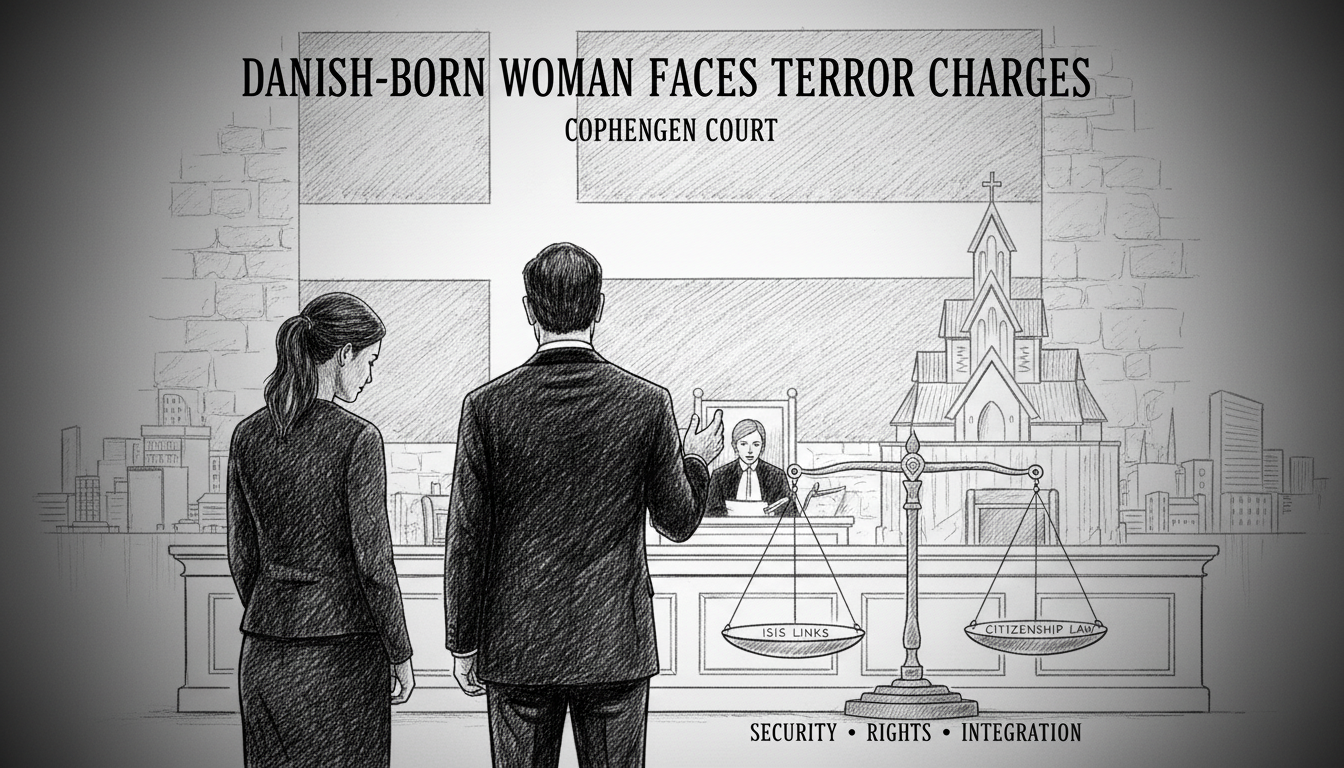
A 28-year-old woman stands accused of preparing terrorist acts for the Islamic State. Danish prosecutors say she received weapons training with the intent to commit terror. The case, unfolding in Copenhagen, touches deep questions about identity, citizenship, and the limits of the Danish welfare system's responsibility.
The woman was born in Denmark but moved to Britain as a young child. She traveled to Syria as a teenager, according to the charge sheet. Authorities evacuated her and her eight-year-old child from the al-Roj camp in Syria last year. Danish police arrested her immediately upon arrival.
Her Danish citizenship was revoked several years ago. This created a complex legal situation. Danish officials initially planned to evacuate only her son, who holds Danish citizenship. The Supreme Court later ruled that separating the child from his mother would violate human rights. This decision forced the state to bring them both to Denmark.
Her defense lawyer, Mette Grith Stage, stated her client denies all charges. "These have been hard years for her," Stage said in a statement. "First in the camp in Syria and then during the pre-trial detention period. She looks forward to getting the case started." The trial is scheduled for seven days, with a verdict expected in late January or early February.
This case is not isolated. It reflects broader challenges within Copenhagen integration efforts and Danish immigration policy. How does a society handle individuals who were born within its borders but later adopt ideologies deemed hostile to its core values? The Danish welfare system is built on a strong social contract. Cases like this test its boundaries and its capacity for rehabilitation.
Statistics on integration often focus on employment and education. They rarely capture these extreme, marginal outcomes. Yet, each case forces a public reckoning. Community leaders in neighborhoods with diverse populations watch these proceedings closely. They worry about broad societal judgments. Municipal social centers work daily to build bridges and prevent radicalization. A high-profile trial can sometimes undermine that patient work.
From a policy perspective, the revocation of citizenship is a powerful tool. It is also a controversial one. It creates stateless individuals, shifting responsibility. The court's intervention on human rights grounds shows the legal system acting as a check on executive power. The coming verdict will answer the immediate legal questions. It will not resolve the deeper societal ones about belonging, forgiveness, and the long road back for those who have gone astray. Denmark's social policy continues to evolve under the pressure of such difficult cases, seeking a balance between security and its humanitarian obligations.