
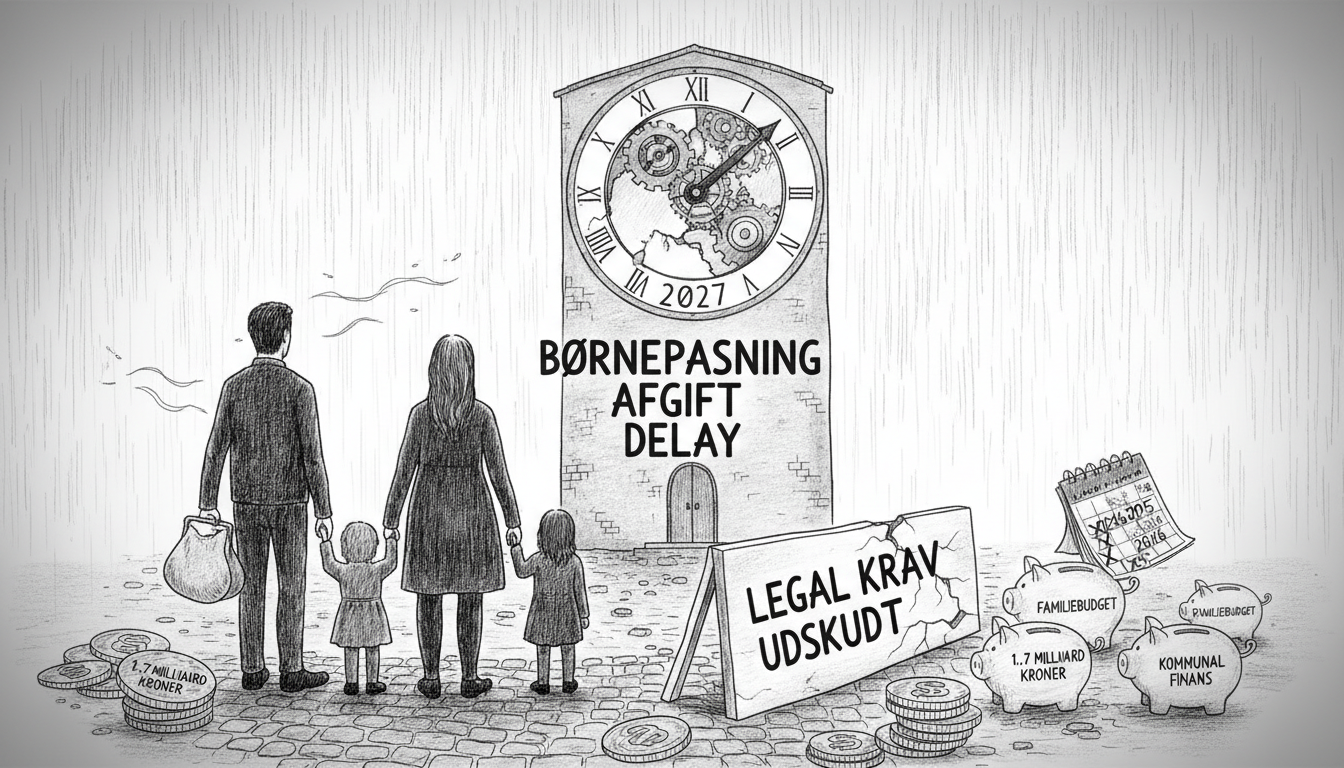
A promised reduction in Danish childcare fees faces a significant delay. This creates immediate financial uncertainty for families and complex budgeting challenges for municipalities across the Øresund region. The policy was a central part of the government's family support package but will not become mandatory for all 98 Danish municipalities until 2027.
Finance Minister Nicolai Wammen initially announced the measure, stating it would strengthen welfare and put more adults in nurseries and kindergartens. He said the average family would save about 3,200 kroner per child annually. The plan involves lowering the maximum parental payment cap from 25 percent to 21.3 percent of total daycare costs.
Now, the legal requirement for this price cut is postponed. An agreement between the government and the national association of municipalities, KL, shows the delay. Children and Education Minister Mattias Tesfaye explained the decision in a written statement. He said the legal mandate is pushed back half a year. In return, municipalities will receive the allocated funds of approximately 1.7 billion kroner within weeks.
KL Chairman Martin Damm said the delay is to find the most suitable model for implementation. He told reporters that municipalities need the money first to calculate new rates. Some funds must also go to private institutions, making it a larger calculation. This highlights the intricate financial logistics behind Danish public service delivery.
The practical result is a patchwork system until 2027. Some municipalities may choose to lower prices voluntarily in 2026. Others will wait until the law forces them to do so. This creates inequality where a family's savings depend entirely on their postal code. Social Democratic children's policy spokesperson Sara Emil Baaring confirmed this uneven rollout. She said some will experience lower prices sooner, but others must wait.
The delay has clear economic implications. For young families, often key consumers in Copenhagen and Aarhus, planned disposable income is affected. This can influence spending on housing, retail, and services. For municipal budgets in cities like Frederiksberg or Odense, early receipt of funds provides liquidity but also administrative complexity. They must decide whether to act early or wait for the legal deadline.
The political context is straightforward. The government promoted this as a tangible benefit for middle-class families. Postponing a core element of that promise risks public perception. It also shows the constant negotiation between state policy and municipal execution in Denmark's decentralized model. The funds are committed, but the timeline for mandated relief is extended, shifting the immediate burden of choice onto local councils.
The legislative process is expected to conclude in spring 2026. The rules will then take full effect the following year. Until then, the state of Danish childcare costs remains in flux, with direct consequences for household economics and local government planning across the country.