
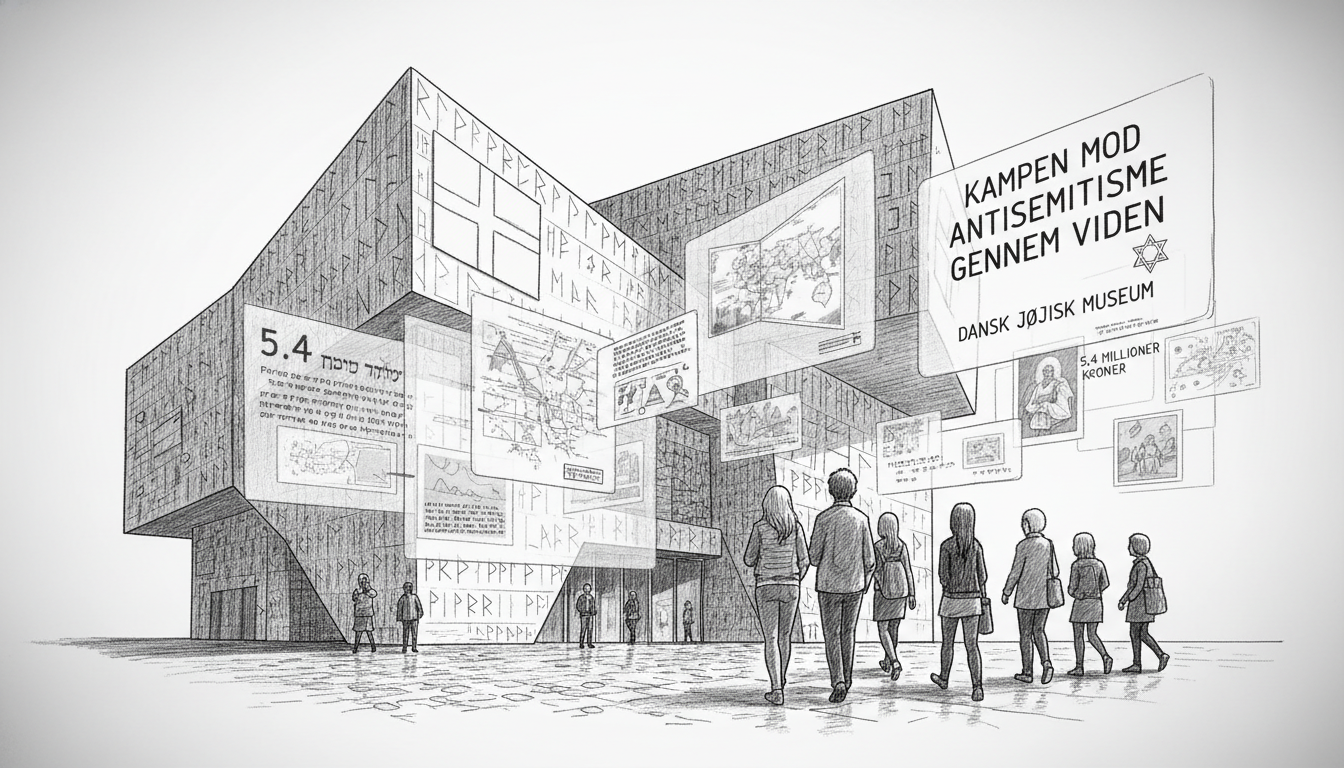
The Danish Jewish Museum in Copenhagen has secured a substantial grant to launch five new educational projects. The funding totals 5.4 million Danish kroner. The goal is to strengthen young people's knowledge of Jewish life and history in Denmark. This initiative forms a key part of a broader, cross-ministerial action plan against antisemitism.
Janus Møller Jensen, the museum's director, emphasized the importance of this work. He said knowledge and information are crucial defenses against prejudice. The funding allows the museum to turn initial ideas into permanent resources. The museum has received consistent government support for such projects for several years.
The new national action plan against antisemitism, presented in early December, includes seventeen specific initiatives. Many of these initiatives target children and young people directly. The museum's projects will run for three years, starting soon. They involve further developing existing educational offerings for primary schools and high schools.
Three of the projects are the museum's own creations. One will focus on Jewish burial grounds and their cultural significance. Another project involves a partnership with the Langelandsfort Cold War Museum. This collaboration will explore the stories of Polish refugees who arrived in Denmark in the 1970s.
A third partnership is with Museum North Zealand. Together, they will create a special exhibition titled 'October 1943'. This immersive experience will use light, sound, and even smell to tell powerful stories. October 1943 marks the month during the German occupation when authorities attempted to arrest Danish Jews. The famous rescue operation that followed is a cornerstone of Danish historical identity.
This funding reflects a sustained policy focus within Danish society news. It highlights how Copenhagen integration efforts and broader Denmark social policy increasingly target prejudice at its roots. The Danish welfare system traditionally intervenes through social services, but education is now seen as equally vital. This move aligns with ongoing debates about Denmark immigration policy and social cohesion, where understanding minority histories is deemed essential.
From my perspective covering Danish society, this is a meaningful but complex development. Directing resources to cultural institutions makes sense for long-term change. Museums can reach schoolchildren in ways that political statements cannot. Yet, the real test lies in execution and reach. Will these programs connect with diverse youth in all Danish municipalities, including those in social housing areas where community centers are vital? The project's success depends on its ability to move beyond central Copenhagen and engage nationwide.
Statistics on integration often highlight employment and language. Education about shared history and combating antisemitism is a different, softer metric. Its impact is harder to measure but no less important for social trust. The collaboration between museums is a smart use of existing networks. It leverages local expertise across regions, which is a practical approach within the Danish system.
The clear political motivation here is to preempt social division by educating the next generation. The economic reality is that 5.4 million kroner is a serious commitment, signaling this is a priority. The obvious implication is that authorities view antisemitism as a persistent threat requiring proactive, cultural counter-measures. This is a shift from reactive policy to preventative cultural investment.