
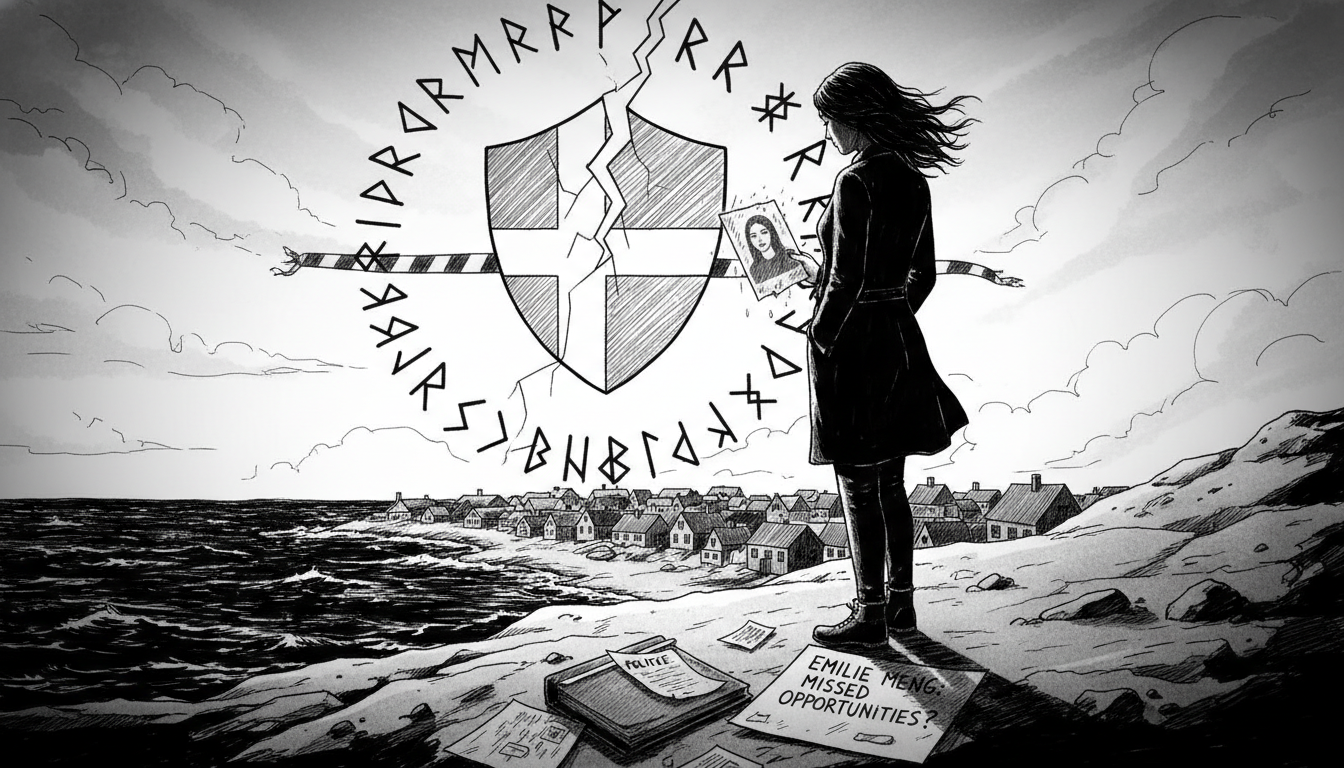
A new report from Danish police has acknowledged multiple failures in the initial investigation into the murder of 17-year-old Emilie Meng. The admission comes years after the crime and has been met with mixed emotions by the victim's family. The case raises profound questions about police procedures and the protection of young people in Denmark's welfare system.
Emilie Meng disappeared from Korsør Station in the early hours of a July morning. Her mother reported her missing later that day. Police initially classified the case as a missing person, a standard procedure for young people not returning from a night out. A recent internal review by the South Zealand and Lolland-Falster Police District now states too much time passed before a properly organized homicide investigation began.
Mai-Brit Storm Thygesen, the legal counsel for Emilie Meng's mother, spoke about the report's impact. She said the acknowledgment of errors validates the mother's long-standing criticism. The mother had publicly criticized police handling of the case in a documentary. Thygesen stated this situation must never happen again.
Phillip Westh was later convicted and sentenced to life in prison for Emilie Meng's murder and crimes against two other girls. His capture, however, came only after he kidnapped a 13-year-old girl and held her for 27 hours. Investigators also linked him to an earlier attempted abduction of a 15-year-old girl in Sorø.
The review highlights a specific investigative lapse. A witness came forward a year after the disappearance. She reported seeing a man carrying something from a car at Regnemarks Bakke, the same area where Emilie's body was found months later. The witness recalled the license plate might have started with the letter 'B' and was not a standard EU plate.
Police investigators did not search for vehicles with a 'B' prefix in the national registry. They deemed the number of possible matches too large. It was later revealed the perpetrator owned a white Hyundai i30 with an EU license plate beginning with 'B'. A search for light-colored Hyundais with a 'B' in the Korsør area would have yielded just seven results. One belonged to Phillip Westh.
The report concludes this cross-reference was not made during the investigation. If it had been, it would have directed attention to the perpetrator earlier. Thygesen expressed deep difficulty with this revelation. She called it one of the most terrible cases in Danish legal history. She noted the only reason he was found was because he struck again.
This case touches directly on core aspects of Danish society news and social policy. It tests public trust in the protective functions of the state. Denmark is known for its strong welfare system and high levels of safety. Failures in such a high-profile murder investigation challenge that narrative. They prompt discussions about resource allocation, training, and accountability within law enforcement.
The legal counsel argues the matter is not settled. She stated it is insufficient to merely conclude mistakes were made. There must be consequences for errors of this magnitude within the police force. She did not specify what those consequences should be. The report's credibility is also questioned because the same police district investigated its own actions. Thygesen said an external investigation would have been preferable.
For international observers, this story reveals the complex reality behind Denmark's social model. The nation's integration policies and social safety nets are often praised. Yet this tragedy shows systemic vulnerabilities can exist even in well-functioning societies. It underscores that procedural failures can have devastating human costs, regardless of a country's overall stability. The case leaves a lingering question about what might have been prevented with a more thorough initial response. It is a sobering reminder for Copenhagen integration efforts and national social policy that trust is built on consistent competence, not just good intentions.