
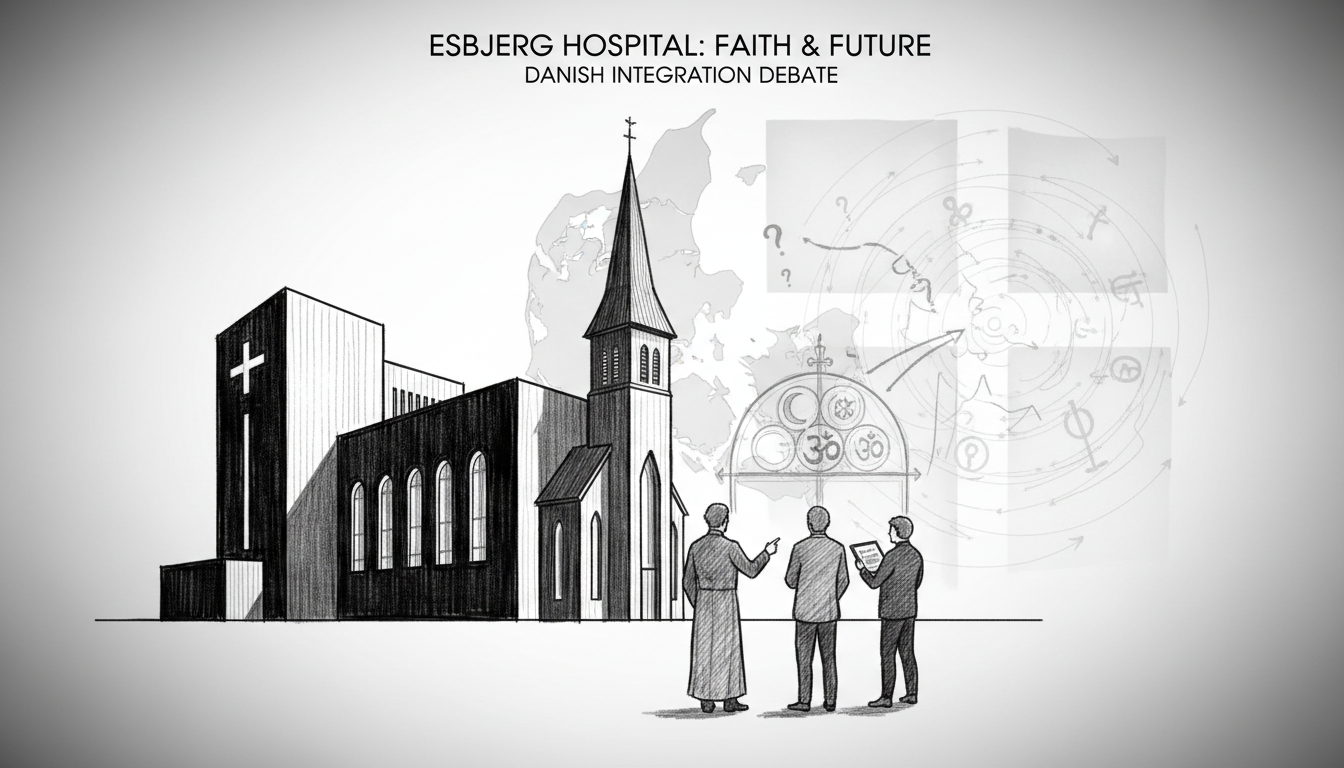
A new chapel for the Evangelical Lutheran Church will open at Esbjerg Hospital. This development has sparked a quiet but significant debate. Should the hospital also create a dedicated multi-faith room for non-Christian religious practice? The question touches a core nerve in Danish society news and ongoing discussions about Copenhagen integration and national identity.
The hospital's decision currently favors the established church. The Folkekirken, as Denmark's state church, holds a traditional place in public institutions. Many Danish municipalities follow similar protocols in schools and civic buildings. This policy reflects the deep historical ties between church and state. Yet Denmark's demographic landscape has shifted considerably in recent decades.
Community leaders from Muslim and other faith groups in Esbjerg have raised the issue. They ask for equitable access to quiet spaces for prayer and reflection. A local imam noted the growing need in a statement to regional officials. He said families from diverse backgrounds use the hospital. They seek the same spiritual comfort during difficult times. This mirrors conversations in social centers across Jutland.
Denmark social policy often grapples with balancing tradition and inclusion. The welfare system is designed for universal access. But its cultural framework remains distinctly Danish. Statistics on integration show varied outcomes. For instance, participation in adult education programs by non-Western immigrants has risen. Yet gaps in civic engagement persist. The hospital space debate is a microcosm of this larger tension.
Officials at the Region of Southern Denmark, which runs the hospital, are reviewing the request. They must consider practical logistics and symbolic weight. A dedicated multi-faith room requires allocation of scarce square meters. It also represents a formal acknowledgment of religious pluralism. This is a sensitive topic within Denmark immigration policy discussions.
The core dilemma is clear. How does a nation with a strong state church accommodate diverse religious practices in its public sphere? Some argue the existing chapel can serve all. Others see a need for a neutral space. This avoids any perception of favoring one belief system. The debate in Esbjerg is not isolated. Similar discussions occur in Aarhus and Copenhagen hospitals.
Adding a multi-faith room seems a simple logistical solution. But in Denmark, these decisions carry heavy cultural meaning. They signal who belongs within the Danish welfare system and on what terms. The outcome in Esbjerg may set a precedent for other regional hospitals. It will show whether Danish institutional practice can adapt to its changing population. The answer will resonate far beyond the hospital's walls.
Honest analysis suggests the resistance is rarely about space alone. It connects to deeper anxieties about cultural change and national identity. Proponents see inclusion as a practical need and a moral imperative. The hospital's final decision will be a small but telling data point. It will measure the distance between official policy and lived reality for many residents.