
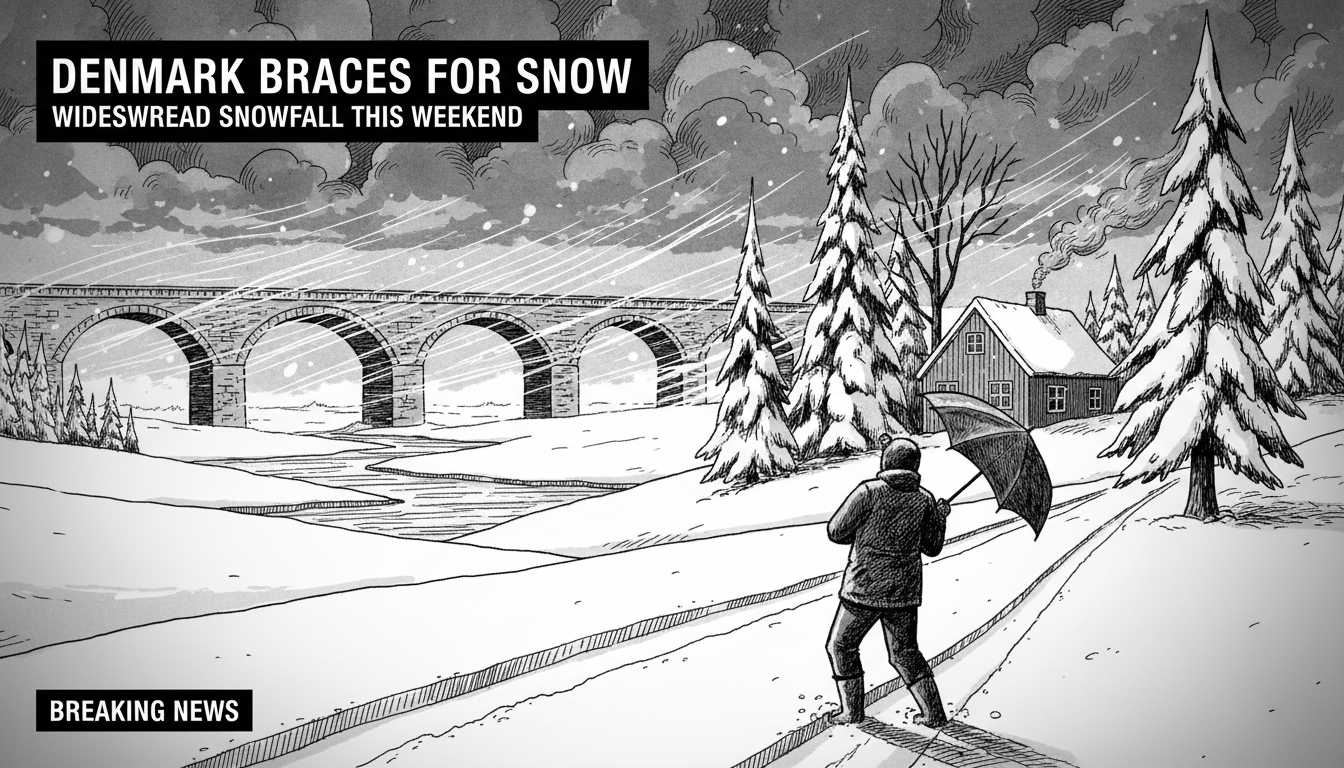
Meteorologists predict significant snowfall across Denmark this weekend, with southern regions expected to receive up to ten centimeters of snow. Northern Jutland will likely remain unaffected by the weather system moving in from the southwest. The Danish Meteorological Institute warns travelers to prepare for potentially slippery roads during Sunday night and Monday morning.
Meteorologist Mette Wagner detailed the expected progression. "The system will move across the country overnight," she explained. "It will reach Central and Western Zealand, Funen, and large parts of Zealand during the night hours." Coastal areas along the west coast may experience both snow and sleet, while southern regions face the highest accumulation.
The snow originates from a frontal system moving from England toward Denmark. This weather pattern represents a typical late autumn transition that often affects Scandinavian countries. Denmark's position between the North Sea and Baltic Sea makes it particularly susceptible to such maritime weather systems.
Local variations will be considerable across the country. Southern Jutland could see up to ten centimeters locally, while Northern Jutland will probably escape the snowfall entirely. The snow may create hazardous driving conditions during the Monday morning commute. Meteorologists advise extra patience and earlier departure times for Monday's traffic.
The snowy conditions will be relatively short-lived. "Warmer air will move in during Monday," Wagner confirmed. "This will replace the snow with sleet and rain as the day progresses." She noted that quick-acting residents might manage a snowball fight before the transition occurs during the morning hours.
This weekend's weather represents just the beginning of an active pattern. Meteorologists anticipate another significant shift later in the week. By Thursday, temperatures across Denmark could reach five to ten degrees Celsius nationwide. The warmer conditions will bring cloudy skies and periodic rain instead of snow.
For international readers unfamiliar with Danish geography, the country consists of the Jutland peninsula and numerous islands, including Zealand and Funen. The varying impacts across regions demonstrate how Denmark's geography creates microclimates. Southern regions typically experience more continental influences, while northern areas receive more maritime weather patterns.
Danish authorities have extensive experience managing such weather transitions. The country's infrastructure handles snow effectively, though commuters should always exercise caution during the first significant snowfall of the season. Road treatment crews typically respond quickly to maintain safe travel conditions.
The coming week's weather rollercoaster reflects Denmark's transitional climate position between continental Europe and Scandinavia. Residents can expect both winter-like conditions and near-spring temperatures within just a few days. Such rapid changes are not uncommon during Danish autumn months as the country moves toward winter.