
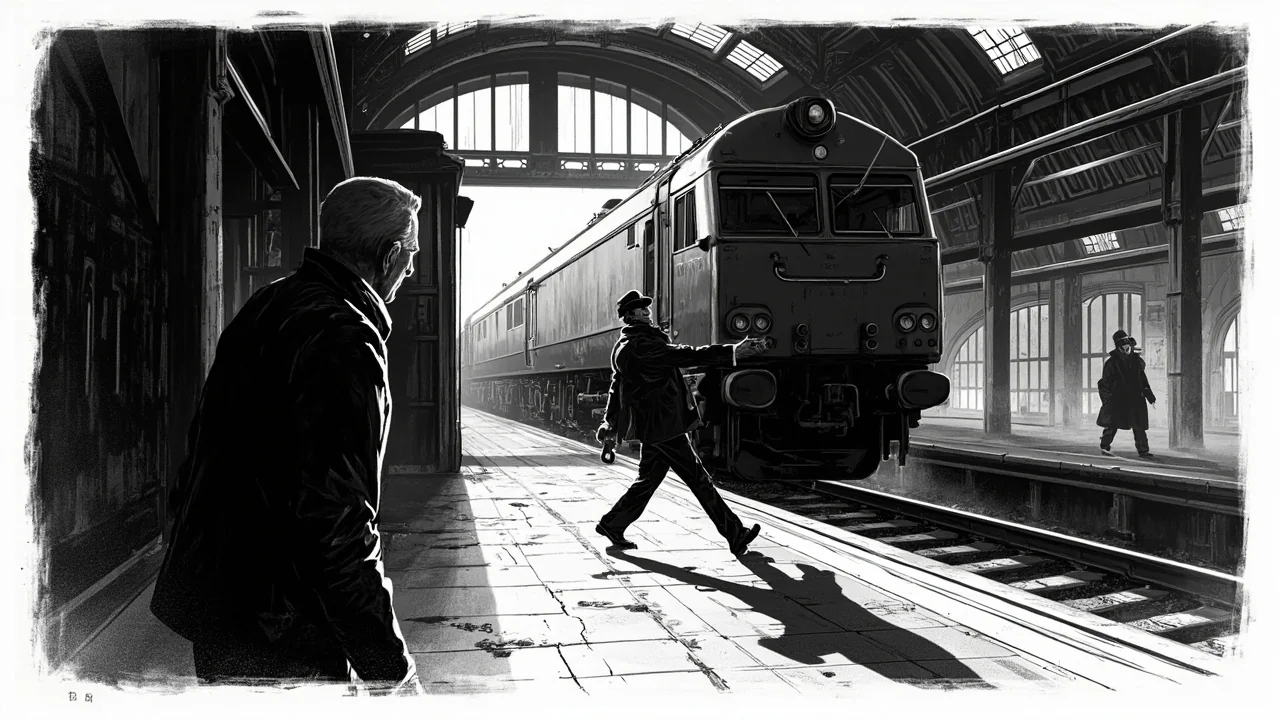
Denmark police are investigating a violent assault at Middelfart Station where a man was pushed into the path of a moving freight train. The incident, described by authorities as a 'tumult between two persons,' left the victim seriously injured but in stable condition, sparking urgent questions about public safety and conflict resolution in communal spaces.
Thursday evening's chaos unfolded on the platform as a physical altercation escalated. According to a police duty manager, one of the men involved gave the other 'a proper shove' as a freight train passed through. The victim was thrown against the side of a freight car and flung back onto the platform. The assailant fled the scene before officers arrived, leaving investigators to piece together the events from security footage and witness accounts. Fyns Police stated the victim is now out of life-threatening danger, a relief amidst the brutality of the act.
A Platform Turned Danger Zone
The attack transforms a routine transit hub into a scene of potential homicide. Train stations, especially in regional towns like Middelfart, are central to Danish daily life. They are spaces of movement and waiting, typically associated with order under the country's renowned social contract. This violence breaches that fundamental expectation of security. Police have not confirmed an arrest, stating their investigation continues to clarify the precise circumstances and interview involved parties. The deliberate use of the moving train as a weapon marks a chilling escalation from a fistfight to attempted murder.
The Anatomy of a 'Tumult'
Police terminology matters. By defining the event as 'tumult,' authorities frame it as a violent public disturbance involving mutual conflict. This initial classification comes from a review of station surveillance video. It suggests a chaotic, reciprocal fight rather than a premeditated, one-sided ambush. However, the act of shoving a person into the path of a train is an unequivocally grave action that will dominate the legal proceedings. Danish criminal law treats such acts with extreme severity, with potential charges ranging of grievous bodily harm to attempted manslaughter, depending on intent and outcome.
Safety and Surveillance in Public Transit
This incident immediately tests the security protocols of Denmark's public transport network. Stations are monitored, but cameras record crimes; they do not prevent them. The attack raises practical questions about staffing, lighting, and the presence of security personnel at regional stations, especially during evening hours. While major hubs like Copenhagen Central Station have a visible police presence, resources in smaller municipalities are stretched thinner. The response hinges on whether this is an isolated personal conflict or a symptom of broader social friction spilling into public areas.
The Social Contract Under Stress
As a reporter focused on integration and society, I see events like this through a dual lens. First, is the immediate tragedy and criminal act. Second, is what it signals about the health of communal spaces. Danish society functions on a high degree of trust and a shared commitment to non-violence. A violent tumult on a station platform fractures that trust. It makes everyone waiting for a late train subconsciously assess their surroundings, eroding the unspoken security that is a cornerstone of the Danish welfare model. When public spaces feel unsafe, the social fabric itself is damaged.
Community leaders often stress that integration and social cohesion are not just about language classes and job contracts. They are about belonging and resolving conflicts without violence. This incident, regardless of the backgrounds of those involved, is a failure of that basic premise. Local social centers and municipal conflict mediators play a crucial role in addressing the tensions that can lead to public violence, but their work is often preventative and goes unseen until a crisis occurs.
A Long Investigation Ahead
Fyns Police have been tight-lipped, refusing further comment to protect the investigation. The coming days will involve identifying and apprehending the suspect, conducting forensic analysis, and interviewing witnesses. The victim's statement will be critical. The legal process will be meticulous, as Danish courts require clear evidence to establish intent behind the push. Was it a reckless act during a struggle, or a deliberate attempt to kill? The answer lies in the details police are now gathering.
The Ripple Effects on a Community
For the citizens of Middelfart, this is not just a news brief. It is a traumatic event that localizes abstract fears. Parents might think twice about letting teenagers wait at the station alone at night. Commuters may become more wary. The municipality's sense of itself as a safe, close-knit community is challenged. Recovery requires more than a police resolution; it needs transparent communication from authorities and perhaps community dialogue to restore a sense of collective safety. The local council and social services may need to assess if there are underlying, unresolved tensions in the area that require proactive engagement.
This attack is a stark reminder that the Danish welfare system, while robust, cannot legislate away every spark of human conflict. It highlights the constant work required to maintain safe public spheres. The system's strength will be shown in its response: a thorough police investigation, appropriate legal consequences, and community support for those traumatized. The hope is that this becomes a singular, shocking event, not a precedent. The reality is that it forces a necessary, uncomfortable conversation about violence, accountability, and how we share the spaces that connect us all.