
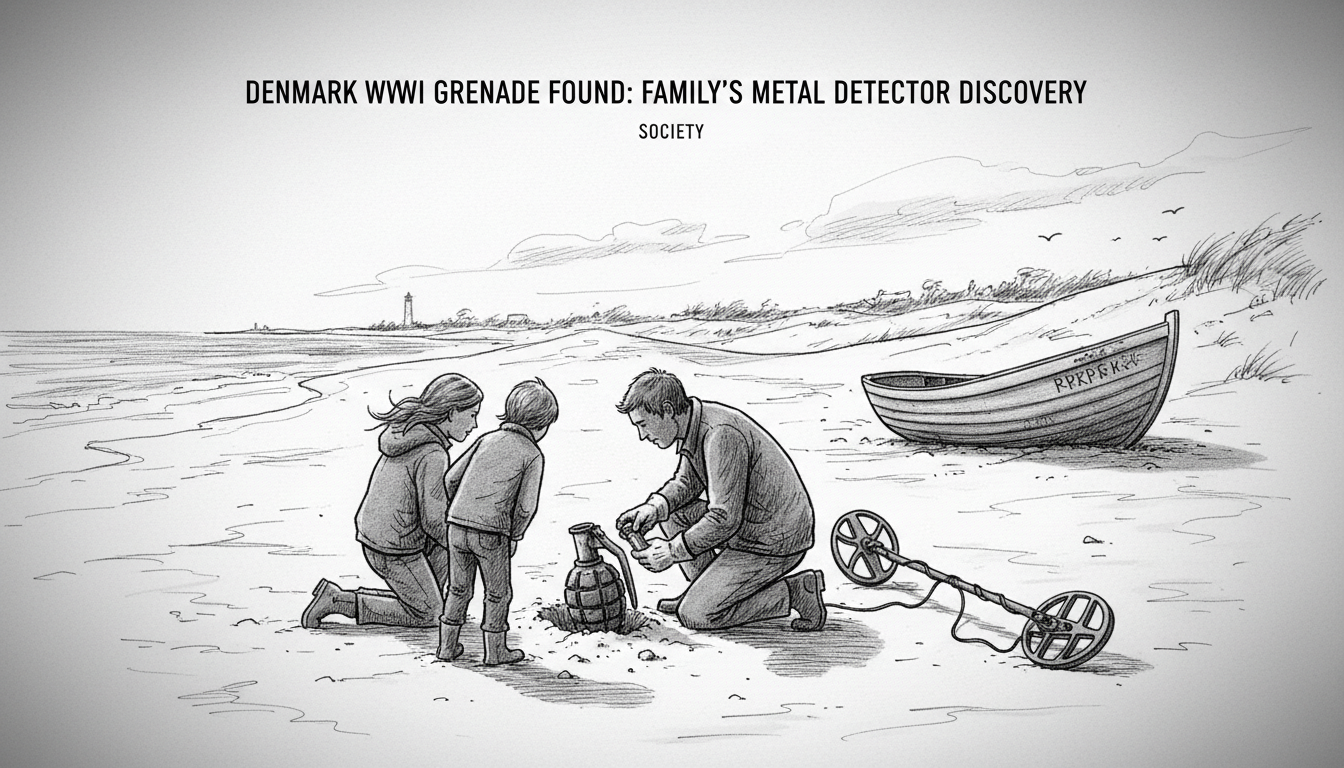
Denmark unexploded ordnance from World War II remains a hidden danger along its coastlines. A mother and son's weekend metal detecting trip on Skæring Strand north of Aarhus turned serious when their device signaled a buried object. What they unearthed was a heavily rusted, potentially live 40mm grenade, likely dormant in the sand since the 1940s. Their immediate call to police triggered a security response, closing off a section of the popular coastal area and summoning the military's bomb disposal experts. This incident is not an isolated historical footnote but a tangible reminder of the war's enduring physical legacy beneath Denmark's serene landscapes.
A Routine Hobby Uncovers a Dangerous Past
The family was engaging in a perfectly legal and popular Danish pastime. Metal detecting is widespread in Denmark, governed by rules that require permission from landowners and respect for archaeological finds. On this Friday afternoon, the hobby shifted from searching for lost coins or relics to confronting a piece of live history. After digging up the object and recognizing its dangerous nature, they wisely stepped back and contacted Østjyllands Police. Vagtchef Mikkel Møldrup confirmed the family’s cautious approach was correct. “It is something that has been fired. So we suspect it is just a lump of iron. But we are not sure there is nothing inside,” he said in a statement. His initial assessment pointed to a very old piece of ammunition, completely rusted and potentially dating back to World War II.
The Swift Response of Denmark's Security Protocol
Østjyllands Police moved quickly to secure the green area at Skæring Strand. They established a cordon and called in the Danish Defence's Explosive Ordnance Disposal (EOD) unit. This specialized team handles hundreds of calls annually across Denmark related to old munitions. The police communicated clearly with the public, using social media platform X to announce that the EOD would conduct a controlled detonation of the object. They assured residents that a loud bang would be heard but there was no danger as long as people respected the barriers. This efficient, transparent protocol highlights Denmark's established procedures for managing the unpredictable discovery of historical ordnance. The incident did not spark a criminal investigation, as it was treated as a hazardous materials cleanup of a decades-old artifact.
The Enduring Legacy of War Along Denmark's Coast
Skæring Strand’s location is key to understanding the find. During the Nazi occupation from 1940-1945, Denmark's coastlines, particularly near major ports like Aarhus, were heavily fortified as part of the Atlantic Wall defenses. Military exercises, defensive preparations, and naval activity left a significant amount of material buried or lost. While major bomb finds in cities like Copenhagen make headlines, smaller ordnance like grenades, shells, and mortars are routinely discovered in coastal dunes and fields. These items, though corroded, can remain highly unstable. The chemical compounds within can become more sensitive with age, making them unpredictable and dangerous to move. This grenade’s discovery underscores a continuous, low-level risk that Danish authorities and certain hobbyists implicitly accept.
The Blurred Line Between History and Hazard
This event sits at a complex intersection. For historians and archaeologists, such finds are physical evidence of a defining national trauma. For the police and EOD, they are a public safety hazard requiring routine but risky disposal. For the growing community of metal detectorists, they represent the most serious potential consequence of their hobby. Danish law tries to balance these interests, allowing public engagement with history while mandating responsibility. Finders are obligated to report objects of potential historical or dangerous significance. The system relies on public cooperation, as demonstrated by the family at Skæring Strand. Their correct actions prevented a potential tragedy and turned a dangerous object into a controlled disposal operation.
A Controlled Bang and a Return to Normal
Shortly before 4:30 PM, the EOD team carried out the planned controlled explosion. The loud blast echoed along the strand, a sharp, modern punctuation mark to a story that began eighty years prior. With the threat neutralized, the police cordon was lifted, and the area returned to its usual state—a place for walks, play, and leisure. The family, though undoubtedly shaken, provided a model of civic responsibility. Their story serves as a crucial public reminder: Denmark's soil still holds echoes of the war, and caution is the first tool to unpack them. As long as rusted metal lies hidden in coastal sands, the protocols tested that Friday will remain a necessary part of Denmark's peaceful present.
The discovery prompts a broader reflection on how societies manage the lingering physical scars of conflict. Denmark has integrated this reality into its safety frameworks, but each find is a potent, localized shock. It momentarily bridges the gap between textbook history and lived experience, asking citizens to be custodians of a dangerous past. For a few hours on Skæring Strand, a community’s quiet Friday was punctuated by the procedures of history, a controlled detonation ensuring that the only thing left from the war is the story itself.