
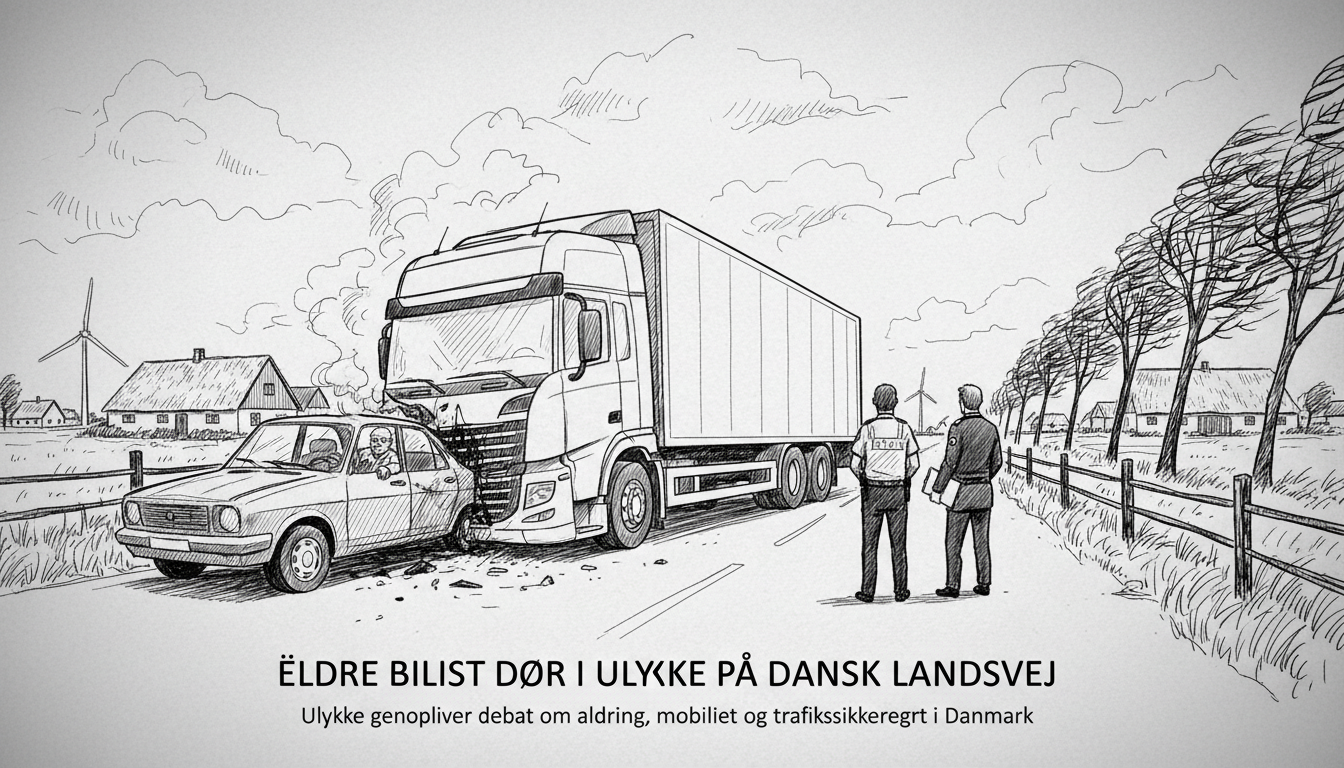
A 95-year-old man has died following a traffic collision on a main road near Borris in western Denmark. The accident occurred at an intersection between Arnborgvej and Storegade. Police reported the incident took place on Thursday morning. Officials said the elderly driver overlooked his duty to yield. He then collided with a truck. The man was from the local area. Authorities have notified his next of kin.
This tragic event highlights a growing concern in Danish society. The nation's population is aging rapidly. More senior citizens are retaining their driver's licenses. This creates complex questions for road safety and personal independence. Denmark's welfare system traditionally supports elderly citizens living at home. This often requires personal mobility. The accident near Borris forces a difficult conversation. How does society balance safety with the autonomy of its oldest members?
Local police provided the basic facts. A duty officer confirmed the timeline. The crash was reported just after half past ten in the morning. The investigation points to a failure to yield. Such accidents are not uncommon at rural intersections. Danish country roads often have high speed limits. They mix local traffic with through traffic. The junction where this happened serves as a key route. It connects smaller communities to larger towns in the region.
This incident connects to broader Danish social policy. The country has strict rules for driver's license renewals for seniors. Drivers over the age of 70 must renew their license every few years. The process includes a medical declaration. It does not typically require a practical driving test. Some experts argue this system relies heavily on self-assessment. The tragic outcome in Borris may renew debates about mandatory testing for older drivers. Other Nordic nations have similar discussions. Sweden, for instance, has explored more frequent checks.
Community leaders in rural areas often express a dual concern. They recognize the need for safety. They also understand that taking away a driver's license can mean social isolation. In regions with limited public transport, a car is a lifeline. It provides access to groceries, healthcare, and social activities. Municipalities run social centers and activity hubs. These are vital for combating loneliness among the elderly. Yet they still require a way to get there. The loss of mobility can accelerate a decline in health and well-being. This creates a genuine policy dilemma.
Statistics on aging and transport in Denmark paint a clear picture. The number of licensed drivers over the age of 85 has increased in recent years. At the same time, accident data shows that very old drivers have a higher risk per kilometer driven. Their accidents often occur at intersections. They involve errors like misjudging gaps or failing to yield. The policy response is not simple. A blanket ban would be seen as discriminatory and harmful. The current system emphasizes personal responsibility and medical fitness.
What happens next? The police investigation will conclude its factual findings. The local municipality's social services may engage with the family. Broader policy discussions will likely continue in transport and social care committees. For international observers, this story is a window into the challenges of an advanced welfare state. Denmark prides itself on integration and care for all citizens. This includes its aging population. Yet integration means more than just new immigrants. It means ensuring all generations can participate in society safely. The accident on Arnborgvej is a somber reminder that policy is about real people. It is about the difficult balance between protection and freedom on the roads of everyday life.