
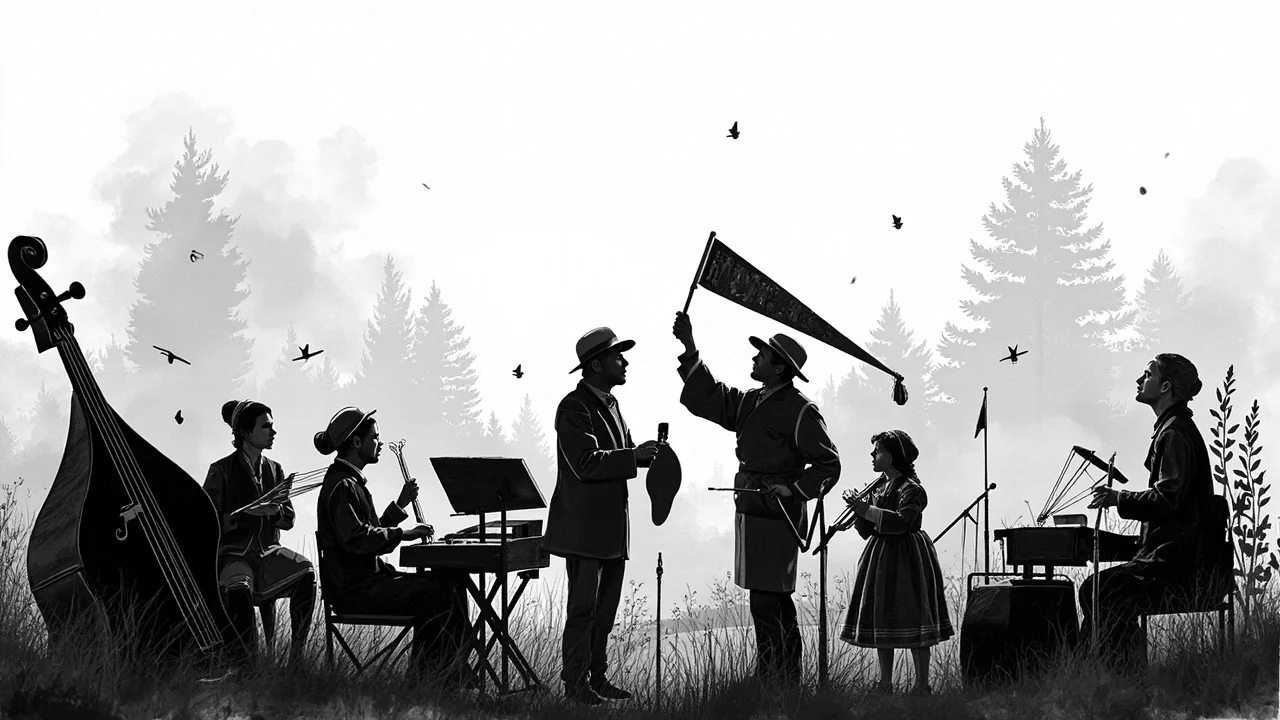
Finland’s tradition of communal music faces a quiet crisis in the town of Saarijärvi, where the number of people learning instruments has fallen at a worrying rate. The shortage is particularly acute for wind instrument players, but there is also growing need for string and even piano students. The declining enrolment at the local Viitasalo Institute has concerned the institute’s leadership, the municipal education board, and the wider music community. Even the local civic institute no longer has the same number of individual students for subjects other than singing, according to music teacher Vesa-Matti Laaksonen.
Vesa-Matti Laaksonen, the civic institute’s head music teacher, points to the Saarijärvi Wind Orchestra as a prime example. The orchestra is currently experiencing a positive period but still desperately needs new players to secure its future. The decline is not about a lack of interest in music itself, but rather the significant threshold to begin formal instrument studies. The cost of instruments and the commitment of lessons can deter potential learners, especially children and young adults in a small municipality.
A Community-Wide Effort for a New Solution
To tackle this problem, Vesa-Matti Laaksonen has developed an idea for a free instrument trial program. The concept is designed specifically to lower the barrier to entry. It allows individuals, particularly the young, to try playing an instrument without any initial financial investment or long-term obligation. The plan has not been created in isolation. Laaksonen has been refining the idea alongside Timo Tikka, the rector of the local institutes, and Markku Korpela, the conductor of the Saarijärvi Wind Orchestra.
This collaborative approach extends to the organizations needed to bring the trial to life. An agreement has been reached between the institutes’ rector, Timo Tikka, the board administering the Musiikkineuvos Väinö Viitasalo foundation (managed by the Laulumiehet association), the Saarijärvi Wind Orchestra, and the Saarijärvi parish. This broad coalition underscores the shared concern across civic and cultural institutions about the erosion of practical music skills in the community. Each partner brings a necessary resource, whether it’s pedagogical expertise, funding potential, instruments, or performance opportunities.
Implementing the Free Trial Model
The practical workings of the free instrument trial are central to its potential success. While the source material does not detail every logistical step, the framework involves providing access to instruments—likely focusing on the wind instruments needed by the local orchestra—at no cost to the participant. The trial period would allow a person to learn the basics, understand the physical demands of the instrument, and see if they enjoy the process, all under the guidance of a teacher like Laaksonen.
The involvement of the Saarijärvi Wind Orchestra is a critical component. It offers a clear pathway for successful trial participants. A student who thrives on the clarinet or trumpet during the trial could naturally progress to playing with the orchestra, filling its vacant seats. This creates a direct pipeline from beginner to community ensemble member, addressing the shortage head-on. The parish’s involvement may relate to providing space for lessons or rehearsals, a common practice in Finnish municipalities where community spaces are multipurpose.
The Broader Context of Finnish Music Education
This local initiative in Saarijärvi touches on a national conversation in Finland about the accessibility of cultural education outside major urban centers. Finland has a strong heritage of music institutes and civic activism in the arts, but rural areas often face disproportionate challenges. Population decline, centralized resources, and changing leisure habits among the young all contribute to the strain on traditional models. The situation at the Viitasalo Institute reflects a nationwide trend where smaller music schools must fight to maintain their student base.
The model being tested in Saarijärvi is noteworthy because it is proactive and partnership-driven. Instead of simply lamenting the decline, the local actors are pooling their resources to create a new, low-risk entry point. It acknowledges that the old method of expecting families to immediately invest in instruments and tuition may no longer be sufficient in today’s economic and social climate. By removing the first major hurdle—the cost and commitment of the instrument itself—the community hopes to rekindle a latent interest in playing.
Questions and Future Prospects
The success of the free trial program will depend on several factors. Community uptake is the first unknown, will enough children and adults come forward to try an instrument? Secondly, the quality and sustainability of the teaching support during the trial period will be crucial to converting interest into lasting skill. Finally, the long-term funding and instrument maintenance for such a program will need secure planning beyond the initial launch phase.
If the Saarijärvi model proves successful, it could serve as a template for other small towns and municipalities across Finland facing similar struggles. The collaborative framework between the education institute, a cultural foundation, a performing ensemble, and the local church is a replicable structure of community asset mobilization. The program’s ultimate goal is not just to fill seats in the wind orchestra but to reinvigorate the entire ecosystem of amateur music-making, ensuring that the skill and joy of playing an instrument does not fall silent in rural Finland. The coming months will be a telling test of whether a shared concern can be translated into a sustainable solution, one new player at a time.