
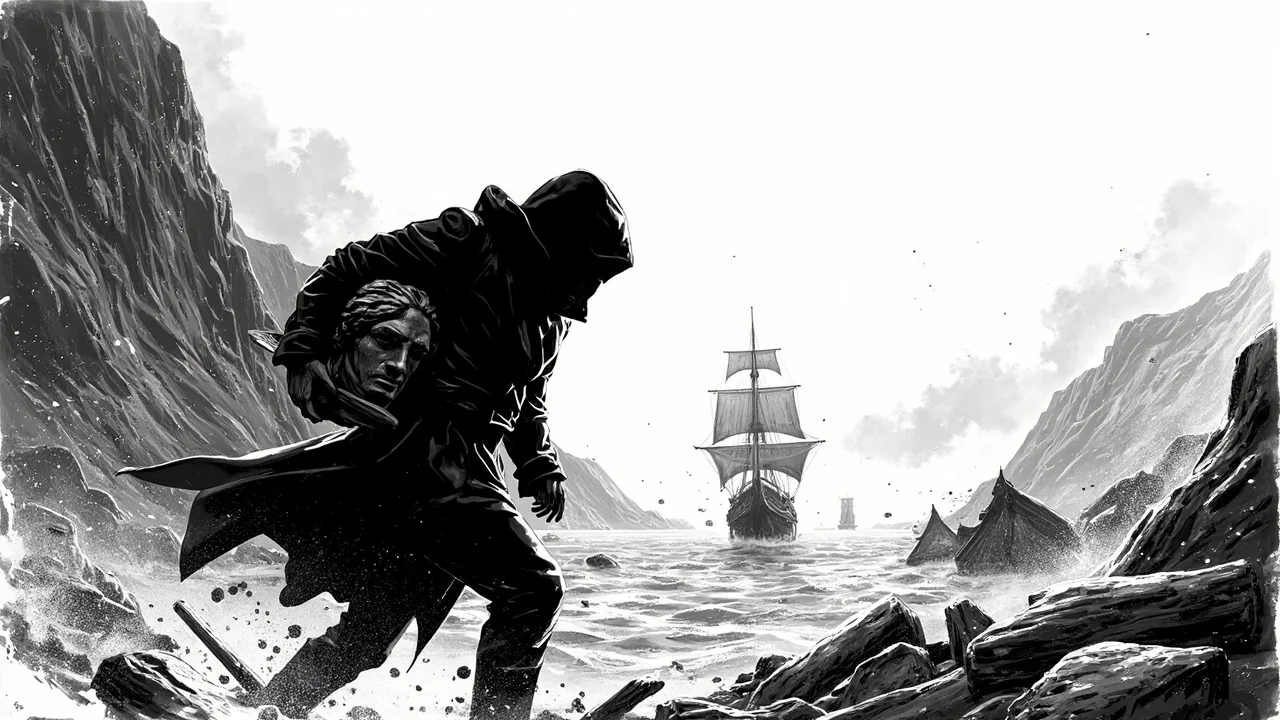
Norway’s cultural reckoning with a problematic literary figure has escalated into a crime after the bronze bust of poet Hans Hyldbakk vanished overnight from its plinth outside Surnadal’s municipal building. The theft, reported to police Sunday, comes just days after local politicians voted to remove the monument in response to historical abuse allegations against the late writer, leaving the community grappling with how to handle its contested heritage.
A Disputed Monument Removed by Force
Surnadal’s municipal director, Lars Inge Kvande, received the alert about the missing bust around noon on Sunday. Police are investigating the scene, though it remains unclear how the heavy bronze head was detached. Kvande stated he could not confirm whether tools like an angle grinder were used. “This is theft of municipal property. I take it seriously,” Mayor Hugo Pedersen of the Centre Party said. He emphasized that while the bust was destined for removal, the decision was for it to be safely stored, not stolen. Pedersen now hopes those responsible will return the bust undamaged.
The local council had formally decided earlier last week to remove the bust following abuse allegations against Hyldbakk, who died 24 years ago. The plan was to preserve the head in storage while leaving the empty stone plinth in place. That official process was preempted by persons unknown, turning a municipal decision into a criminal act. “It has been a demanding case, but there is no reason for it to result in someone taking the law into their own hands and committing theft,” Kvande told local media.
The Legacy of a Local Icon Under Scrutiny
Hans Hyldbakk was long celebrated as Surnadal’s literary pride. He is best known for the poem "Vårsøg," which inspired a namesake festival held for years at his donated homestead, Kleiva. His legacy as a benefactor, having bequeathed his home and fortune to the municipality, made him a revered figure. That legacy was fundamentally challenged in the autumn of 2025 when Mayor Pedersen went public with abuse notifications concerning Hyldbakk, prompting the commune to establish a dedicated helpline for potential victims.
The subsequent political debate culminated in last week's vote, highlighting a deep community divide. While the council agreed the bust should go, disagreements lingered about the plinth. The theft has further polarized the conversation, forcing a swift police response to an act of cultural vandalism.
Political Reactions Condemn the Theft
Local politicians across the spectrum have denounced the illegal removal, even those who supported the monument's complete elimination. FrP politician Nils Petter Tonning argued that both the bust and its plinth should have been officially removed. However, he explicitly distanced himself from the crime. “They should not have done it. It is completely wrong to commit such theft,” Tonning said. He speculated the bust would likely reappear, suggesting it was probably “in a garage somewhere,” a comment he made with a laugh.
Mayor Pedersen reinforced the official stance, framing the incident as straightforward theft of public property. The municipality has formally reported the crime, and police are conducting their investigation. The act has complicated a painful but deliberate administrative process, injecting illegality into a sensitive community dialogue about history, memory, and accountability.
A Community's Painful Reassessment
The case of Hans Hyldbakk’s bust underscores the complex challenges Norwegian communities face when reappraising historical figures. Surnadal’s experience mirrors national debates happening in town squares and cultural institutions across the country, where long-held narratives are being questioned. The decision to remove the bust was an attempt to navigate this difficult terrain through official channels and democratic deliberation.
Its theft represents a rejection of that process, removing not just a bronze sculpture but also the opportunity for a communal, albeit painful, resolution. The empty plinth now stands as a stark symbol of a process interrupted, a conversation left unresolved, and a crime that has yet to be solved. Police presence at the site marks a shift from a cultural dispute to a criminal investigation, with authorities tasked with finding who took the bust and where it is now.
What Happens Next
All attention now turns to the police investigation and the possible return of the bust. The municipality’s original plan—to store the removed head—remains, but its execution now depends on the artifact's recovery. The incident has likely intensified local discussions about how to physically handle the remnants of Hyldbakk’s legacy, including the future of the plinth and the Vårsøg festival.
The theft of Hans Hyldbakk’s bust is more than a simple property crime. It is an act of intervention in a live and aching public debate. It raises difficult questions about who gets to control a community's physical history, especially when that history becomes a source of shame and pain rather than pride. As Surnadal waits for answers from the police, the empty space outside the town hall speaks volumes about a nation wrestling with how to remember its past, legally and respectfully.