
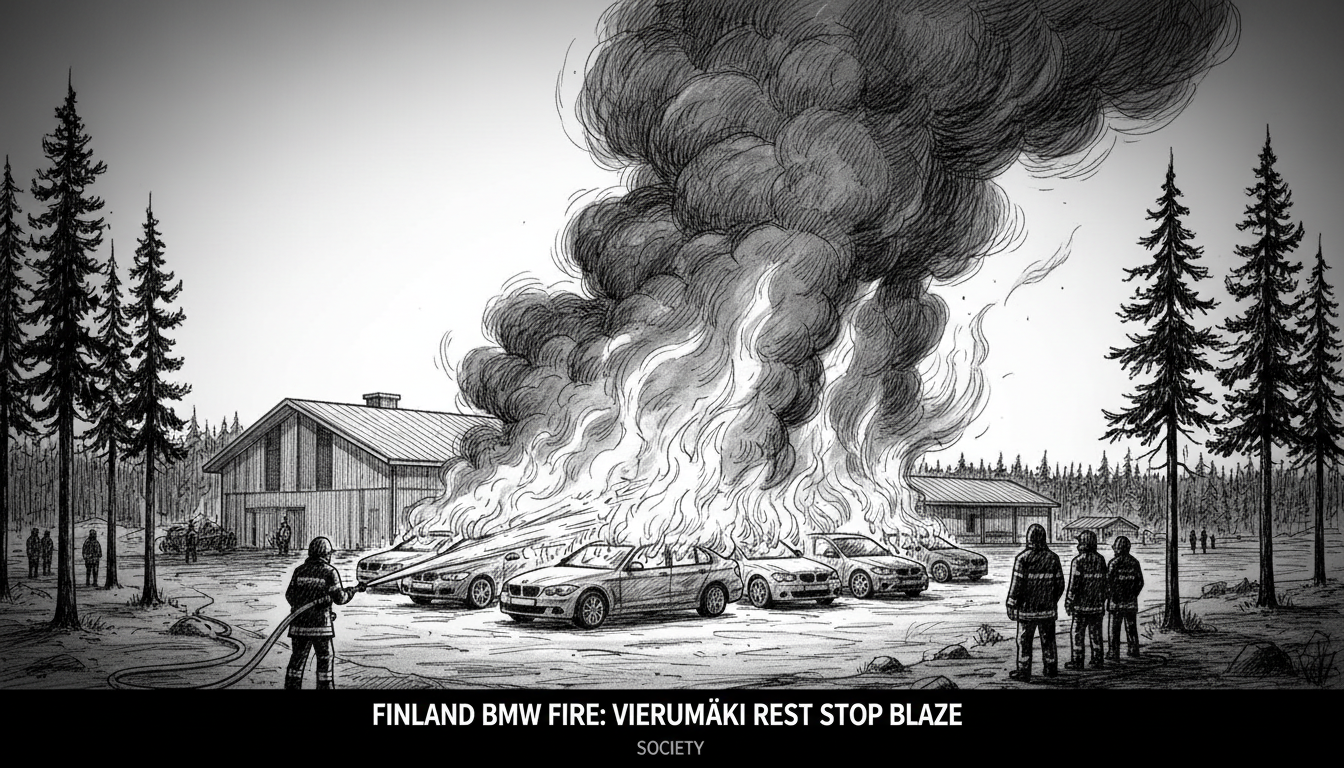
Finland's Highway 4 witnessed a dramatic vehicle fire at a popular travel center on Saturday afternoon. A BMW passenger car erupted in flames at the Vierumäki Matkakeidas rest stop, located between Lahti and Heinola. The Päijät-Häme Rescue Department responded quickly, extinguishing the blaze without any reported injuries. Preliminary investigations suggest no signs of deliberate arson, pointing instead toward a likely technical fault as the cause.
A Sudden Blaze on a Busy Highway
The incident occurred at a key travel hub on one of Finland's most important north-south arteries. Highway 4 connects Helsinki to Lapland, making the Vierumäki Matkakeidas a frequent stop for thousands of motorists, tourists, and transport trucks. Witnesses reported seeing thick black smoke billowing from the parked vehicle, prompting immediate emergency calls. The rescue service units arrived on the scene within minutes, a critical response time given the potential risk to other vehicles and the rest stop's infrastructure. By approximately 2:30 PM, firefighters had fully extinguished the fire and cleared the area.
This event highlights the ever-present, though statistically low, risk of vehicle fires even in a country with a modern fleet and strict safety standards. For the travelers present, the sight of a luxury car engulfed in flames served as an unexpected and alarming interruption to their journeys. The efficient work of the rescue services prevented what could have escalated into a more dangerous situation, especially considering the proximity to fuel pumps and other vehicles.
Understanding the Risks of Vehicle Fires
While dramatic, vehicle fires are a known operational hazard handled routinely by Finnish rescue services. National statistics provide important context. In 2022, rescue services across Finland responded to roughly 3,000 fires involving vehicles, a category that includes cars, vans, trucks, and other machinery. The most common origin for these blazes is not criminal activity but technical malfunction. Electrical system failures, fuel line leaks, and overheating components are typical culprits.
"The immediate assumption in a case like this, absent clear evidence to the contrary, is an unfortunate technical defect," explained a veteran fire safety engineer familiar with such incidents. "Modern cars are complex machines with numerous electrical systems and flammable fluids. A fault in a wiring harness, a compromised battery, or a fault in the exhaust system can generate enough heat to ignite surrounding materials. Regular, thorough maintenance is the single most effective preventative measure a vehicle owner can take."
The choice of a BMW in this incident is largely incidental; fires can and do occur in vehicles of all makes, ages, and price points. However, the brand's association with performance and complex engineering may lead to public curiosity about specific model histories or known technical service bulletins, which investigators would examine as part of their standard procedure.
The Critical Role of Rescue Services
The swift containment of the Vierumäki fire underscores the effectiveness of Finland's decentralized rescue service model. The Päijät-Häme Rescue Department, serving the region of Southern Finland where the incident occurred, operates with a mandate for rapid intervention. Their performance on Saturday followed a standard protocol: secure the area, prevent the spread of fire, and protect human life.
Finland's rescue services are organized at the municipal and regional levels, ensuring local knowledge and quick deployment times. This structure is tested continuously, not just by vehicle fires but by a wide range of emergencies from house fires to industrial accidents and natural events. The successful handling of this highway incident, resulting in zero injuries, is considered a standard operational success for these professionals.
From a policy perspective, such incidents occasionally feed into broader discussions about vehicle inspection regimes, the safety of electric vehicle batteries versus internal combustion engines, and the adequacy of firefighting equipment at commercial rest stops. While this single event is unlikely to trigger legislative action, it contributes to the cumulative data and experience that informs national safety guidelines and emergency response planning.
Safety on the Road: A Shared Responsibility
For the average Finnish driver, the image of a burning car is a potent reminder of road safety's mechanical dimension. Beyond careful driving, vehicle upkeep is a fundamental component. Experts consistently recommend adhering to manufacturer service schedules, paying immediate attention to warning lights, and being alert to unusual smells, sounds, or smoke from the vehicle.
The location of this fire also brings focus to the safety protocols of public rest areas. These sites must balance convenience with emergency preparedness, ensuring clear access for fire trucks and having staff trained in initial fire response. The Matkakeidas, like many major Finnish travel centers, is designed to accommodate heavy traffic and is likely equipped with fire extinguishers and clear emergency service contact information.
While the investigation into the exact cause of the BMW's failure continues, the public outcome is already determined: a car was destroyed, but no one was hurt. This result is a testament to the effective emergency response system. It also serves as a timely, real-world advisory for all motorists to consider the mechanical health of their vehicles before embarking on long journeys on Finland's extensive and often remote highway network.
The Aftermath and Forward Look
Following the incident, the damaged vehicle was removed from the site, and operations at the Vierumäki Matkakeidas resumed normally. The economic cost falls primarily on the vehicle owner and their insurance company, who will now engage in their own investigation parallel to any official checks. For the rescue department, the event becomes another entry in their annual statistics, a case study for training, and a demonstration of their readiness.
Finland's high rate of car ownership and its citizens' reliance on personal vehicles for transportation, especially in regions beyond major cities, means the reliability of the automobile is deeply woven into daily life. Events that challenge this reliability, even fleetingly, capture attention. They prompt drivers to glance at their dashboard gauges with a bit more scrutiny and to listen for unfamiliar noises.
Ultimately, the Vierumäki rest stop fire was a controlled, resolved incident. It did not become a major tragedy, a scandal, or a political issue. Instead, it stands as a routine emergency, professionally managed. Yet, within that normality lies a broader story about infrastructure, risk, and the silent, reliable work of rescue services that ensure a momentary mechanical failure on a busy highway remains just that—a momentary failure, and not a catastrophe. How many drivers passing that spot next week will consider the unseen work that keeps their own journey safe?