
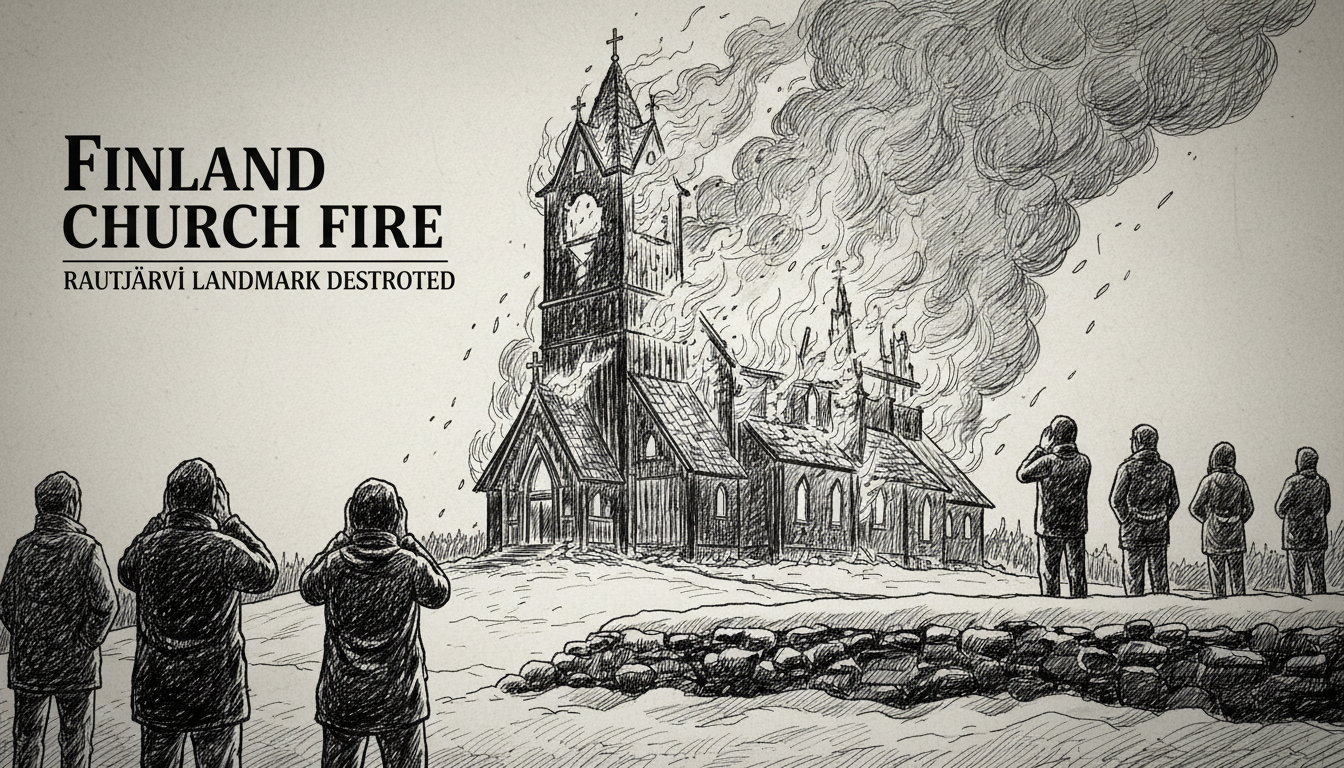
Finland's peaceful Christmas Day in 2022 was shattered by an arson attack that destroyed the historic Rautjärvi church during a morning service. Approximately thirty worshippers escaped the burning wooden building, which was reduced to its stone foundation in a deeply traumatic event for the small South Karelian community. The incident sparked national grief and a complex process of healing and investigation, highlighting vulnerabilities in protecting culturally significant buildings.
A Peaceful Morning Interrupted
Vicar Timo Kälviäinen arrived early on December 25th to finalize preparations for the 8:00 AM Christmas service. The atmosphere was calm and festive as the congregation of about thirty people gathered inside the beloved wooden church. Bells rang, hymns were selected, and the final worshippers took their seats. No one present could have known they were participating in the final service the 19th-century structure would ever host. The first signs of trouble emerged subtly, shifting the mood from one of celebration to one of confusion and then escalating fear as smoke began to seep into the sanctuary.
The fire spread with alarming speed, fueled by the aged, dry timber of the historic building. Attendees described a swift but orderly evacuation, driven by urgency but avoiding outright panic. Within minutes, the entire church was engulfed in flames, a stark and terrifying contrast to the serene winter landscape surrounding it. Firefighters from multiple districts responded, but their efforts could not save the building; they focused on preventing the blaze from spreading and fully consuming the structure.
Community Confronts a Profound Loss
The immediate aftermath was one of shock and disbelief. Parishioners stood together in the cold, watching helplessly as their central spiritual and communal landmark was destroyed. For the tight-knit municipality of Rautjärvi, the church was more than a place of Sunday worship; it was a repository of collective memory, hosting weddings, funerals, and seasonal celebrations for generations. Its sudden, violent erasure on Christmas Day compounded the trauma, turning a day of joy into one of profound mourning. Vicar Kälviäinen, reflecting on the escape of all attendees, later offered a poignant, simple statement of relief: "The devil did not get us."
This sentiment captured the community's focus on human safety amidst material devastation. The emotional impact was immediate and severe, creating a shared psychological wound. In the days that followed, residents grappled with a mix of grief, anger, and a search for meaning. The act of arson against a place of worship, particularly on a sacred holiday, introduced a sense of violation that deepened the community's pain. National media attention brought sympathy but also intensified the feeling of exposed vulnerability.
The Arson Investigation and National Reckoning
Police quickly opened a criminal investigation, classifying the blaze as deliberate arson. The targeting of a church during a service suggested an intent that went beyond simple vandalism, raising alarming questions about motive. Investigators combed through the smoldering ruins for evidence, facing the challenge of a crime scene largely consumed by fire. The case remains active, with authorities continuing to seek information that could lead to a perpetrator.
The fire prompted a broader national conversation about the security of Finland's wooden church heritage. The country is dotted with hundreds of historic wooden churches, many of them unprotected treasures in rural areas. The Rautjärvi fire served as a grim reminder of their susceptibility; just over two decades prior, another famous wooden church in Petäjävesi had also been damaged by arson. Cultural heritage experts and the Evangelical Lutheran Church of Finland reviewed security protocols, debating how to protect these open and accessible community spaces without turning them into fortresses.
Expert Insight on Trauma and Resilience
Psychologists specializing in community trauma note that the destruction of a central landmark like a church creates a unique form of collective grief. "These buildings are anchors of identity," explains Dr. Elina Saarelma, a researcher in social psychology. "When one is violently removed, especially on a symbolic day, it disrupts the community's narrative. The healing process isn't just about rebuilding a structure; it's about reconstructing a sense of safety and continuity." She emphasizes that small, close-knit communities often possess strong inherent resilience, but the path forward requires space for communal mourning and shared rituals.
Religious scholars point to the theological and symbolic weight of the event. The irony of a Christmas fire—a day celebrating light and hope—is not lost. "There is a powerful, painful dichotomy at play," says Professor of Practical Theology Marko Tiilikainen. "The community's resilience, their thankfulness for lives saved, becomes their new source of light emerging from this literal darkness. The process of rebuilding becomes an active act of faith and defiance."
The Long Path Toward a New Beginning
For Rautjärvi, moving forward has involved practical and emotional steps. Insurance assessments and architectural planning for a new church building began, sparking discussions about whether to replicate the old design or create something modern that still honors memory. Temporary spaces were arranged for worship services, ensuring the congregation could continue to gather. Fundraising initiatives received widespread national support, demonstrating solidarity from across Finland.
Months later, the charred foundation remains a sobering site. Yet, the community has steadily worked to reclaim its narrative. Memorial services at the site, the gathering of salvaged artifacts, and the ongoing support for one another mark the stages of a long recovery. The story of the Rautjärvi church fire is now a permanent chapter in the municipality's history—a story of sudden loss, but increasingly, one focused on the collective strength that prevented greater tragedy. The ultimate test will be how this strength shapes what rises from the ashes, forging a future that acknowledges the past without being defined solely by its most devastating day.
Can a community's spirit be rebuilt alongside its bricks and mortar? Rautjärvi is determined to answer that question in the affirmative, transforming a single day of infamy into a lasting testament to resilience.