
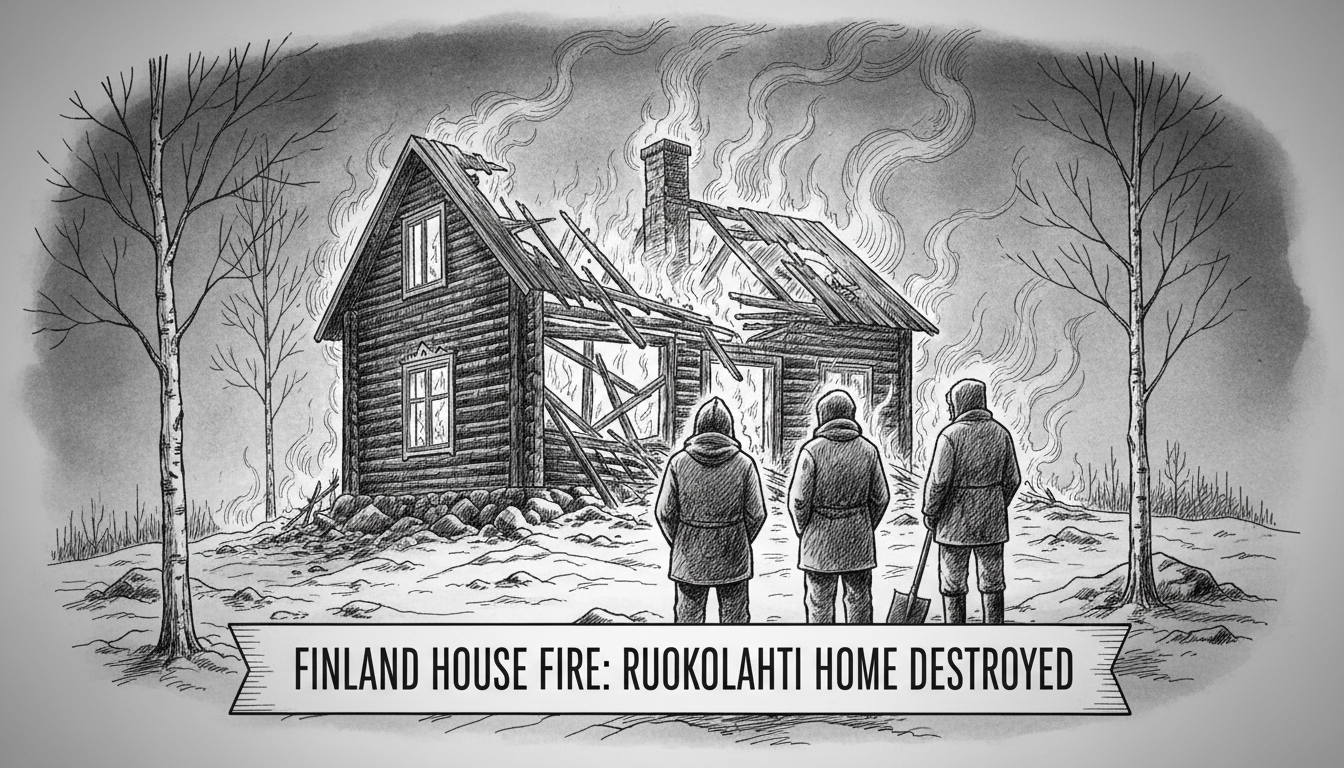
Finland house fires remain a persistent threat, as a single-family home on Iivarintie road in Ruokolahti burned beyond repair last weekend. A bystander spotted the flames in the night and alerted rescue services, who arrived to find the structure fully engulfed. The cause of the blaze, which occurred between Friday and Saturday night, remains under investigation by local authorities.
This incident is not an isolated event but part of a broader national pattern. According to the latest statistics from the Finnish Rescue Services, there were 3,400 structural fires across the country in 2022. Residential buildings, like the one lost in Ruokolahti, accounted for roughly 60% of those incidents, highlighting a significant risk to homeowners.
A Common Tragedy in the Finnish Landscape
The destruction of a home is a deeply personal catastrophe, yet it reflects a recurring seasonal danger in Finland. Colder months bring increased reliance on heating systems, electrical appliances, and lighting, which correspondingly elevates fire risk. Older properties, which may not fully comply with contemporary building codes, can be particularly vulnerable. While Finland's fire safety regulations are stringent, the practical safety of any dwelling depends on maintenance, awareness, and functional safety equipment.
Fire safety experts consistently point to a few critical, life-saving measures. 'The first and most important line of defense is a working smoke detector,' says one Helsinki-based fire prevention specialist, who requested anonymity as they are not directly involved in the Ruokolahti case. 'It provides those crucial early moments to escape. In older homes, special attention should be paid to the inspection of electrical systems and fixed heating sources, like fireplaces and boilers.'
The Unanswered Questions in Ruokolahti
For now, the story on Iivarintie road is one of loss and uncertainty. The local rescue department has classified the house as 'korjauskelvoton' – beyond repair. This term signifies a total economic loss, where the cost of restoration would exceed the value of the property. The investigation will now work methodically to determine the ignition point and source.
Potential causes range from accidental electrical faults or heating system failures to less common origins like cooking accidents or, in a minority of cases, arson. Without a determined cause, speculation is unhelpful, but the investigation will follow standard forensic procedures. The fact that the fire was reported by a passerby, not an occupant, may also factor into the inquiry, though details about whether the home was occupied at the time have not been released.
National Statistics Paint a Clear Picture
The numbers from the Finnish Rescue Services provide crucial context for understanding the scale of the issue. The 3,400 structural fires recorded in 2022 represent a tangible risk spread across the country. When approximately 2,040 of those are in residential buildings, it underscores a direct threat to household safety. These figures drive continuous public safety campaigns by rescue services, insurance companies, and organizations like the Finnish Red Cross.
Prevention efforts focus heavily on public education. Campaigns remind citizens to test smoke alarms monthly, avoid overloading electrical sockets, ensure proper clearance around space heaters, and have chimneys swept regularly. For many Finns, these practices are as seasonal as putting on winter tires.
The Human and Structural Cost of Fire
Beyond the stark statistics lies a profound human impact. Losing a home to fire means the destruction of personal belongings, memories, and a sense of security. The financial burden, even with insurance, can be severe. The physical structure in Ruokolahti is a total loss, a scenario that places immense strain on the homeowners, who must now navigate insurance claims, temporary housing, and the daunting task of rebuilding their lives.
From a policy perspective, Finland's approach combines strict building codes for new constructions with incentives for retrofitting older homes with safety upgrades. However, the responsibility ultimately rests with the property owner. This balance between regulation and personal responsibility is a typical feature of Finnish safety governance.
Looking Ahead: Prevention as the Only Cure
As the investigation in Ruokolahti continues, the event serves as a somber reminder for homeowners nationwide. The Finnish climate necessitates intensive energy use for much of the year, which inherently increases fire hazards. Proactive safety checks are not merely recommended; they are essential components of responsible homeownership.
Experts argue that complacency is the enemy. 'People think a major fire will never happen to them,' the fire prevention specialist notes. 'But the data shows it happens thousands of times a year across Finland. Regular, simple checks are the most effective tool we have. This tragedy should prompt everyone to look at their own smoke alarms tonight.'
The story from Iivarintie road will eventually conclude with an official cause. Yet the broader narrative about fire safety in Finnish homes continues indefinitely. It is a story written in building codes, public service announcements, and, unfortunately, in the ashes of homes where prevention failed. The question for every homeowner is whether they are actively reading that story and taking its lessons to heart.