
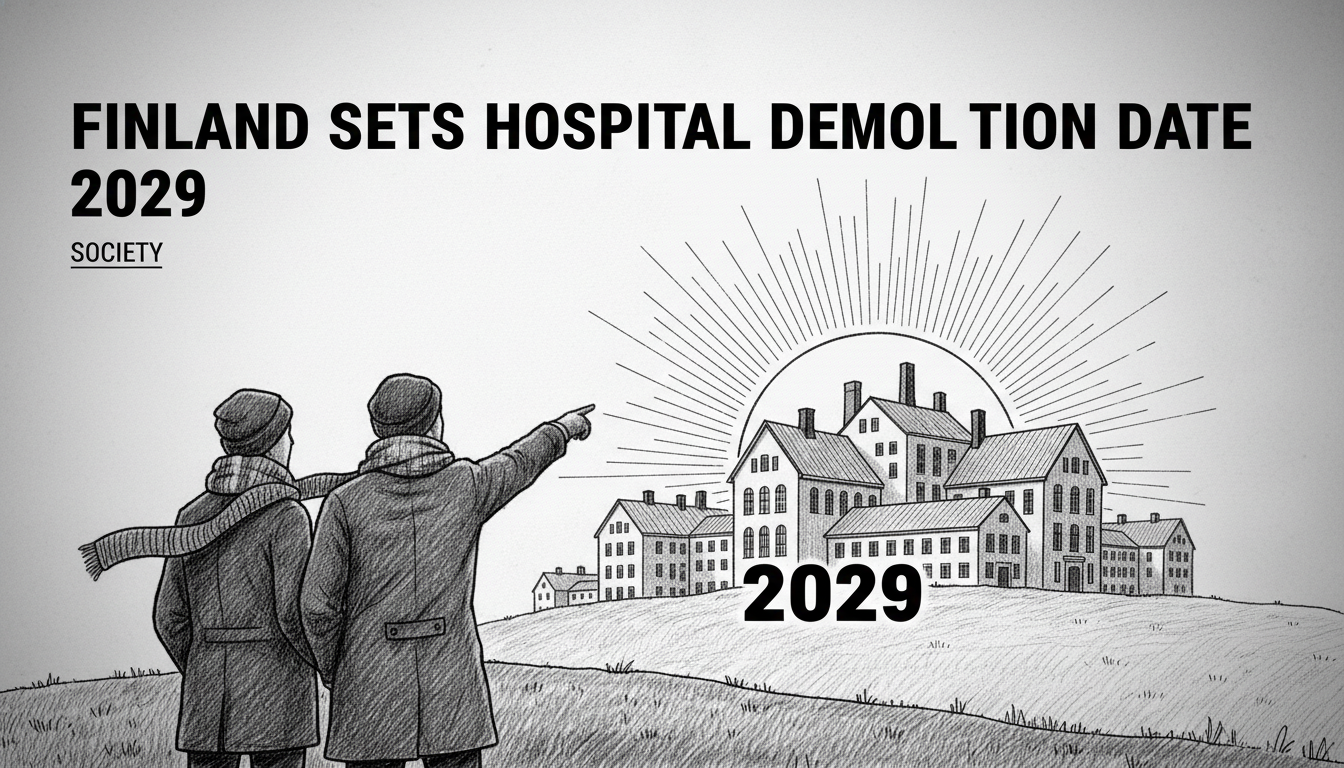
Finland's rural municipality of Taipalsaari has scheduled the demolition of its former hospital for 2029. This decision directly impacts the South Karelia community, where the building known locally as Taipolis has stood for decades. Residents now face the loss of a familiar landmark and must adapt to changing healthcare services. The municipal council will vote on a proposal to decommission functions from 2027 to 2028, with physical demolition following the next year.
This move stems from a harsh financial reality. Renovating the aging structure is prohibitively expensive. Taipalsaari's technical department estimates that updating just the heating, water, ventilation, and electrical systems would cost approximately three million euros. The building's overall condition is poor, requiring even more investment for a full renovation. Municipal leaders argue that pouring funds into this outdated infrastructure is no longer viable.
The Crumbling Infrastructure Dilemma
Taipalsaari's hospital exemplifies a widespread challenge across rural Finland. Many municipalities grapple with aging public buildings constructed during periods of population growth. Maintenance backlogs have accumulated as populations decline and tax bases shrink. The Finnish Ministry of Finance has repeatedly highlighted the unsustainable state of local government infrastructure portfolios. For Taipalsaari, the three million euro price tag for basic systems is a decisive factor.
'When you face a choice between investing in a decaying building or directing funds toward modern service delivery, the calculus becomes clear,' said a municipal finance expert familiar with South Karelia's budget. The expert, who spoke on condition of anonymity, noted that such decisions are emotionally charged but financially inevitable. This analysis aligns with national trends where smaller municipalities are consolidating services and shedding costly physical assets.
A Timeline for Decommissioning
The proposed timeline is methodical. Taipalsaari's municipal board recommends a two-year phase for winding down operations within the old hospital from 2027 to 2028. This period allows for the transfer of any remaining functions to other facilities in the region. The actual demolition is slated for 2029, giving the community time to adjust. Officials emphasize that this plan is not about reducing healthcare access but reallocating scarce resources.
Healthcare services for Taipalsaari's approximately 4,700 residents are increasingly provided through the South Karelia Social and Health Care District (Eksote). This regional model centralizes specialist care while maintaining local health stations. The old hospital's roles have diminished over years, making the standalone building redundant. The demolition plan reflects a strategic shift toward integrated regional care networks, a model encouraged by recent Finnish social and healthcare reforms.
Municipal Finances Under Pressure
Finland's system of highly autonomous municipalities places the burden of infrastructure decisions on local councils. Taipalsaari's case shows the intense pressure these councils face. With an aging demographic and outmigration of younger residents, revenue growth is stagnant. Capital investments must be prioritized carefully. The three million euro saving from avoiding renovation can be redirected to other critical areas like digital services or preventive healthcare.
Professor Juha Kostiainen, a specialist in municipal economics at the University of Eastern Finland, explained the broader context. 'Small municipalities are making triage decisions on infrastructure daily. The EU's cohesion policy aims to support regional development, but direct funds for building demolition are rare. Municipalities must often use their own resources, leading to tough choices between preservation and pragmatism.' His research indicates that dozens of similar buildings across Finnish rural areas face the same fate.
The Human and Historical Cost
Beyond the balance sheets, the demolition carries emotional weight. For older residents, the hospital represents a place of birth, care, and community memory. Local historians have expressed concern over losing a piece of Taipalsaari's architectural and social heritage. However, municipal archives have promised to document the building thoroughly before its destruction. The conversation echoes debates happening in other Nordic countries where rural depopulation forces re-evaluation of community assets.
Some residents argue for alternative uses, such as converting the building into affordable housing or a community center. Yet the technical assessment from Taipalsaari's officials is blunt. The cost to make the structure safe and efficient for any new purpose would still be immense. The core systems are obsolete, and the building does not meet modern energy efficiency standards. In the context of Finland's climate goals, erecting a new, purpose-built facility might be more sustainable long-term.
Implications for Finnish Healthcare Geography
This decision is a microcosm of Finland's evolving healthcare landscape. The government in Helsinki has pushed for larger, centralized healthcare units to ensure cost-effectiveness and specialist access. Rural municipalities like Taipalsaari must navigate this shift while maintaining local trust. The Eduskunta, Finland's parliament, has debated the tension between centralization and local service proximity for years. Taipalsaari's plan shows how local policy aligns with national direction.
Future healthcare in the region will rely on the Eksote district's network. Patients may travel slightly farther for certain services, but telemedicine and mobile units aim to bridge gaps. The Finnish Institute for Health and Welfare (THL) monitors these transitions, ensuring that access inequalities do not widen. The demolition of the Taipalsaari hospital symbolizes a move from brick-and-mortar care to flexible service models. It is a tangible result of policy decisions made in Helsinki government district offices.
Looking Beyond 2029
What happens after the demolition? The site in Taipalsaari offers redevelopment potential. Municipal planners suggest green space or new communal infrastructure that requires lower maintenance. The decision also frees up annual budgets previously spent on upkeep. For other Finnish municipalities watching, Taipalsaari provides a case study in managing decline and change. The 2029 deadline is not just an end but a pivot point.
Finland's EU membership adds another layer. South Karelia is eligible for European Regional Development Fund (ERDF) support aimed at strengthening regional competitiveness. While demolition itself may not be funded, future projects on the site could attract investment. This connects local decisions to broader European cohesion strategies. The story of Taipalsaari's hospital is, therefore, a blend of local governance, national policy, and European frameworks.
Ultimately, the planned demolition raises a fundamental question for rural Finland. How do communities preserve identity and service quality when the economic basis for standalone infrastructure vanishes? Taipalsaari's answer is pragmatic, painful, and telling of the times. As the 2029 date approaches, other municipalities will likely follow suit, reshaping the Finnish countryside one difficult decision at a time.