
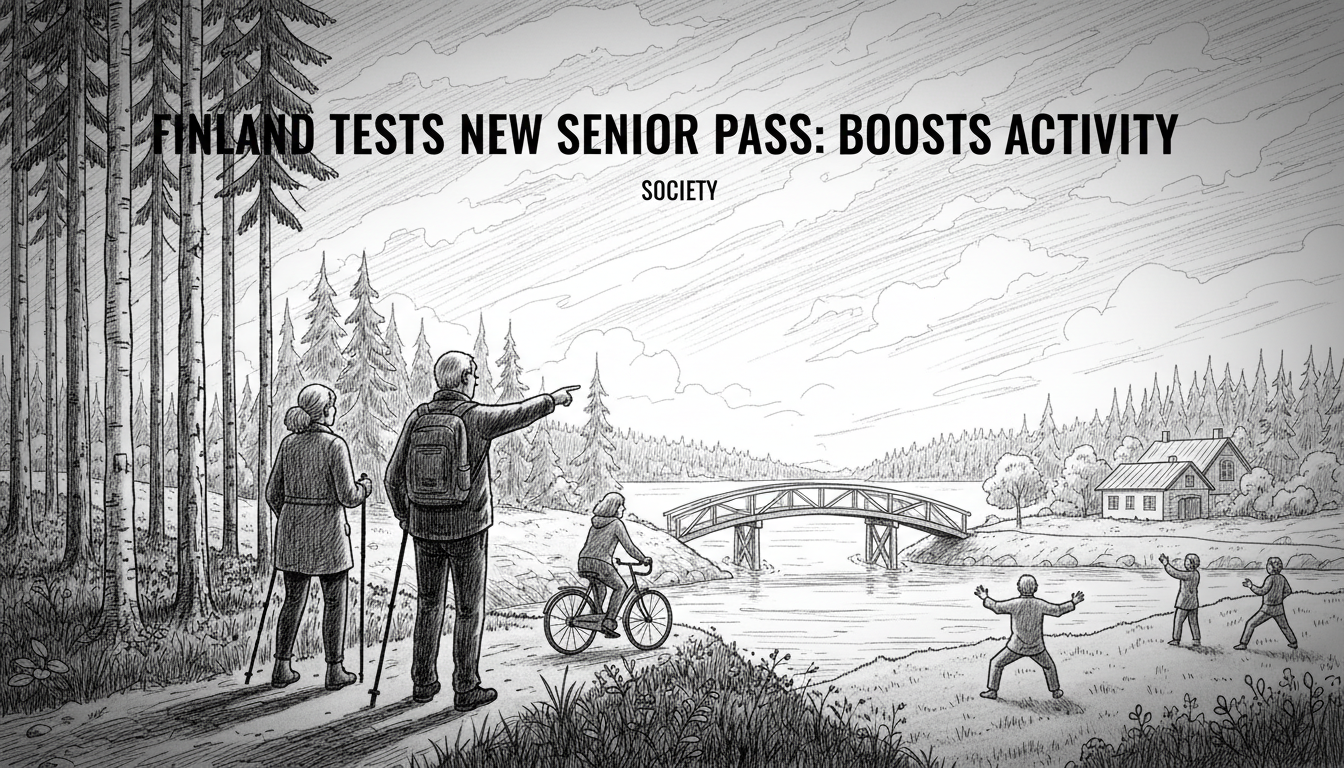
Finland's aging population, where over 23% are over 65, is driving municipalities to find fresh solutions for elder care. The small city of Jämsä has responded with a direct intervention: a two-year pilot for a discounted 'Lupa liikkua' or 'Permission to Move' pass for seniors and disabled residents. This local initiative, started in January 2024, aims to tackle a national challenge by making exercise more accessible and affordable, promoting health and potentially reducing long-term care costs.
A Municipal Experiment in Proactive Care
Jämsä, a municipality of around 20,000 people in Central Finland, is now a testing ground for this new approach. The pass provides holders with significantly reduced prices for municipal sports facilities, including swimming pools, gyms, and group exercise classes. The core idea is preventative. By lowering the financial and motivational barriers to regular physical activity, the city hopes to improve the functional capacity, mental well-being, and social connections of its older and disabled citizens. “We see this as an investment in well-being and independence,” Jämsä's Mayor, Jussi Laitinen, said in a statement announcing the pilot. “Supporting people to stay active in their own community is a cornerstone of sustainable care.”
The program operates on a straightforward subscription model. Eligible residents can apply for the pass, which then grants them a fixed, low-cost access rate to designated services. This model provides predictability for both the user and the municipality's budgeting office. While the direct cost to the city is the revenue forgone from full-price admissions, the anticipated long-term savings are in reduced demand for more intensive health and social services. This calculation reflects a broader shift in Finnish public health strategy from treating illness to maintaining health.
The National Context of an Aging Finland
Jämsä's pilot cannot be viewed in isolation. It is a local manifestation of a pressing national issue. Finland has one of the fastest-aging populations in the European Union. The dependency ratio—the number of people aged 65 and over compared to those of working age—is rising steadily. This demographic pressure strains public finances and challenges the Nordic welfare model. The Finnish government and the Association of Finnish Municipalities have long encouraged local authorities to develop preventative health programs. These initiatives aim to extend healthy life years and enable people to live at home longer, aligning with most citizens' preferences.
National policy frameworks, such as Finland's 'National Program for Ageing 2030,' set the direction, but implementation is largely municipal. Cities and towns have the autonomy to design services that fit their specific demographic and geographic needs. In this context, Jämsä's 'Lupa liikkua' pass is a clear example of applied local innovation. It takes a broad national goal—active aging—and creates a simple, tangible tool to pursue it. Other municipalities, including some in the capital region, have similar discount schemes, but Jämsä's structured two-year pilot is designed to generate evaluable data on uptake and impact.
Expert Analysis on Health and Cost-Benefit
Public health experts view such programs favorably, though with a note of caution regarding measurement. “The evidence is very strong that maintained physical activity is one of the most effective ways to prevent frailty, cognitive decline, and chronic diseases like diabetes and heart conditions in older adults,” says Dr. Elina Saarelma, a gerontology researcher at the University of Helsinki. “A pass like this reduces two key barriers: cost and the complexity of arranging access. The social component of group activities is an equally significant benefit, combating loneliness.”
Dr. Saarelma emphasizes that the true test of Jämsä's pilot will be in its evaluation. “The key questions are: Who uses it? How often? And can we measure any changes in their perceived well-being or their use of other municipal health services over the two-year period?” She notes that for the model to be considered for wider adoption, it should demonstrate a positive cost-benefit outcome. Preliminary data on participation rates is expected to be reviewed by Jämsä's council at the end of the first year.
The pilot also intersects with Finland's commitment to disability rights. By including disabled residents in the same program, it promotes inclusive participation in community life. Accessibility of the facilities, both physical and in terms of suitable activities, will be a critical factor in the program's success for this group. Experts suggest that effective collaboration with disability organizations will be essential for feedback and adjustment during the pilot phase.
EU Strategies and Local Solutions
The initiative also resonates with broader European Union priorities. The European Commission's 'Green Paper on Ageing' and the 'European Pillar of Social Rights' both emphasize enabling healthy and active aging, with a focus on community-based care. Finland, often a front-runner in social policy, contributes to this EU-wide dialogue through local experiments like Jämsä's. Funding for such social innovations can sometimes be supplemented by EU structural funds aimed at promoting inclusion and health equity across member states.
In the Finnish political landscape, this kind of municipal action generally receives cross-party support. The centre-right National Coalition Party might highlight its fiscal prudence through preventative investment, while the Social Democrats and Left Alliance would underscore its role in promoting equality and welfare. The pilot’s progress will likely be monitored by policymakers in Helsinki, as successful local models often inform national policy recommendations. The Ministry of Social Affairs and Health maintains an active interest in programs that could enhance the efficiency and human focus of the care system.
The Road Ahead for Jämsä's Pilot
As the 'Lupa liikkua' pilot moves through its first year, its administrators will be monitoring uptake closely. Success will be defined not just by the number of passes issued, but by sustained usage and positive anecdotal feedback. The city's sports and social services departments are working in tandem to promote the pass and ensure suitable activities are available. Local newspapers and community centres serve as primary channels for reaching the target audience.
The ultimate question for Jämsä and for observing municipalities is whether this investment leads to tangible downstream benefits. Can a modest discount on a swimming pool entry translate into fewer doctor's visits, a delayed need for home care, or simply a higher quality of life for participants? If the pilot shows promising results, the model could be refined and adopted by other Finnish towns facing similar demographic challenges. In a nation famed for its societal innovation, Jämsä's experiment represents a practical, grassroots attempt to write a more sustainable chapter for its aging population. The final assessment in 2025 will determine if this 'permission to move' becomes a permanent fixture and a template for others to follow.