
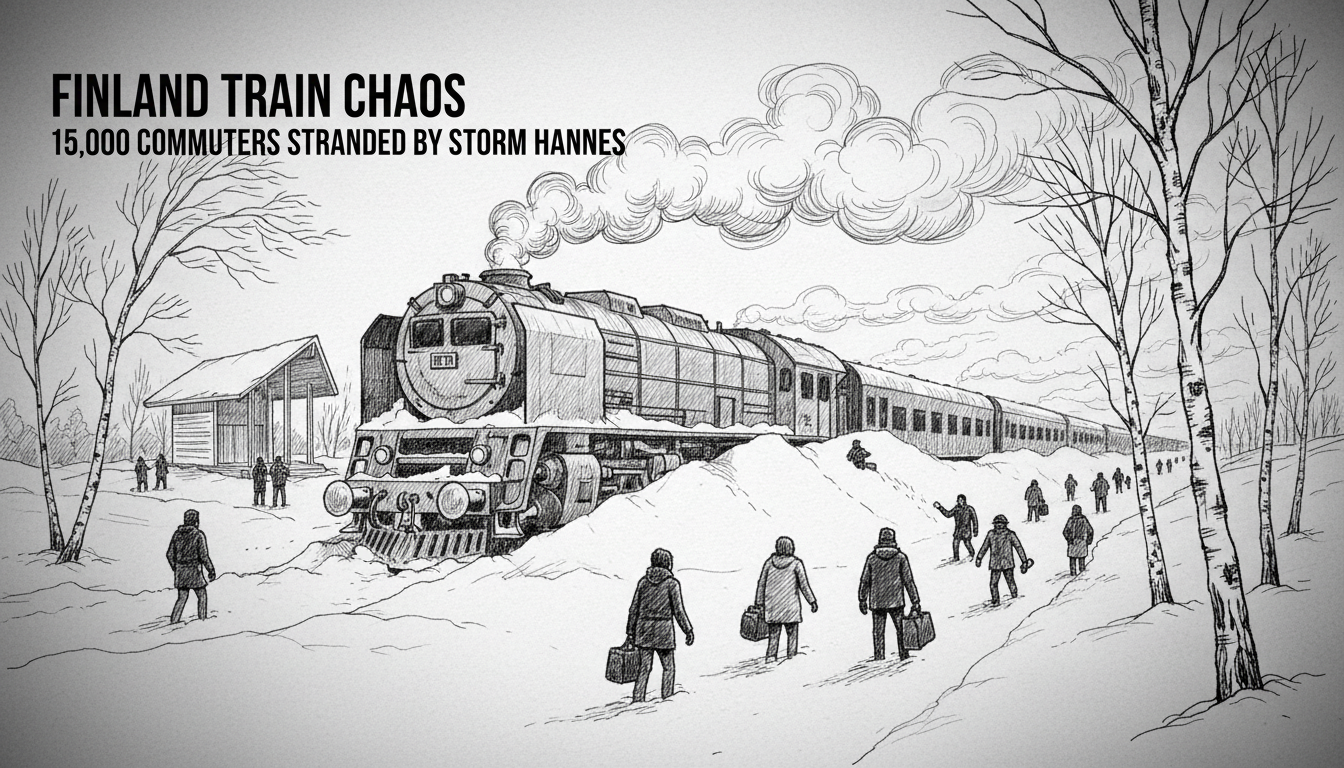
Finland's critical Jämsä-Pieksämäki railway corridor has been severed, halting all passenger and freight traffic for an estimated 48 hours after storm Hannes tore through central Finland. State traffic management company Fintraffic confirmed the total suspension, citing significant damage to overhead power lines from fallen trees between the Lievestuore and Saakoski sections. The disruption has stranded up to 15,000 daily commuters and forced the national operator VR to implement a full bus replacement service on a key north-south artery.
The immediate cause is catastrophic damage to the catenary system—the overhead wires that power electric trains. Fintraffic's rail traffic centre reported multiple fallen trees directly impacting the lines, with additional power supply faults complicating assessment and repair. Emergency crews from Finnish Transport Infrastructure Agency are on-site, but officials warn restoration is a major logistical operation requiring clearing debris before electrical repairs can even begin. This line forms part of the vital connection between Helsinki and much of Central and Northern Finland.
Scope of the Disruption and Immediate Response
The suspension effectively cuts the main railway line through the Finnish lake district. VR Group has activated its contingency plans, directing passengers to replacement buses operating between Jämsä and Pieksämäki stations. However, these bus journeys are significantly longer than the train route, adding roughly an hour to travel times. Freight operators face severe delays, with goods destined for northern regions piling up at logistics hubs. The economic ripple effect is immediate, impacting just-in-time supply chains for industries and retail.
Local mayors from affected municipalities have expressed concern over the isolation of smaller communities reliant on the rail link. "This isn't just an inconvenience for travelers; it's a cut to a vital vein for our local economies and for people needing to access services," said Jämsä's city manager in a radio interview. The disruption highlights Finland's transport vulnerability outside the capital region, where alternative routes are often lengthy detours on regional roads.
Climate Resilience of Nordic Infrastructure Under Scrutiny
Transport experts are framing this incident within a broader pattern of increasing climate-induced stress on Nordic infrastructure. Storm Hannes is part of a trend of more frequent and intense autumn and winter storms battering the region. Professor of Civil Engineering at Aalto University, noting the incident, stated, "Our infrastructure was built for a different climate era. The density of forests near rail lines, combined with wetter soils from increased rainfall, creates a perfect scenario for trees to fall onto tracks and power lines. We need a systematic review of corridor maintenance and tree clearance protocols."
This event follows other recent weather-related rail disruptions in Sweden and Norway, prompting a regional conversation about investment. The Finnish Ministry of Transport and Communications has a long-term rail strategy emphasizing electrification and speed, but critics argue resilience funding is not keeping pace with climate change impacts. Proactive vegetation management and reinforcing critical sections of the grid are now urgent topics for Fintraffic's risk assessment teams.
The Passenger Experience and Systemic Strain
For passengers, the disruption means a day of complicated logistics. The bus replacement service, while necessary, lacks the capacity and comfort of the regular train service. Travelers with bicycles, disabilities, or large luggage face particular difficulties. Social media channels are filled with complaints about overcrowded buses and a lack of real-time information at smaller stations. VR's customer service lines are experiencing high wait times as staff manually reroute thousands of pre-booked tickets.
The incident tests Finland's much-admired public transport system. While Helsinki's metro and trains might quickly recover from a localized issue, a main line outage in the sparser central region exposes the network's limited redundancy. The Finnish Parliament's Transport and Communications Committee is likely to call for a report on the incident, examining both response times and long-term preparedness. Opposition MPs are already questioning whether state subsidies for rail maintenance are sufficient.
Looking Ahead: Recovery and Future-Proofing
Fintraffic's preliminary estimate suggests a minimum two-day closure. The precise timeline depends on the extent of the cable damage, which can only be fully assessed once the track is cleared. Repairing high-voltage catenary wires is specialized work, and spare parts must be transported to the remote damage sites. Every additional hour of downtime translates into economic losses estimated in the hundreds of thousands of euros from logistics and lost productivity.
This storm damage will inevitably fuel the ongoing debate in the Eduskunta about infrastructure spending. The government's budget framework includes allocations for climate adaptation, but specific project funding is perennially contested. As Finland pushes for greener transport and a shift from road to rail, the reliability of the network becomes paramount. Events like the Hannes storm disruption present a stark question: can Finland future-proof its rail arteries against the very climate change it seeks to combat through increased rail use? The answer will require significant political will and investment far beyond repairing this single stretch of line.