
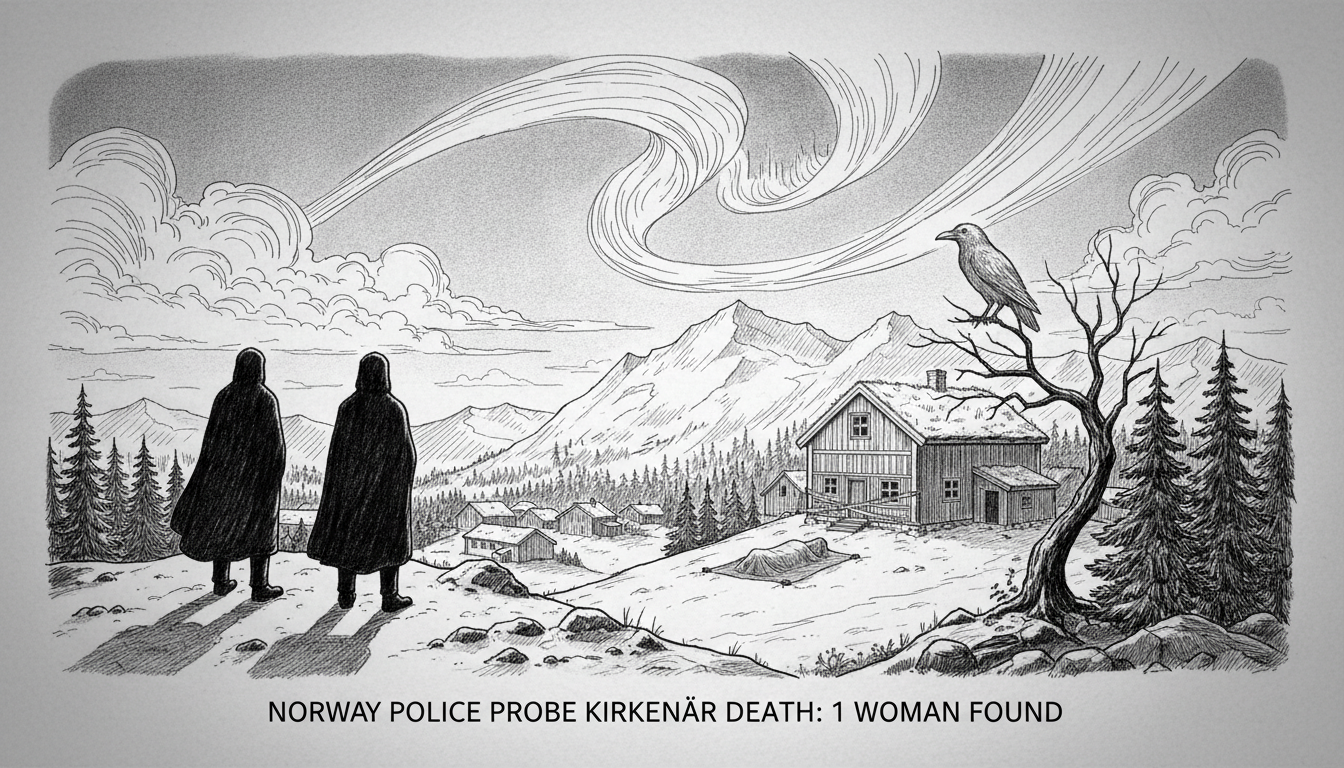
Norway police are investigating after a woman was found dead in her home in the village of Kirkenær on Saturday afternoon. The Innlandet Police District launched the investigation following a 'bekymringsmelding'—a formal notification of concern—when contact with the woman could not be established. Officers discovered her deceased upon arrival at the residence.
Operational leader Bård Einar Toft confirmed the next of kin have been notified. Police Attorney Ann Katrin Nysveen stated the concern report was logged at precisely 5:00 PM Saturday. The discovery has sent ripples through the quiet, rural community of Grue municipality, located in the forested Østerdalen valley.
A Community Awaiting Answers
Kirkenær, a village of approximately 600 residents, is characterized by close-knit neighborhoods and vast tracts of agricultural and forest land. Such incidents are rare in this part of Innlandet county, where crime rates are typically low and centered on minor property offenses. The police presence and subsequent investigation represent a significant disruption to the area's normal tranquility.
Local authorities have released few details, standard procedure in the early stages of a potentially sensitive investigation. The focus is on establishing a clear timeline of events and determining the cause of death. Forensic teams likely secured the scene to collect evidence, while detectives began the process of interviewing neighbors and acquaintances.
The Significance of a 'Bekymringsmelding'
The trigger for police action—the 'bekymringsmelding'—is a critical piece of the puzzle. This mechanism is a formal channel used by family, friends, neighbors, or social services to alert authorities when an individual's welfare is in question. Its activation suggests someone was expecting contact with the woman and grew alarmed when it failed to occur.
"A 'bekymringsmelding' often indicates pre-existing concerns about an individual's well-being, whether due to health, personal circumstances, or other vulnerabilities," explains a former police investigator familiar with Norwegian procedure. "It immediately elevates the priority of the response, as it implies a recognized risk." The police response from receiving the call at 5:00 PM to finding the woman underscores the urgency attached to such alerts.
The Investigative Process Unfolds
In cases like this, the Innlandet police follow a structured protocol. The immediate priority is to secure the scene and ensure there is no ongoing threat to the public. With that established, the work turns to forensics and pathology. A medical examiner will determine the official cause and manner of death, which guides the next investigative steps.
Simultaneously, detectives work to build a profile of the deceased's recent movements and state of mind. They will seek to identify who made the original concern report and interview them in detail. Neighbors are canvassed for any unusual observations—strange vehicles, arguments, or missed routines—in the days leading up to Saturday.
"The challenge in rural investigations is the balance between thoroughness and discretion," the former investigator notes. "Communities are small. Everyone knows each other. Police must gather information while managing the spread of speculation, which can itself harm the investigation and the community."
The Human Impact in a Small Village
Beyond the official investigation, the death leaves a profound human impact. In a village the size of Kirkenær, most residents are connected through school, work, or local associations. The woman, whose identity remains private out of respect for the family, was undoubtedly a known member of the community.
The notification of next of kin, completed by Sunday morning, is one of the most difficult duties police undertake. It also marks the point where private grief and public inquiry intersect. The family now must navigate their loss while potentially assisting the police with their inquiries.
Local support services, including the municipal health service and church, often mobilize quietly in these situations to provide counseling and practical support to those affected. The sense of safety inherent to rural Norwegian life is temporarily shaken, replaced by a collective wait for answers.
Broader Context of Rural Safety
This incident prompts reflection on safety and welfare in Norway's remote districts. While violent crime rates are low nationally, isolation can create vulnerabilities. Municipalities like Grue have well-established social and health services, but the vast geography can complicate regular welfare checks.
The 'bekymringsmelding' system is a crucial community safeguard. It formalizes the instinct to check on one another, channeling it directly to authorities with the power to intervene. Its use in this case demonstrates the system in action, even if the outcome was tragic.
Norway's police districts have undergone consolidation in recent years, with Innlandet being one of the larger districts formed from several smaller ones. Proponents argue this provides greater resource depth for complex investigations. Critics sometimes voice concerns about centralization and distance from local communities. This investigation will test the district's ability to manage a sensitive case far from its main headquarters.
A Waiting Game for Clarity
As the investigation continues, the police face the dual task of pursuing facts and managing public anxiety. Their public communications have been brief and factual, avoiding speculation. The next significant update will likely come when the cause of death is established, which will determine if the investigation expands into a homicide probe, a search for a missing person connected to the event, or an inquiry into a tragic accident or natural death.
Until then, Kirkenær waits. The forests and fields of Østerdalen continue as always, but in the village, there is a pause. The normal weekend rhythms are overshadowed by the presence of police vehicles and the unanswerable questions hanging in the cold spring air. The community's resilience will be tested in the days ahead, as will the police's ability to provide timely transparency without compromising their work.
The case is a somber reminder that even in Norway's safest regions, unforeseen tragedy can occur. It highlights the importance of community vigilance—the very act that triggered the police response—and the intricate, often unseen, procedures that follow when something goes wrong. The hope now, for both investigators and residents, is for a resolution that provides clarity and allows a grieving process to begin.