
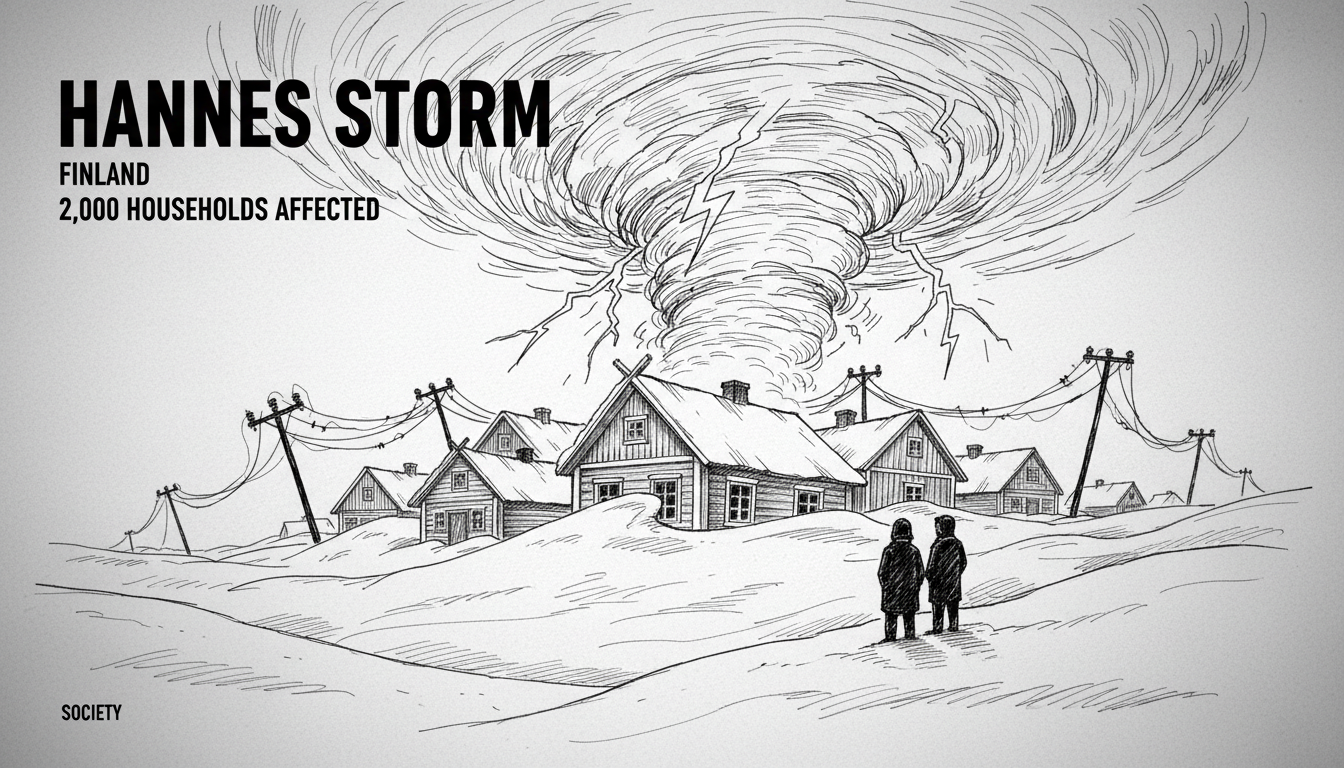
Finland's Hannes storm has forced rescue services in Eastern Uusimaa to handle dozens of damage control tasks, with over 2,100 households losing power during the severe weather event. The storm, which struck on Tuesday evening, mobilized the Itä-Uudenmaa rescue department and contract fire brigades across the region. By Wednesday afternoon, the situation had calmed, but not before extensive work clearing fallen trees from roads and power lines.
No personal injuries were reported, a testament to effective warnings and response. However, property damage occurred, and the disruption highlighted vulnerabilities in rural power infrastructure. Rescue officials confirmed that tasks poured in through the night and into Wednesday morning before tapering off.
Rescue Teams Tackle Dozens of Incidents
Acting Palomestari Mika-Kristian Tepsan said rescue tasks came in thick and fast overnight. 'The calls were steady from evening through the early morning, but by afternoon, things had quieted down,' Tepsan stated. The rescue department did not elevate its readiness level officially, but it relied heavily on contract fire brigades for support. These volunteer units are a cornerstone of Finland's decentralized emergency response, especially in rural municipalities.
The primary tasks involved trees blocking roads and, to a lesser extent, trees fallen on power lines. For incidents involving electrical infrastructure, responsibility shifts to the local energy companies. This coordination between public rescue services and private utilities is standard protocol during such storms. The seamless handoff ensures that specialized teams handle live wires safely.
Power Grid Strain and Rapid Restoration
Energy sector data reveals the storm's immediate impact. In Porvoo, over 1,000 households were without electricity at the peak of the outage. In neighboring Loviisa, 1,100 homes lost power. Restoration crews worked through the night. By Wednesday, Loviisa had full power restored, but Porvoo still had 122 customers waiting for electricity.
This disparity in restoration times often relates to the density of the network and the nature of the damage. Fallen trees on overhead lines in forested areas can require extensive clearing before repairs. Finland's energy network, while modern, remains exposed in such weather due to its vast forest cover. Analysts point to this event as a routine stress test for the grid.
A Familiar Challenge for Finnish Preparedness
Storms like Hannes are not uncommon in Finland, particularly during autumn and winter. The country's geography and climate make it susceptible to such events. The response to Hannes followed a well-rehearsed playbook. The Finnish Interior Ministry oversees rescue services through regional authorities, ensuring a standardized approach.
The absence of injuries is a key success metric. It reflects effective public warning systems and public adherence to safety advice during high winds. The Finnish Meteorological Institute issued timely storm warnings, which likely kept people indoors and off roads. This institutional coordination minimizes risks during natural disasters.
Infrastructure Investment and EU Resilience Goals
From a policy perspective, repeated storm disruptions feed into ongoing debates about infrastructure investment. Energy companies are increasingly pressured to bury power lines or strengthen grids. The Finnish government has allocated funds for critical infrastructure upgrades, aligning with broader European Union objectives.
The EU's Civil Protection Mechanism and policies on critical infrastructure resilience encourage member states to fortify systems. Finland often references these EU frameworks when planning long-term investments. Events like the Hannes storm provide concrete data for justifying such expenditures. They highlight the economic cost of outages beyond mere inconvenience.
Experts in emergency management emphasize the role of volunteer fire brigades. 'These local units provide indispensable rapid response capability,' said one Helsinki-based crisis preparedness consultant. 'Their integration with professional rescue services is a model of community-based resilience.' This model is funded through municipal budgets and state subsidies, reflecting Finland's layered governance.
The Political Dimension of Disaster Response
In the Eduskunta, Finland's parliament, storms often trigger questions about climate adaptation and funding. Opposition parties may query whether preparedness measures are sufficient. The Ministry of Economic Affairs and Employment, which oversees energy policy, monitors outage data closely. Prolonged outages can lead to political scrutiny and calls for faster grid modernization.
Finnish EU Commissioner Jutta Urpilainen has highlighted climate resilience as a priority for cohesion funding. Eastern Uusimaa, as part of the Helsinki-Uusimaa region, could access such EU funds for infrastructure projects. The Hannes storm's impact adds weight to arguments for prioritizing these investments in national budgetary discussions.
Looking Beyond the Immediate Cleanup
As power restores and roads clear, the focus shifts to lessons learned. Energy industry analysts note that while overhead lines are cost-effective, their vulnerability prompts a cost-benefit analysis. Underground cabling is more expensive but offers greater reliability during storms. This trade-off is central to Finland's energy security strategy.
The storm also tested communication between rescue services, energy firms, and local governments. Preliminary reports suggest coordination was effective, but full evaluations will follow. Such reviews are standard and often lead to procedural tweaks. They ensure that responses to future storms become even more efficient.
Finland's experience with Hannes is a microcosm of broader Nordic challenges. Climate change may increase the frequency or intensity of such weather events. Proactive policy must consider this trajectory. Investing in resilient infrastructure is not just about repairing damage but preventing it.
What does a storm like Hannes reveal about Finland's capacity to handle future climate-related disruptions? The answer lies in continued investment, community preparedness, and strong inter-agency cooperation. The coming years will show if current policies are equal to the task.