
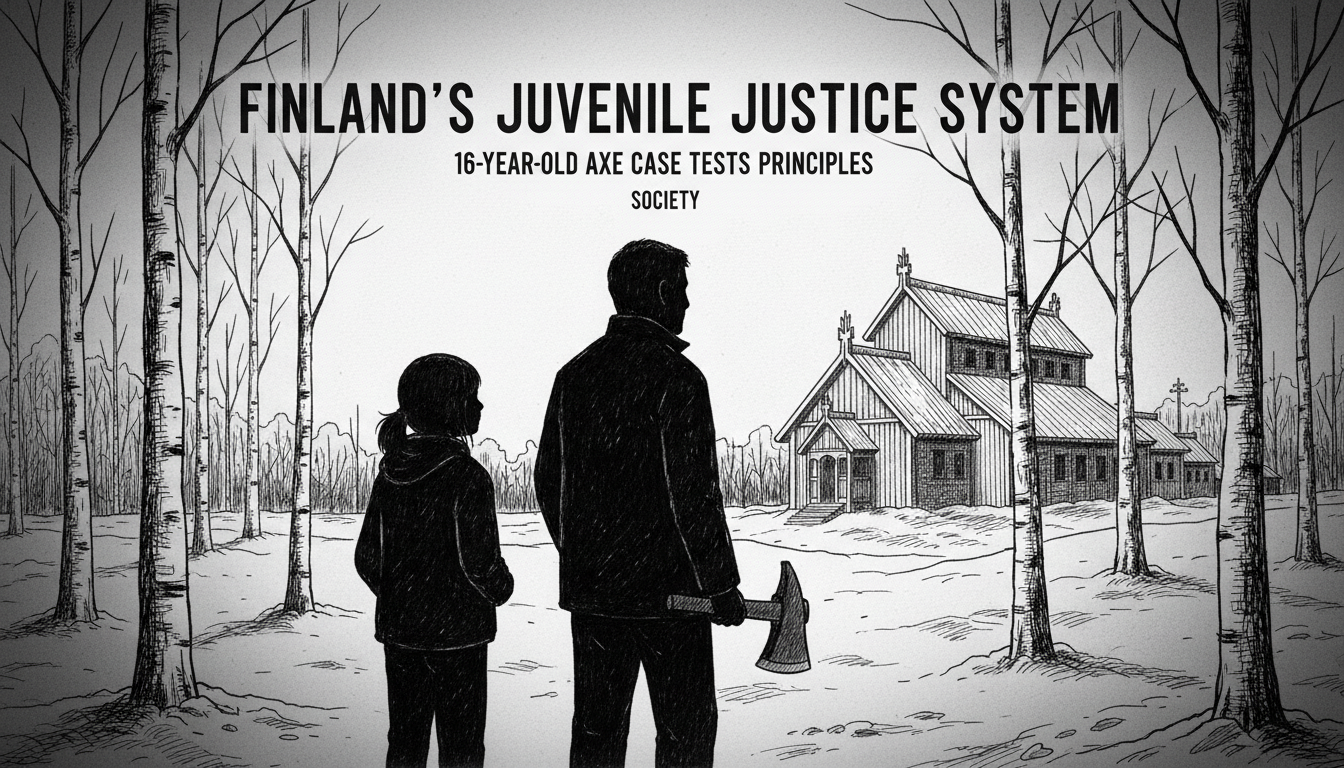
Finland's youth justice system faces a new test after a South Savo District Court verdict ordered a now-adult teenager to pay thousands in damages for crimes committed at age 16. The young man was convicted for property damage and possession of an object suitable for causing harm, stemming from an incident in Juva where he swung an axe and broke windows. This case highlights the complex balance Finland's legal system must strike between holding young offenders accountable and prioritizing their rehabilitation. The verdict from the Etelä-Savon käräjäoikeus demonstrates the practical application of principles that make Nordic juvenile justice distinct from more punitive models found elsewhere.
A Verdict Rooted in Restorative Justice
The court's decision focuses heavily on financial restitution, ordering the defendant to compensate the victims for the damage caused. This aligns with Finland's longstanding emphasis on restorative justice, especially for minors. Under Finnish law, individuals under 18 are considered juveniles, and the penal code explicitly favors measures that repair harm and reintegrate young people into society. Sentences typically involve community service, fines, or placement in a youth rehabilitation program rather than imprisonment for non-violent crimes. The specific charge of 'possession of an object suitable for causing harm' reflects a legal nuance aimed at preventing escalation, acknowledging the danger of the situation without necessarily proving intent to injure a person.
Criminologists argue this approach addresses the root causes of behavior more effectively than pure punishment. "The goal is not to create a permanent criminal record that follows a child for life, but to interrupt a negative trajectory," explains a Finnish criminology researcher familiar with the system. "By focusing on compensation and consequences tied directly to the act, the young person understands the real-world impact of their choices. It's about accountability within a framework of support." The court likely considered the teenager's age, circumstances, and potential for reform as central factors, as mandated by Finnish juvenile law.
The Nordic Model: Prevention Over Punishment
Finland's approach to juvenile crime cannot be separated from its broader social welfare model. The system is designed to intervene long before a teenager picks up an axe. It relies on a network of social services, schools, and healthcare providers to identify and support at-risk youth. Issues like social exclusion, family problems, mental health struggles, or substance abuse are treated as key factors that society has a responsibility to help mitigate. This preventative infrastructure is why Finland consistently reports some of the lowest rates of juvenile incarceration in Europe.
Comparative studies show stark contrasts with more punitive systems. Where some countries might pursue custodial sentences for similar property crimes involving a weapon, the Finnish trajectory begins with child welfare services and escalates through graduated, non-custodial interventions. The court process itself for juveniles is less formal, with a stronger emphasis on mediation between the offender and the victim. The ultimate aim is to prevent re-offending by strengthening the young person's bonds to society, not severing them through incarceration. This case in Juva, while serious, would be channeled through this philosophy, aiming to make the teenager understand the consequences and provide tangible restitution to those harmed.
Challenges and Criticisms in a Modern Context
Despite its international acclaim, Finland's system is not without contemporary challenges. Public perception can sometimes clash with rehabilitative ideals, particularly when crimes involve weapons or cause significant fear in a community, as the axe-swinging incident in Juva likely did. There is an ongoing debate about whether the system is too lenient in an era of social media influence and evolving youth gang dynamics. Furthermore, the effectiveness of interventions depends heavily on municipal resources, leading to potential inequalities in support available across different regions of Finland.
Experts note that the system's success hinges on early and effective intervention. "The Finnish model works best when problems are caught early by teachers, social workers, or healthcare professionals," says a policy analyst focusing on Nordic justice. "If a young person slips through that safety net and their behavior escalates to the point of a serious court case, the challenge of rehabilitation becomes greater. The case in South Savo is a reminder that the system is tested at its edges." The requirement for the young man to pay substantial damages also raises questions about his economic capacity and whether the debt could itself become a destabilizing factor, potentially undermining the goal of integration.
Looking Ahead: Rehabilitation and Responsibility
The young man from Juva now carries the financial responsibility imposed by the district court as he enters adulthood. His case becomes a microcosm of the system's core question: can enforced accountability foster genuine rehabilitation? The Finnish answer is a cautious 'yes,' but it requires follow-through. Payment plans for damages are often structured reasonably, and probation services may monitor his progress. The hope is that this experience, coupled with any mandated counseling or social support, will redirect his path.
This incident does not signify a rise in juvenile violence in Finland, where overall crime rates have remained relatively stable. Instead, it serves as a concrete example of how the legal machinery operates when a young person crosses a serious line. The verdict underscores that while the system is rehabilitative, it is not permissive; serious actions have serious consequences, even for 16-year-olds. The ultimate measure of success will be whether this individual does not reappear in the court system in the future. As Finland continues to navigate the complexities of youth crime, the principles applied in this Juva courtroom—restoration, responsibility, and a steadfast belief in the possibility of change—remain its guiding lights. The system bets on the potential of every young person, even one who has caused harm, to contribute positively to society.