
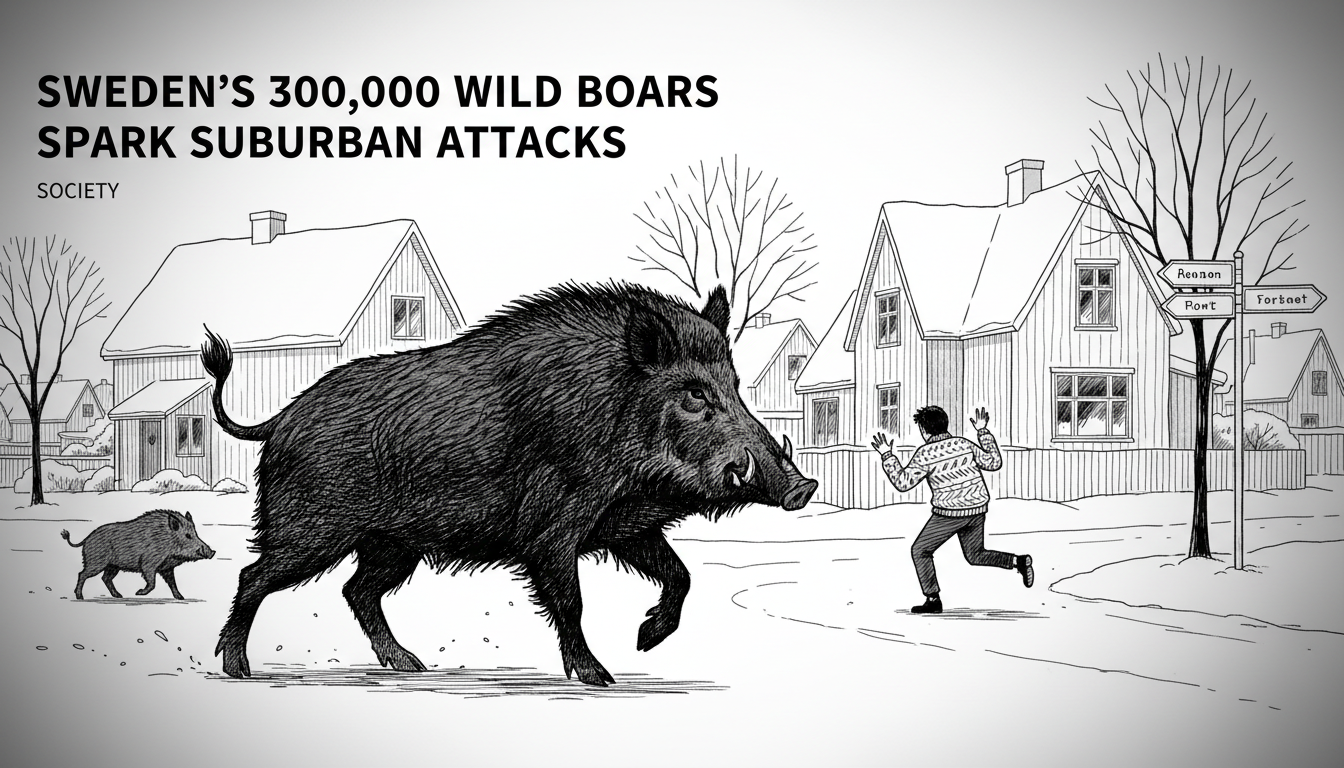
Sweden's wild boar population now exceeds 300,000 animals, a number that is transforming peaceful suburban walks into unexpected encounters with wildlife. For Lollo Samuelsson, a routine evening walk with her dogs in Kungsbacka turned terrifying when a wild boar she describes as 'the size of a pony' charged from the undergrowth.
"I first thought, this is no pig—it's a pony, that's how big it was," Samuelsson said, recalling the sudden attack. Her dogs, unleashed in a familiar wooded area, sparked the aggressive response. The boar, likely a protective sow, targeted her pets. The incident, one of several recent police reports in the area, highlights a growing tension at the edge of Sweden's towns and forests.
Kungsbacka, a municipality in Halland County on Sweden's west coast, typifies this conflict zone. It's a place of expanding residential neighborhoods nestled against agricultural land and dense woods. This mosaic landscape provides perfect habitat for wild boar: shelter, water, and abundant food from farms and gardens.
From Rare Sight to Common Nuisance
A few decades ago, spotting a wild boar in southern Sweden was noteworthy. Today, it is increasingly common. Milder winters due to climate change, successful conservation, and a lack of natural predators like wolves in these areas have allowed populations to boom. The animals are highly adaptable and intelligent.
They are also large and powerful. An adult male can weigh over 200 kilograms. While generally shy, they become fiercely defensive, particularly females with young piglets. "A sow with piglets is one of the most dangerous animals in the Swedish forest," says wildlife biologist Erik Svensson, who studies human-animal conflict. "She will not hesitate to charge a threat, and dogs are often perceived as wolves, triggering a deep-seated defensive instinct."
For homeowners, the boars are a nightly nuisance. They root up lawns, destroy gardens, and raid compost bins. For farmers, the cost is measured in millions of Swedish kronor annually in crop damage. For dog owners like Samuelsson, the risk is far more personal.
The Rules of Engagement in Modern Sweden
The attack in Kungsbacka raises practical questions for residents. What should you do if you encounter a wild boar? The universal advice from authorities is simple: do not provoke it, and back away slowly. Never get between a sow and her young. The advice for dog owners is even more straightforward.
"In areas known for wild boar, keeping your dog on a leash is not just a courtesy; it's a critical safety measure," Svensson explains. "An unleashed dog can chase or corner an animal, escalating a sighting into an attack. The dog often runs back to its owner, bringing the threat directly to them."
Police in Halland have reiterated this message following the recent reports. They advise walkers to stay vigilant, especially at dawn and dusk when boars are most active. Making noise while walking can help avoid surprising them.
Managing the Unmanageable?
Controlling the wild boar population is a complex challenge. Hunting is the primary tool, with annual culls aiming to stabilize numbers. However, the boar's high reproductive rate makes this a constant battle. Some regions have implemented targeted hunting programs near urban fringes.
Yet, public opinion on hunting is mixed. The debate touches on animal welfare, the ethics of population control, and the very Swedish concept of allemansrätten—the right of public access. This cherished freedom to roam in nature becomes complicated when nature itself becomes a potential hazard.
Local municipalities are experimenting with solutions. These include public awareness campaigns, subsidized fencing for farmers, and clearer reporting systems for sightings and damage. The goal is coexistence, not eradication.
A New Suburban Reality
The story of Lollo Samuelsson and her dog is more than an isolated wildlife incident. It is a sign of a shifting relationship with nature in a densely populated, modern country. Sweden's green suburbs are increasingly a shared space.
This requires a change in mindset. The forest is no longer just a peaceful retreat; it is a dynamic ecosystem that includes large, wild animals. "We built our homes into their territory," reflects Samuelsson. "Now we have to learn the rules of their world when we step out our doors."
She and her dogs are unharmed, but shaken. The image of the massive animal charging from the twilight is indelible. Her experience serves as a stark reminder for communities across southern Sweden.
As the boar population continues to grow, these encounters will likely become more frequent. The question for towns like Kungsbacka is how to adapt. Can Swedish society find a balance between its deep connection to nature and the practical demands of safety and property? The answer will define the character of the Swedish suburbs for years to come. It will depend on education, sensible policy, and an acknowledgment that the wilderness, in the form of a boar the size of a pony, can appear at the end of your garden path.