
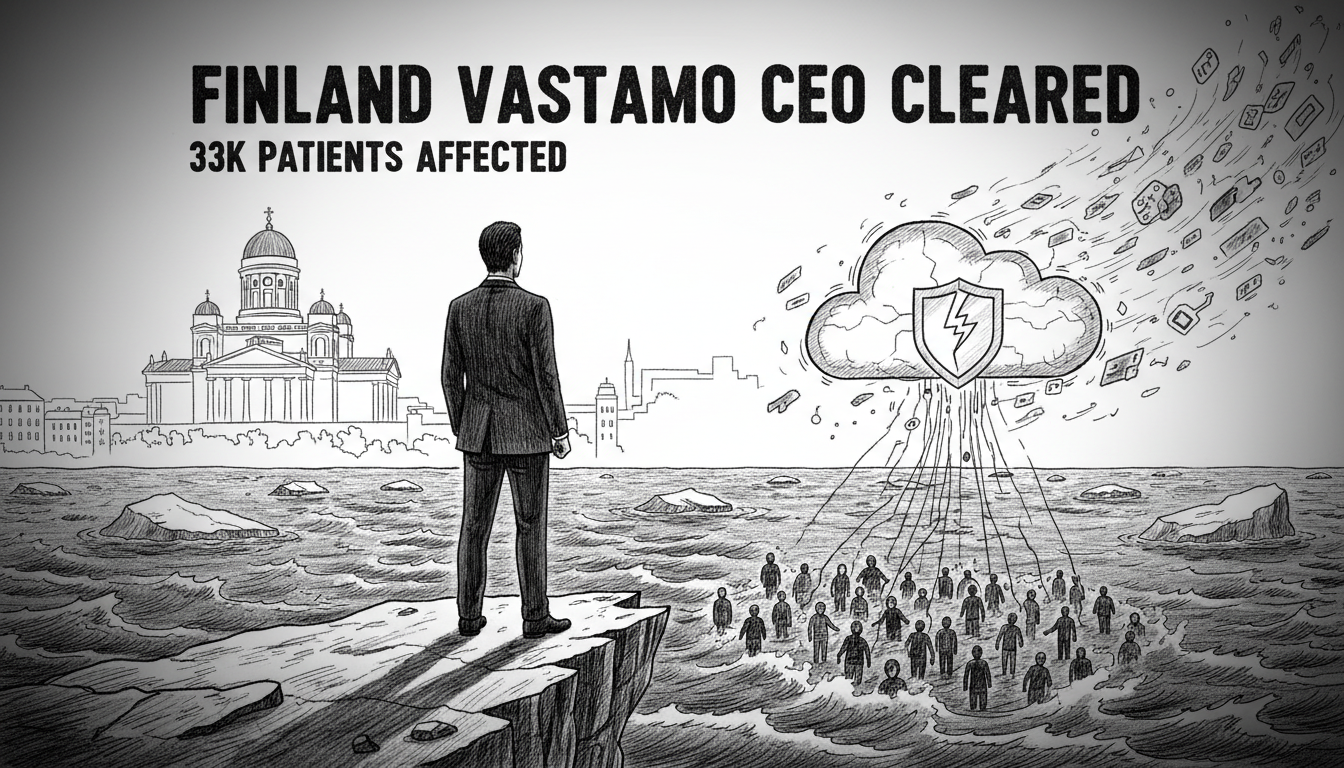
Finland's Vastaamo data breach exposed 33,000 therapy patients, but the Helsinki Court of Appeal has acquitted former CEO Ville Tapio of data protection crimes. This reversal overturns a district court's 2023 sentence, highlighting profound legal challenges in holding executives accountable for cyber failures. The decision sparks fresh debate over corporate responsibility under the EU's strict General Data Protection Regulation (GDPR). For thousands of victims, the ruling adds a complex legal postscript to a deeply personal crisis of leaked intimate health records.
A Landmark Case Unravels in Helsinki
The Helsinki Court of Appeal dismissed all charges against Ville Tapio, the former chief executive of the private psychotherapy firm Vastaamo. In April 2023, the Helsinki District Court had sentenced Tapio to a three-month suspended prison term for data protection violations. That conviction followed a catastrophic 2020 hack where attackers stole patient databases and later attempted extortion using Bitcoin ransoms. The appeal court's assessment focused on the specific legal criteria for criminal negligence, ultimately finding insufficient evidence to prove Tapio's direct culpability beyond a reasonable doubt. This judicial shift occurred in the Finnish capital's government district, where policy makers are now forced to re-examine enforcement mechanisms.
Chronology of a National Data Trauma
Vastaamo's data security collapse began with intrusions in late 2018, but the breach became public in October 2020. Cybercriminals accessed sensitive patient journals containing therapy notes and personal identifiers for approximately 33,000 individuals. The hackers subsequently targeted victims directly with ransom demands, threatening to publish their confidential information. The scale of the breach triggered national outrage and a police investigation spanning several years. Finnish authorities faced immense pressure to deliver accountability, leading to Tapio's prosecution as the company's leader. The case marked one of the first major tests of Finland's implementation of the EU GDPR for criminal liability.
The Legal Hurdle of Proving Executive Negligence
Legal experts note that acquittals like Tapio's underscore the difficulty of establishing personal criminal responsibility for corporate data breaches. "The court must find concrete evidence that the CEO personally neglected clear and specific duties," explained University of Helsinki law professor emerita, citing the Finnish Criminal Code. The appeal court scrutinized whether Tapio had adequate systems in place and whether he ignored direct warnings. Without documented proof of such deliberate oversight, the principle of corporate liability does not easily translate to prison sentences for individuals. This legal reality exists despite the EU's GDPR framework, which mandates strong security but leaves national courts to interpret enforcement.
Technical Failures and Missed Warnings
Data security analysts who reviewed the Vastaamo case point to a series of technical vulnerabilities that enabled the hack. The company's IT infrastructure reportedly used outdated software and insufficient encryption for patient records. Internal audits before the breach had flagged security weaknesses, but the appeal court found no conclusive evidence that Tapio was personally aware of these specific reports or that he acted with criminal intent by ignoring them. This gap between identified risks and proven executive knowledge becomes a critical barrier in court. The Finnish Transport and Communications Agency Traficom has since intensified national cybersecurity guidelines, but the Vastaamo precedent may influence how future incidents are prosecuted.
Political and Regulatory Repercussions
The acquittal arrives amid ongoing political scrutiny in the Eduskunta, Finland's parliament. Several parties, including the Social Democrats and the Greens, have called for tighter data protection laws and clearer chains of responsibility. Minister of Justice Leena Meri acknowledged the ruling, stating that the government is "analyzing the implications for our legal framework." Finland must balance EU directives with national jurisprudence, and this case may prompt legislative proposals to clarify the thresholds for criminal negligence in data security matters. The outcome also raises questions about the effectiveness of GDPR as a deterrent when corporate leaders avoid personal penalties.
Patient Trust and the Long Road to Recovery
For the 33,000 affected patients, the court's decision is a mixed outcome. While some victims sought symbolic justice through Tapio's conviction, others emphasize that compensation and systemic change are more crucial. Civil lawsuits against Vastaamo continue, and the Data Protection Ombudsman has imposed administrative fines on the defunct company. The breach eroded public trust in digital health services, a sector where Finland has been a leader. Psychologists report that many victims experienced renewed anxiety during the legal proceedings, feeling that their trauma was reduced to a technical legal debate. The human impact of the breach remains palpable across Finnish society.
EU Context and Future Cybersecurity Challenges
Finland's case mirrors broader European struggles to apply GDPR's punitive measures. The regulation allows for fines up to 4% of global turnover, but criminal sanctions for individuals vary by member state. In Finland, the Penal Code's data protection crime section requires proof of intent or gross negligence, a high bar for prosecutors. As cyber threats grow more sophisticated, EU institutions may push for more harmonized criminal liability standards. For Finnish companies, the takeaway is that robust technical safeguards are essential, but legal protection for executives remains complex. The Vastaamo saga serves as a cautionary tale about the limits of law in the digital age.
A Question of Corporate Accountability
Does the acquittal of Vastaamo's CEO signal a failure of accountability or a nuanced application of justice? The ruling leaves Finland at a crossroads, weighing the need for strong data protection against the legal principles of personal culpability. As policymakers in Helsinki review the decision, the legacy of the breach continues to shape Finland's approach to cybersecurity and privacy. For now, the case closes a criminal chapter but opens a wider debate on how societies hold leaders responsible when digital systems fail.