
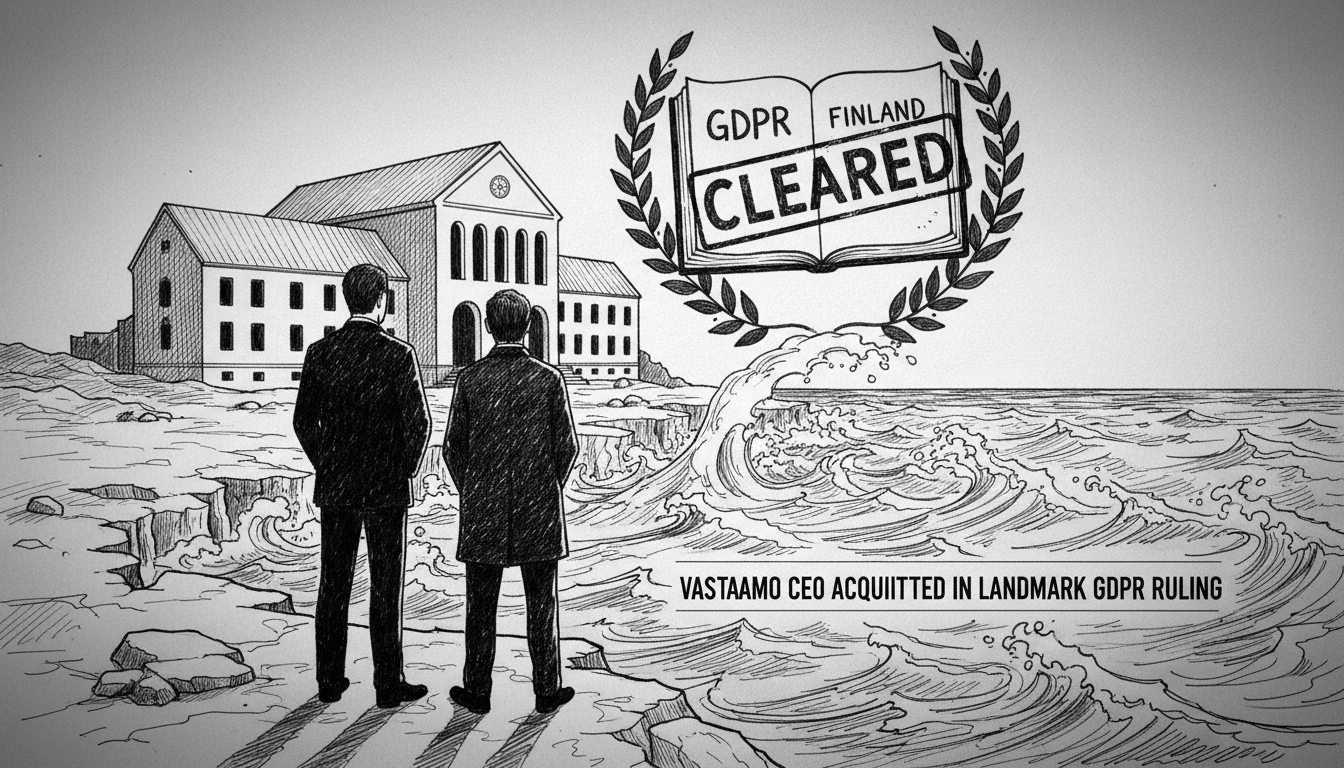
Finland's Vastaamo data breach impacted up to 40,000 therapy patients, yet its former CEO now walks free. The Helsinki Court of Appeal acquitted former Psychotherapy Centre Vastaamo CEO Ville Tapio of data protection crimes on Thursday, overturning his prior suspended prison sentence. This landmark ruling delivers a stunning reversal in one of the Nordic region's most damaging privacy scandals, raising urgent questions about the practical enforcement of the European Union's General Data Protection Regulation (GDPR).
A Court's Reversal Upends the Narrative
The appellate court's decision starkly contradicts the Helsinki District Court's judgment from spring 2023. That lower court had found Tapio guilty, imposing a three-month conditional prison term. It ruled that Vastaamo's patient database stored sensitive personal information and session notes in plain text without sufficient encryption. This failure, the district court argued, violated GDPR requirements for pseudonymization and encryption of personal data. The Court of Appeal, after re-examining the legal framework, reached a different conclusion. It determined that neither the GDPR nor Finland's specific healthcare legislation mandated the specific technical security measures Tapio was accused of neglecting.
This legal about-face centers on technical interpretation. The prosecution's case hinged on proving that Tapio, as the responsible leader, failed to implement adequate and prescribed data security measures. The appeal court's acquittal suggests the legal mandates were not as explicit as the lower court believed. “The court has now drawn a line on what the GDPR's principle of accountability specifically requires in practice,” said a Helsinki-based data protection lawyer familiar with the case. “This will become a key reference point.”
The Breach That Shook a Nation
The legal debate unfolds against the backdrop of a profound national crisis. The Vastaamo data breach, discovered in 2020, was not a typical hack. An attacker infiltrated the company's systems and stole databases containing deeply intimate details of psychotherapy sessions. The assailant then embarked on a cruel campaign of extortion, demanding ransom payments from the clinic itself and later targeting individual patients directly. Thousands received emails threatening to publish their therapy notes unless Bitcoin payments were made.
The scale of the trauma is difficult to overstate. An estimated 25,000 to 40,000 individuals had their most private thoughts, fears, and vulnerabilities exposed to criminal exploitation. For many, the breach compounded existing trauma and shattered trust in the confidentiality of mental healthcare. The scandal triggered police investigations, parliamentary hearings, and a national conversation about digital security in sensitive health services. It also placed Finland's application of the EU's GDPR under an intense microscope.
Legal Experts Debate GDPR's 'Teeth'
The acquittal sparks a complex debate among legal scholars and privacy advocates. On one side, some argue the ruling reveals potential gaps in how GDPR's broad principles are translated into enforceable obligations for corporate leaders. The regulation mandates data protection by design and default, but specifying the exact technical measures can be subject to interpretation. “This case shows the challenge of prosecuting individuals under the GDPR without very clear, specific violations of mandated protocols,” notes a European data law professor. “The principle of accountability is strong, but its edges are being tested in court.”
Conversely, others caution that the ruling is narrowly focused on this specific charge against Tapio. It does not absolve Vastaamo the company of its obvious security failures, nor does it negate the immense civil liability it faces. Thousands of victims have filed compensation claims, and the company is in bankruptcy proceedings. Separate criminal investigations into the actual hacking and extortion attempts continue. The CEO's acquittal pertains solely to the charge of a data protection offense under the specific articles cited by the prosecutor.
The Technical Security Failure
Regardless of the legal outcome, data security analysts describe Vastaamo's practices as grievously flawed. Storing psychotherapy notes in plain text within a database, especially without strong encryption and access controls, is considered a fundamental failure in modern information security. In healthcare, where data sensitivity is at its peak, such lapses are indefensible by contemporary standards. The breach highlighted a systemic failure where technical oversight did not match the profound sensitivity of the data being held.
“The technical facts of the case are clear: the data was not secure,” states a cybersecurity consultant who has analyzed public reports of the breach. “The court's decision is a legal interpretation of responsibility, not a validation of the security model. Any health service provider looking at this should see it as a catastrophic example of what to avoid, not a get-out-of-jail-free card.” The Finnish Health and Social Care Inspectorate (Valvira) has since tightened oversight, emphasizing concrete technical requirements for patient data systems.
What Comes Next for Victims and the Law?
For the tens of thousands of victims, the legal wrangling offers little solace. Their data remains in the wild, their privacy irrevocably violated. The civil cases for compensation are their primary path for some form of redress. The bankruptcy estate of Vastaamo is handling these claims, though the process is slow and the total damages sought could far exceed the company's remaining assets.
The ruling's implications extend beyond Finland. As one of the first major GDPR cases involving a corporate executive's criminal liability for a massive data breach, it is being studied across the EU. National courts are still building a jurisprudence around the regulation's enforcement. This Finnish decision may influence how prosecutors in other member states draft indictments, ensuring charges are tied to explicit, unambiguous legal requirements.
The prosecution has the right to appeal the acquittal to Finland's Supreme Court, a move legal observers consider likely given the case's significance. The final word on Ville Tapio's legal responsibility may yet be ahead. Meanwhile, the shadow of the Vastaamo breach continues to loom large over Finland's digital society, a stark reminder that even the world's strongest privacy laws are only as effective as their implementation and interpretation in court.