
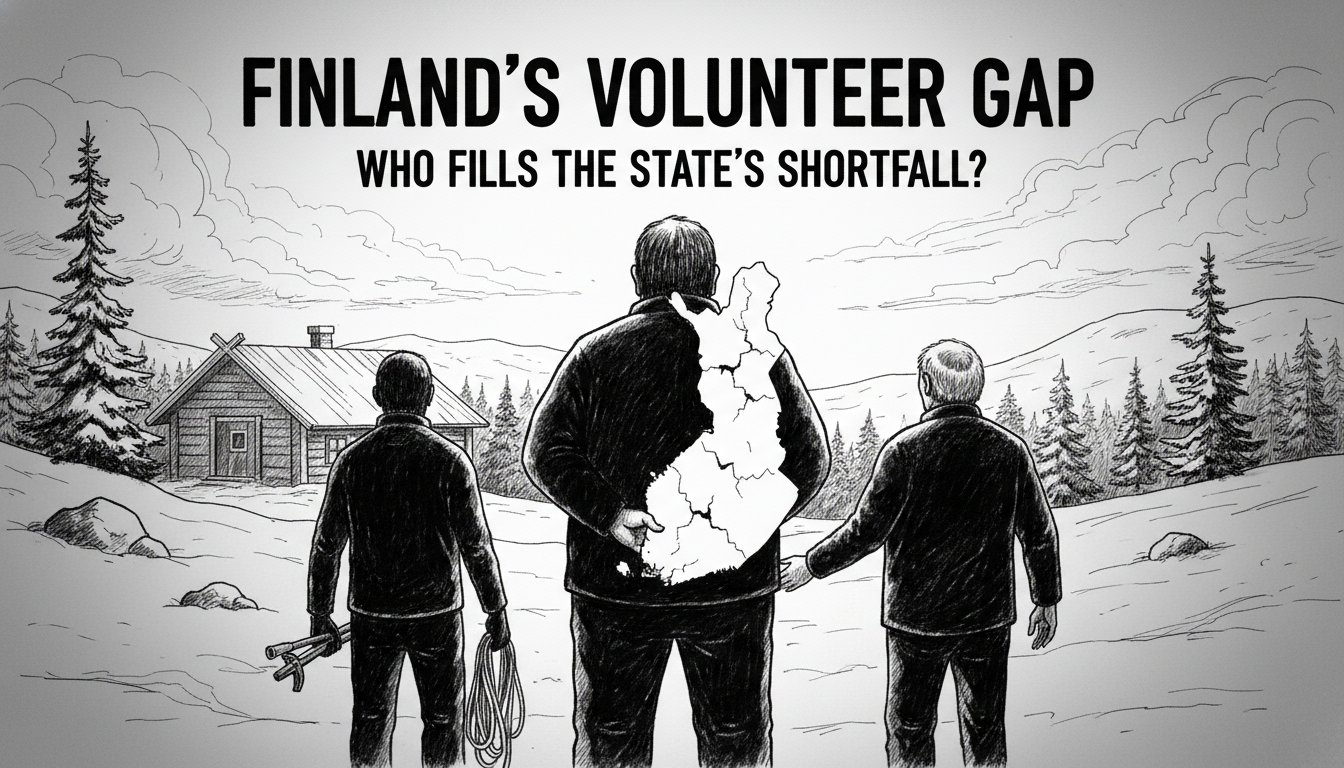
Finland's tradition of volunteerism faces a severe test as economic pressures mount nationwide. In the small town of Saarijärvi, Finnish Red Cross volunteers Sirpa Lehtinen and Marita Salokivi decorate their premises for Christmas. Their task is urgent: to create a welcoming space for locals who have nowhere else to go. This year, for the first time, the Saarijärvi chapter of SPR is organizing a 'Joulu yhdessä' or 'Christmas Together' event from December 23rd to 25th. The free, substance-free gathering will offer crafting, gingerbread baking, board games, and an evening snack. "Christmas can be a difficult time for some people, for example because of a family member's excessive alcohol use," Salokivi and Lehtinen explain. "That's why we want to offer a place to celebrate Christmas if home is a difficult place to be." Their initiative reveals a widening gap between public need and public funding, a gap increasingly filled by ordinary Finns.
The Growing Burden on Voluntary Action
The scene in Saarijärvi is not an isolated act of holiday charity. It is a symptom of a broader societal shift. For decades, Finland's renowned welfare state and its vibrant network of volunteer organizations operated in a complementary balance. Today, with government budgets stretched thin by a prolonged period of economic uncertainty and rising social service demands, that balance is tipping. Organizations like the Finnish Red Cross, with its 70,000 members operating in nearly every municipality, are being asked to do more with similar or shrinking resources. "There's an expectation that things will get done, even if the state doesn't do them," one volunteer noted, echoing a sentiment felt across the sector. This silent expectation places immense pressure on the 35% of Finns who Statistics Finland reports participated in volunteer work in 2022.
From Social Safety Net to Community Lifeline
Events like 'Joulu yhdessä' illustrate a critical evolution in the role of volunteer groups. They are moving beyond supplementing state services to providing essential community infrastructure for mental health and social cohesion. The choice of activities—communal crafting, baking, playing games—is deliberate. They combat the profound isolation that economic stress and family dysfunction exacerbate, particularly during the emotionally charged holiday season. "It's a mystery how many people will come here," the Saarijärvi volunteers muse, highlighting the unpredictable but rising demand. This model of preventative, community-based care is gaining recognition among social welfare experts. They argue that such initiatives address issues like loneliness and stress before they escalate into crises requiring more expensive, state-led interventions.
Economic Strain and the Volunteer's Dilemma
The paradox of the current situation is stark. Economic downturns simultaneously increase the need for volunteer-supported services and strain the capacity of volunteers themselves. Inflation reduces the purchasing power of donations, while potential volunteers may need to work longer hours or multiple jobs, leaving less time for unpaid community work. The Finnish Red Cross, while a large organization, relies on local chapters like Saarijärvi's to identify and respond to hyper-local needs. These chapters depend on the time, energy, and personal funding of individuals like Lehtinen and Salokivi. The sustainability of this model is now in question. Can volunteer networks continue to expand their scope indefinitely, acting as a catch-all for social needs without a corresponding increase in systemic support or recognition?
A National Challenge with Local Faces
The story in Saarijärvi provides a microcosm of a national conversation. Finland is grappling with the limits of its welfare model and rediscovering the indispensable value of its civic fabric. The volunteer effort is no longer just about altruism; it is a fundamental component of Finland's social resilience. Experts point out that the strength of community-based organizations lies in their agility and local knowledge—they can set up a Christmas event for the vulnerable in a matter of weeks, a bureaucratic impossibility for larger state entities. However, they warn against the normalization of this dynamic. Over-reliance on volunteerism to provide core social goods risks burnout and creates a patchwork system where support depends on geography and the vigor of local chapters.
The Path Forward: Partnership or Burnout?
The future of Finnish volunteerism hinges on redefining the partnership between the state and civil society. The current trend, where volunteers feel compelled to step in where public services retreat, is not sustainable. A constructive path requires greater institutional support: targeted funding for operational costs, training, and resources that allow organizations like the Red Cross to professionalize their volunteer management without losing their community heart. It also requires a public discourse that values this work not as a free substitute, but as a vital national asset worthy of investment. As the lights twinkle on the Christmas tree in Saarijärvi, they illuminate a simple truth. The success of 'Joulu yhdessä' will be measured in laughter and shared moments of peace for a few dozen people. But the success of Finland's social model will be measured in how it supports the thousands of volunteers making those moments possible, not just at Christmas, but all year round.