
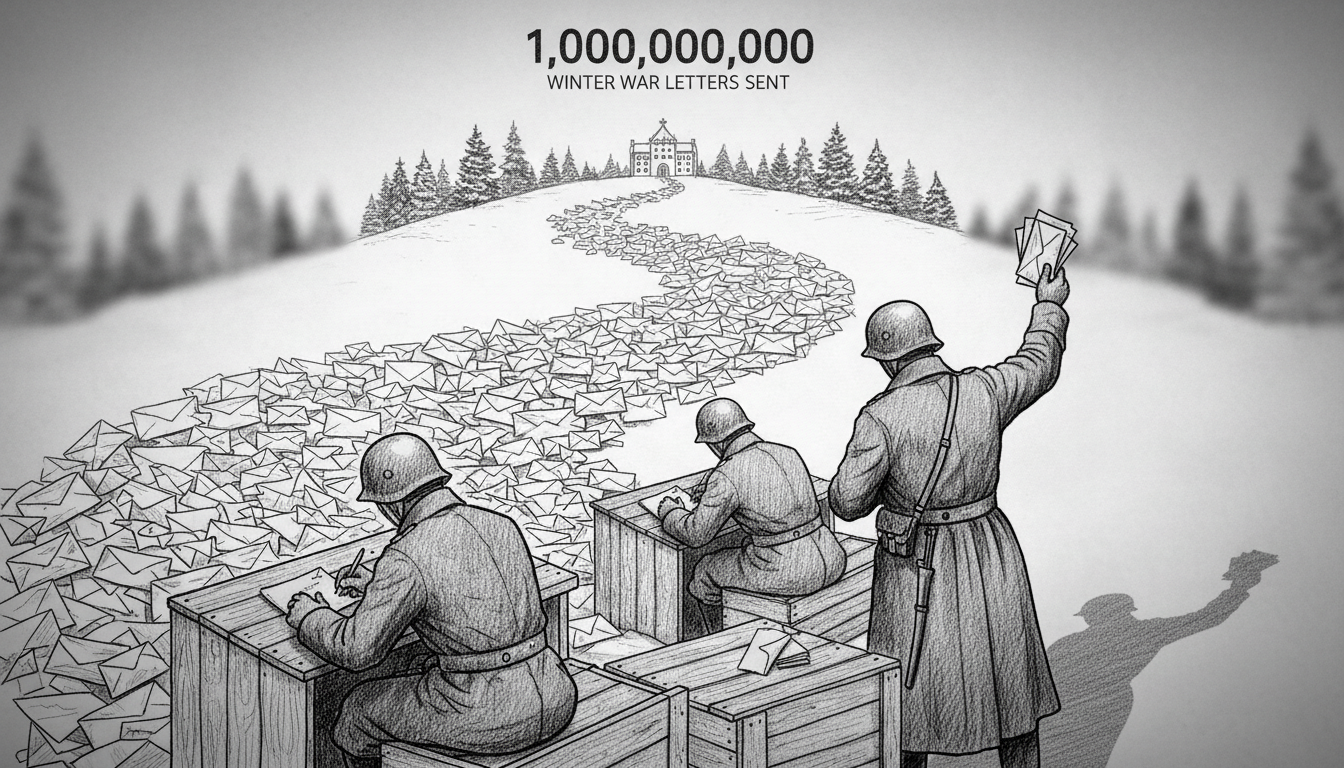
Over 1 billion letters were sent by Finnish soldiers during the Winter War and Continuation War, a staggering testament to the need for connection amid conflict. In the quiet Murtoinen district of Hankasalmi, central Finland, Jorma Makkonen carefully preserves a small part of that colossal correspondence. His home holds a bundle of brown envelopes, each containing handwritten messages from his grandfather, Aksel Hartikainen, sent from the front lines of the Winter War to his wife, Lyydia. These fragile papers offer a deeply personal window into a defining chapter of Finnish history.
A Family's Fragile Archive
Jorma Makkonen lifts the stack of envelopes from a cupboard, their paper brittle with age. The letters, penned by his maternal grandfather, soldier Aksel Hartikainen, are addressed to his grandmother in their home village. 'My grandmother wrote back to the front, but those letters have been lost,' Makkonen explains, highlighting the one-sided nature of many such family archives. The surviving letters detail daily life in the trenches, concerns for family, and the harsh realities of a war against a vastly superior foe. This collection in rural Hankasalmi is a microcosm of a national phenomenon, where millions of Finnish families once clung to postal updates as lifelines.
The Winter War began with a Soviet invasion on November 30, 1939, after Moscow demanded territorial concessions. Finland, though outnumbered and outgunned, mounted a fierce defense. The conflict ended with the Moscow Peace Treaty on March 13, 1940, forcing Finland to cede 11% of its territory. Approximately 25,000 Finns died, with 43,000 wounded. Soviet casualties were significantly higher. Within this brutal context, the exchange of letters became a crucial psychological sustainment for troops and civilians alike.
The Ink-Stained Reality of War
Historians emphasize that war correspondence like the Hartikainen letters serves as an invaluable primary source. They provide raw, intimate insights that official military records often lack. 'These letters capture the emotions, fears, and hopes of ordinary people caught in extraordinary circumstances,' says a Finnish historian specializing in the era. They reveal not just battlefield conditions but also the profound worry for loved ones back home, a theme echoed in Aksel's messages to Lyydia. This personal documentation helps scholars understand the social fabric of Finland under siege.
The letters from the front were a logistical marvel, considering the chaos of war. The Finnish postal service worked relentlessly to maintain this flow of communication, which was vital for morale. For soldiers like Aksel, writing home was a moment of normalcy and reflection. His letters likely avoided graphic detail to shield his family, instead focusing on mundane requests, weather, and reassurances. This self-censorship is common in war letters, yet the underlying anxiety often seeps through the lines.
Preserving a Nation's Memory
Today, descendants like Jorma Makkonen become inadvertent custodians of national memory. Preserving these documents is an act of personal and historical significance. They are tangible links to a past that shaped modern Finland's identity of resilience and independence. Museums and archives across Finland actively seek such collections to digitize and study, ensuring the stories are not lost. The letters are more than family heirlooms; they are fragments of a collective narrative.
In Helsinki, the National Archives of Finland hold extensive collections of war-time correspondence. Researchers use them to gain a ground-level view of history, complementing strategic analyses. The sheer volume—over one billion letters—underscores the communicative frenzy of a nation at war. Each letter, like those in Makkonen's home, adds a unique voice to the chorus of experience. They show how Finnish society remained knitted together through written words, despite the physical separation and danger.
The Legacy of the Winter War in Envelopes
The Winter War, though a military loss, became a cornerstone of Finnish national identity. The letters contribute to this legacy by humanizing the statistics. They remind us that behind the number of 25,000 dead were individuals with families, dreams, and daily concerns. Reading Aksel Hartikainen's worries about 'home troops'—his family—transforms historical fact into relatable emotion. This empathy bridges generations, allowing contemporary Finns to connect with their grandparents' sacrifices.
As Finland continues to navigate its relationship with Russia, now amidst a changed European security landscape, these historical documents gain renewed relevance. They are reminders of the cost of sovereignty and the enduring spirit of the Finnish people. The letters do not glorify war; instead, they testify to its personal toll and the universal desire for peace and reunion. In an age of digital ephemera, the physicality of these handwritten notes carries profound weight.
Jorma Makkonen's careful preservation of his grandfather's letters is a quiet act of devotion. It ensures that Aksel and Lyydia's story, and the million similar ones, continue to resonate. As Finland reflects on its past, these intimate documents challenge us to remember the human scale of history. They ask what we today would write home from the front lines of our own struggles, and what future generations might learn from our words.