
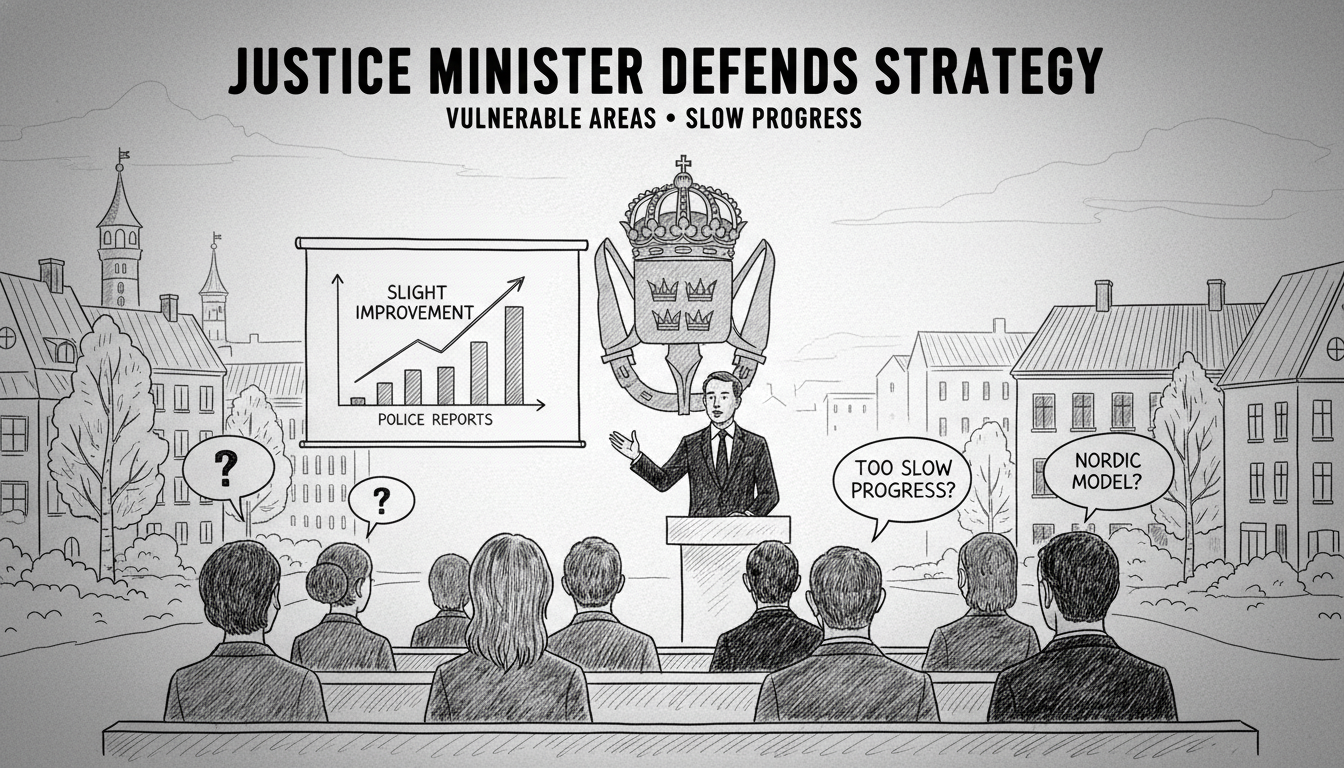
Justice Minister Gunnar Strömmer maintains the Swedish government is on the correct path in tackling vulnerable urban areas, despite acknowledging only minor progress. In a recent statement from the Rosenbad government offices, Strömmer pointed to police assessments indicating a weak but tangible positive development. He stated his position is based solely on police data, which shows a reduction in open drug dealing and fewer attacks on officers in these districts. The minister's comments come as official reports confirm the number of classified vulnerable areas has not decreased, raising questions about the efficacy of current government policy Sweden.
The political debate in Stockholm politics often centers on the pace of reform. Critics argue the developments cited by the minister are minimal given the scale of the challenge. They question whether the current Riksdag decisions and allocated resources are sufficient. The opposition has called for more aggressive measures and greater transparency in reporting outcomes. This ongoing discussion reflects a deeper struggle within the Swedish Parliament to balance security, integration, and social investment.
From a historical perspective, the classification of vulnerable areas, often termed 'utsatta områden', began over a decade ago. The policy framework involves coordinated efforts between national police, social services, and municipal authorities. Success is measured across multiple dimensions including crime rates, parallel societal structures, and economic exclusion. The current administration's approach continues initiatives from previous governments but with a heightened focus on law enforcement and stricter penalties.
For international observers, the situation highlights a complex Nordic model under strain. Sweden's approach combines proactive policing with social programs, a method now facing a rigorous test. The slow progress reported by police suggests systemic issues that may not yield to quick fixes. It also points to potential gaps between political rhetoric in the Riksdag building and measurable outcomes on the ground. The next comprehensive police assessment will be a critical indicator for the government's standing.
Strömmer's firm stance, declaring he will not 'budge an inch' from the current strategy, signals a political commitment to a long-term plan. The coming quarters will determine if this patience is warranted or if public and parliamentary pressure will force a policy review. The outcome will significantly influence the political landscape and future government policy Sweden directions concerning urban security and social cohesion.