
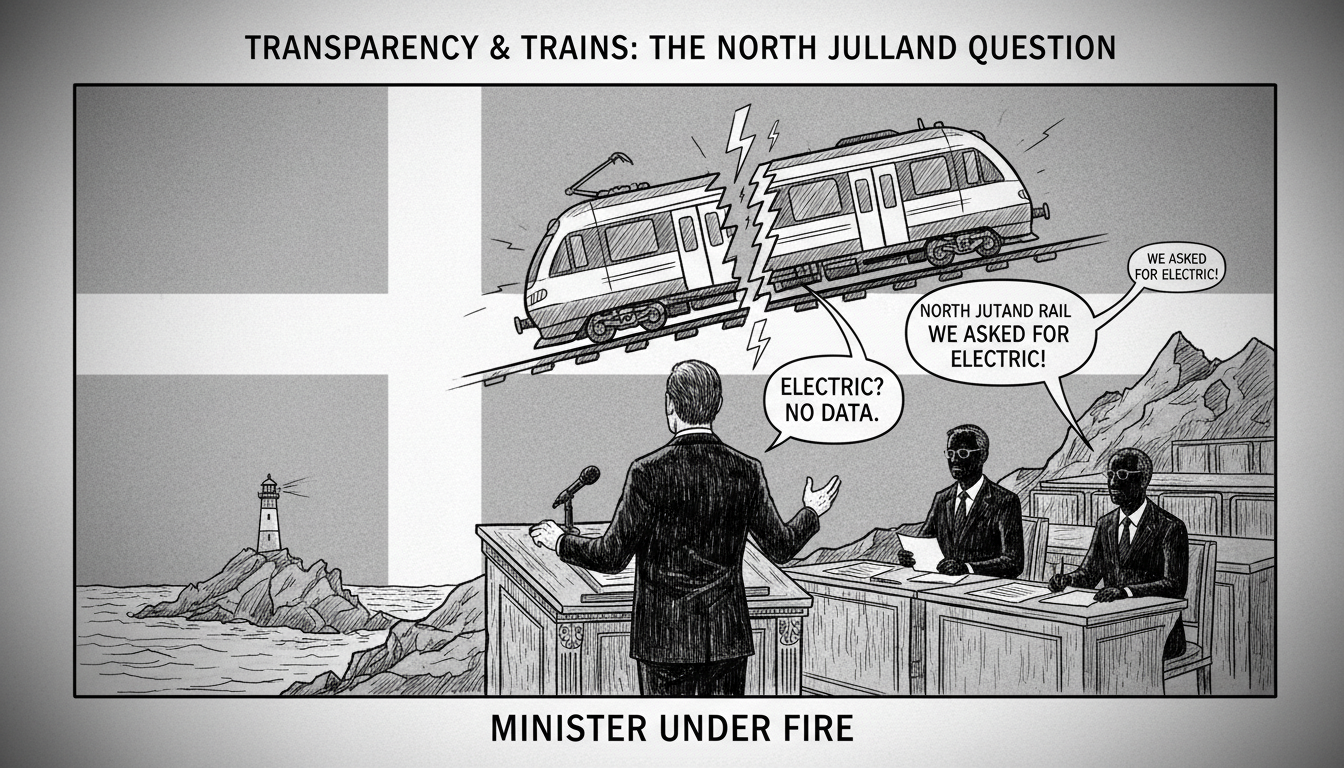
A recent parliamentary debate in Copenhagen has cast a spotlight on Denmark's transport policy and political accountability. The focus is on the future of rail services in North Jutland, a region often feeling distant from the capital's decisions. The core issue involves a direct contradiction between local needs and a minister's statements.
Nordjyske Jernbaner, the regional rail operator, has publicly requested electric trains powered by overhead lines for the Vendsyssel network. This is a clear infrastructure demand. Yet, in a parliamentary session in November, Transport Minister Thomas Danielsen presented a different narrative to the Folketing, Denmark's parliament. He has since avoided explaining this discrepancy.
The debate unfolded during the standard question time. These sessions can sometimes pass unnoticed, but not this one. On a Wednesday afternoon, Peder Hvelplund, a member of parliament from The Red-Green Alliance representing North Jutland, took the floor. He held a specific question for the minister regarding the northern rail service.
Parliamentary rules allow a politician to ask a minister three questions on a topic. After the minister evaded the initial inquiries, Hvelplund posed his final, repeated question with clear intent. He asked if the minister was willing to champion the establishment of electrification with overhead lines in Vendsyssel. His gaze remained fixed on Minister Danielsen across the chamber, underscoring the demand for a straight answer.
This incident touches on broader themes in Danish society news, particularly regional equity and infrastructure investment. For international observers, it highlights how Denmark's famed consensus model can sometimes fray at the edges, especially concerning Copenhagen integration with outlying regions. The welfare system relies on reliable public transport to connect citizens to jobs and services. When major infrastructure promises appear inconsistent, it erodes public trust.
Analysis of Danish social policy often shows a tension between national budgetary priorities and local development needs. The government's current stance on immigration policy and welfare spending may be influencing broader investment decisions, potentially sidelining regional projects like this. Municipalities in North Jutland have long argued for better transport links to spur economic growth and counter population decline.
Community leaders in areas like Aalborg and Hjørring frequently stress that modern, electric rail is not a luxury but a necessity for sustainable development. Statistics on integration and education show that reliable transport is a key factor in connecting residents, including newer arrivals, to educational institutions and job markets outside major urban centers. Social centers in these communities depend on such links to function effectively.
The minister's avoidance raises a simple question about political transparency. It is one thing to debate the merits and costs of a project. It is another to give an account to parliament that contradicts established facts from the very operator involved. The situation now places the government's commitment to Denmark's green transition and regional balance under scrutiny. The next steps will reveal whether this was a simple miscommunication or a deeper policy shift away from investing in the country's northern rail infrastructure.