
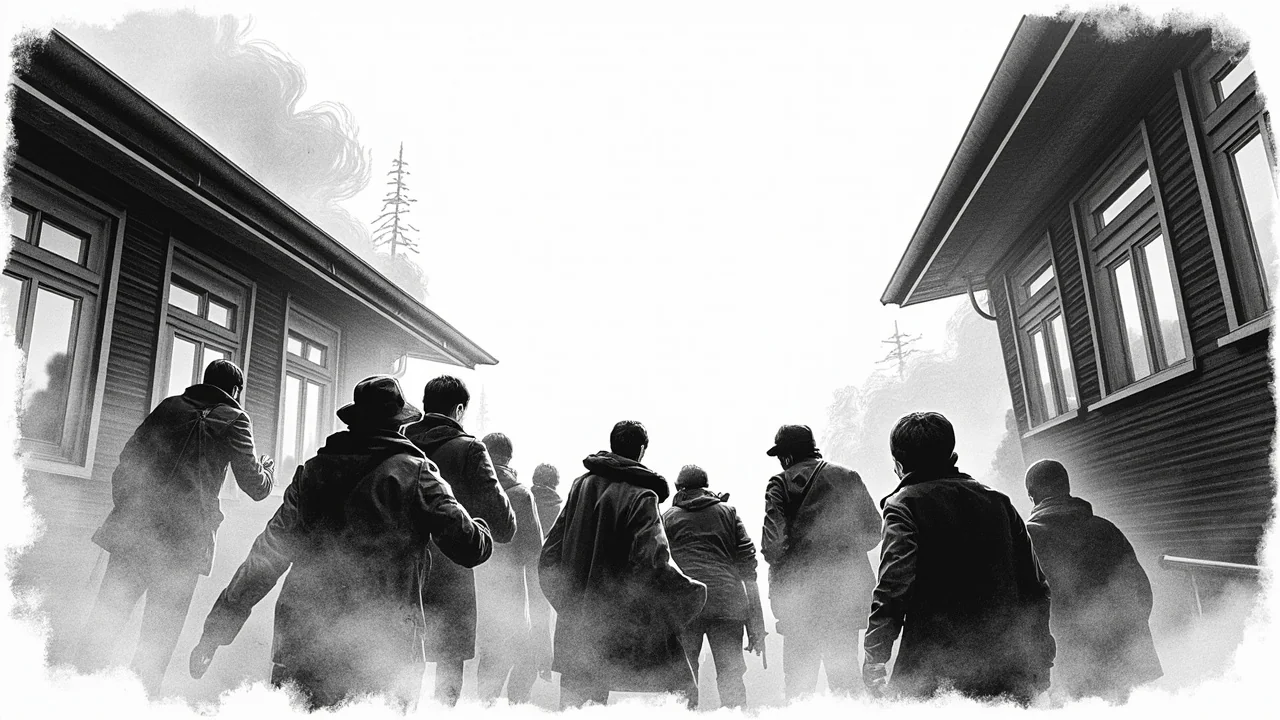
Norway's historic city center faced a major emergency response Monday morning as thick smoke forced the full evacuation of a prominent Bergen hotel. Forty-one guests and staff fled the Opus XVI hotel on Vågsallmenningen after smoke detectors activated in a labyrinthine network of crawlspaces beneath the building. Firefighters described facing extreme conditions as they worked to locate the source.
A Cramped and Confusing Search
Emergency services received the alarm just after 7 AM Monday. "The hotel is being evacuated. The fire department is on site from the main station and Sandviken, going in with smoke divers to get an overview," said duty officer Jostein Steinsland-Hauge immediately after the alarm sounded. The hotel's receptionist confirmed 38 guests and three employees had self-evacuated. Police on scene, led by Frode Selven, worked to verify the total number of evacuees. No injuries were reported.
The central challenge quickly became the building's substructure. Jan Aase, the fire department's incident commander, explained that crews were working in a large crawlspace cellar. "It's like a maze and the crews have to partially crawl," Aase said, describing the search area as extremely cramped. This complicated the initial investigation, as smoke divers navigated tight, confined spaces to find the origin of the smoke.
No Fire Located, Source Remains Unknown
As of 7:07 AM, operational leader Tore-André Brakstad with the West Police District confirmed that no actual fire had been located. The alarm was triggered solely by detectors in the crawlspace. "We do not know what is causing the smoke," stated Jan Aase. This uncertainty became the core of the operational dilemma. Without a clear source—be it an electrical fault, smoldering material, or another issue—the danger could not be fully assessed or mitigated.
The difficult working conditions directly impacted the response strategy. "We must find a way to get the smoke out, but it is very difficult working conditions," Aase emphasized. Ventilating such a confined, complex space presents significant technical hurdles for fire crews, who must balance their own safety with the need to investigate. The evacuation order remained strictly in place until the source could be found and removed, leaving guests displaced.
The Logistical and Architectural Challenge
This incident highlights the unique firefighting challenges presented by Bergen's historic wood-built city center, a UNESCO World Heritage site. Many buildings, while modernized, retain older architectural features and substructures not designed with contemporary emergency access in mind. The Opus XVI hotel, situated in a key area near the famous fish market, is part of this historic urban fabric. The description of a large, labyrinthine crawlspace is not uncommon for structures built on and into Bergen's seven hills, where cellars and foundational spaces were often carved out or added incrementally over time.
Firefighting in such environments requires specialized training and equipment. Smoke diving in confined spaces is among the most hazardous regular operations fire services undertake. Reduced visibility is compounded by physical constraints, potential for entanglement, and the rapid buildup of heat and toxic gases. The Bergen crews' immediate deployment of smoke divers indicates a standard protocol for such alerts in complex buildings, prioritizing investigation to confirm or rule out an active fire.
Awaiting Answers and All-Clear
For the 41 evacuees, the morning turned into a waiting game. With no immediate threat of flames but a persistent, unexplained smoke source, re-entry was impossible. Hotel management and emergency services would have to coordinate temporary accommodations or gathering points for those displaced, a standard procedure in such situations. The economic and logistical ripple effects of a full hotel evacuation in a central location are immediate, affecting guest itineraries, staff workloads, and the daily flow of business in the surrounding area.
The operational focus remained squarely on the crawlspace. Firefighters continued their meticulous search, likely employing thermal imaging cameras and gas detectors to identify hotspots or hazardous atmospheric conditions. Every minute in such conditions is taxing, requiring crew rotations to manage fatigue and heat stress. The priority was to systematically eliminate potential causes, from electrical panels and piping to stored materials, within the confined area.
A Reminder of Invisible Risks
While Norway maintains strict fire safety codes, incidents like Monday's hotel evacuation serve as a sharp reminder that risks can emerge from the most unseen parts of a building. The crawlspace, rarely visited by occupants, houses the vital bones of the structure—wiring, plumbing, and supports. A fault there can remain undetected until sensors alarm, creating a scenario where danger is sensed but not seen. The efficient, professional response by Bergen's fire and police services prevented potential tragedy, transforming a serious alarm into a managed, if disruptive, incident. Their work in those difficult conditions underlines the constant, unseen vigilance required to protect Norway's populated urban centers. The question for authorities and property owners alike will be how to better inspect and manage these hidden spaces to prevent future alarms and ensure even faster resolution when they occur.