
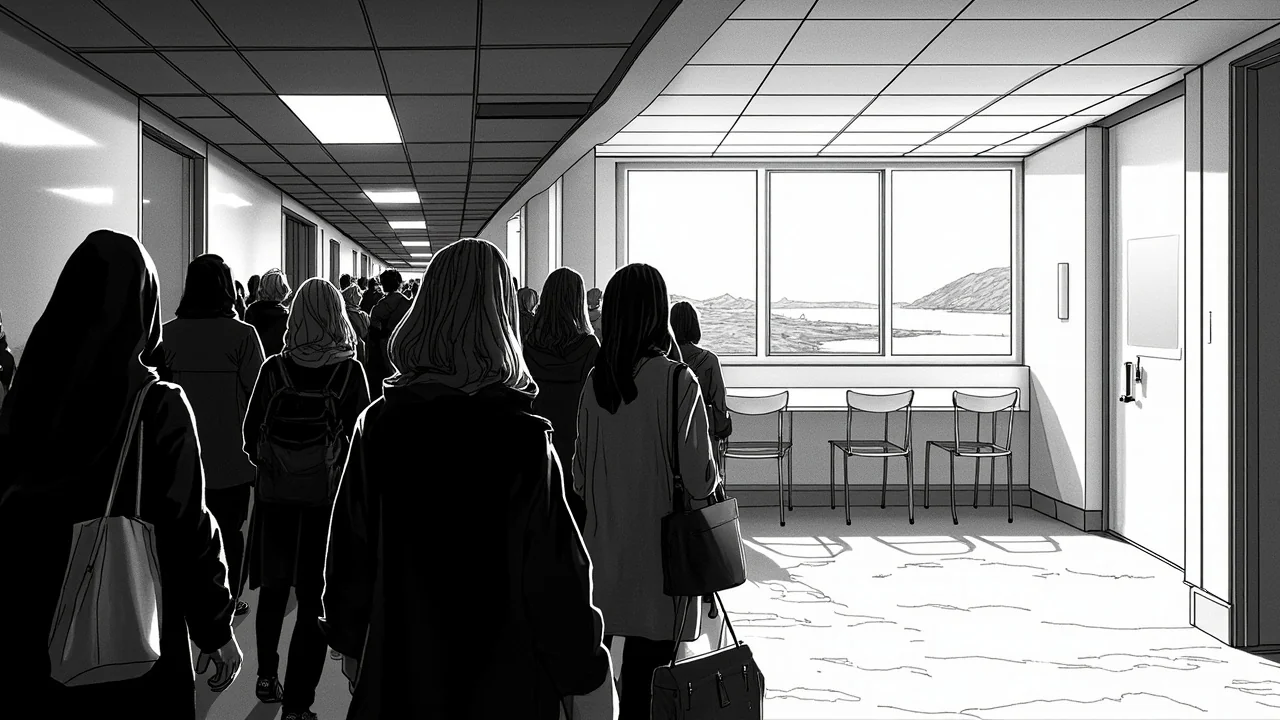
Norway's Haukeland University Hospital recorded 22 mothers with newborns in hospital corridors in July, while a ten-bed palliative care ward in the floor above stood completely vacant for four weeks. This stark allocation failure occurred during a particularly busy period for the hospital's Women's Clinic (Kvinneklinikken), which welcomed 445 new Bergen residents into the world that month.
A Stark Contradiction in Care
The capacity in the Women's Clinic was described as 'sprengt' or blown during periods, forcing multiple new mothers to spend parts of their post-birth stay on the corridor. The situation in July followed an even worse June, when 39 women with newborn babies were placed in hallways due to a lack of proper rooms. Simultaneously, on the floor directly above, the palliative care department's ten single rooms remained unused and empty for the entire four-week period in July. This created a jarring visual and operational paradox within the same hospital building: overcrowded wards below and silent, empty rooms above.
The Human Impact of Mismanagement
For the staff at the Women's Clinic, July 2025 was exceptionally demanding. Managing the care for 445 births, alongside the complex post-natal needs of mothers and infants, is a significant logistical challenge. The pressure was compounded by having to provide intimate, critical care in non-private, hallway settings. New mothers recovering from childbirth, a physically and emotionally intense process, were denied the privacy and quiet of a dedicated recovery room. This environment is far from the standard of care expected in Norway's healthcare system, which prides itself on patient dignity and support. The corridor placements represent a clear breach of established post-natal care protocols aimed at supporting bonding, breastfeeding, and recovery in a calm environment.
Official Explanations and Systemic Questions
Hospital administration, when confronted with this contradiction, typically cites rigid departmental budgeting and specialized staffing as primary reasons for such inefficiencies. A palliative care ward is staffed by specialists trained in end-of-life care, with specific equipment and protocols. Administrators argue that simply moving a post-partum patient into a vacant palliative room is not a matter of opening a door, but of reallocating entire teams, resources, and potentially violating the terms of the ward's designated function and funding. However, this explanation does little to satisfy patients or frontline staff who see available physical space going unused during a clear capacity crisis. The incident raises fundamental questions about the flexibility and patient-centric prioritization within Norway's regional health trust system, where siloed budgets can seemingly override common-sense solutions to acute patient need.
A Recurring Challenge for Norwegian Healthcare
This is not an isolated incident in Norwegian hospitals. Reports of patients waiting in corridors in emergency departments and other wards, while other areas have available beds, surface with regularity. It highlights a persistent structural issue in hospital management and resource allocation. The Haukeland case is particularly poignant because it involves two of the most vulnerable patient groups: newborn infants and their mothers, and those requiring end-of-life care. The failure to dynamically manage space across departments suggests a system that is often bureaucratic and reactive, rather than agile and patient-focused. The four-week duration of the vacancy indicates this was not a day-to-day scheduling error, but a prolonged failure of operational coordination.
The Search for Solutions and Accountability
Following such reports, hospital management usually pledges to review internal procedures and improve coordination between department leaders. Solutions often discussed include creating more centralised 'bed management' teams with the authority to allocate rooms across departmental lines during peak pressures, or designing more flexible 'universal' wards that can be adapted for different patient needs as demand shifts. However, implementing these changes faces hurdles related to funding models, union agreements regarding staff roles, and deeply ingrained departmental autonomy. The public and political response often focuses on whether the regional health trusts are effectively using their substantial budgets to prioritise direct patient care over administrative rigidity. This case will likely prompt questions from local politicians to the Western Norway Regional Health Authority (Helse Vest) about how such a glaring misallocation was allowed to persist for an entire month.
The Unanswered Questions
The situation at Haukeland leaves several critical questions unresolved. Why could a short-term plan not be formulated to use the palliative ward's space, even if with temporary, reassigned staff? What was the cost of maintaining an entirely empty ward for four weeks while overtime was likely paid to staff managing corridor patients below? Most importantly, what is the long-term plan to ensure that physical space in publicly funded hospitals is used to its maximum potential to benefit patients? Until hospital administrations are measured and rewarded for system-wide efficiency and patient flow, rather than just departmental performance, these paradoxical scenes of scarcity amid empty rooms are likely to repeat. The image of a mother and her newborn in a hallway, directly beneath a floor of silent, unused rooms, remains a powerful symbol of a system struggling to adapt its resources to the immediate needs of the people it is built to serve.