
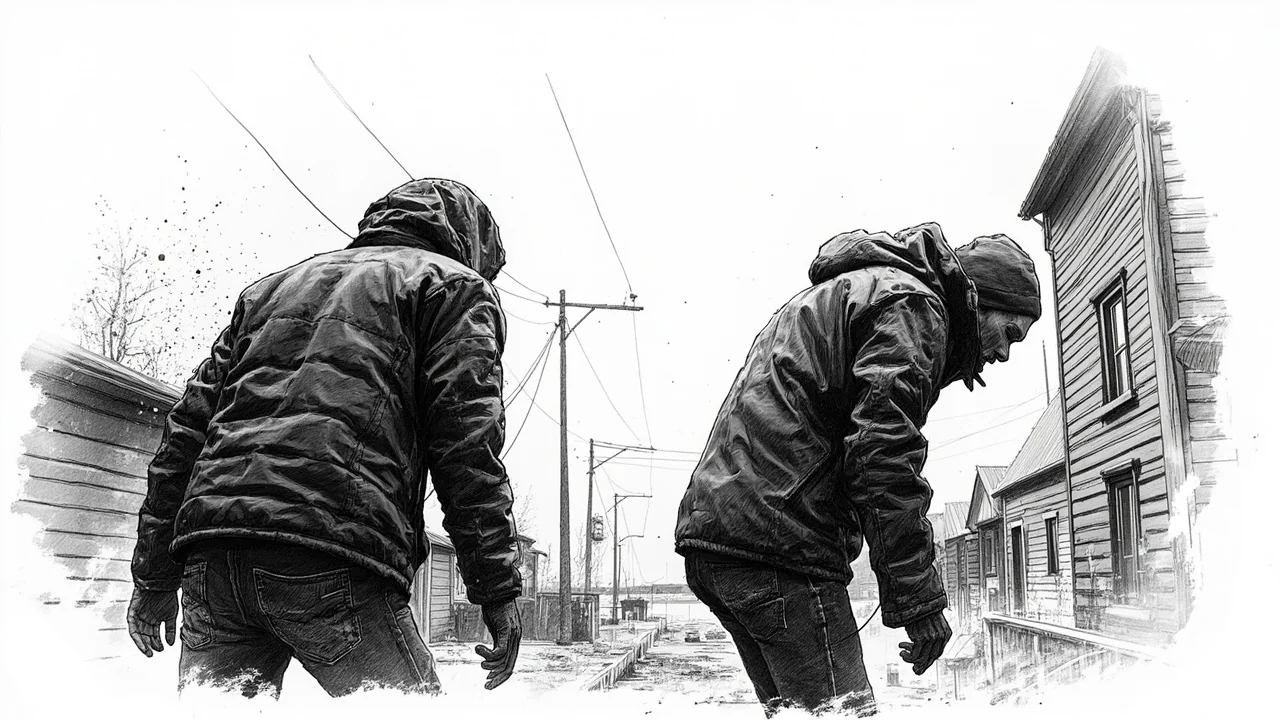
Bergen police are investigating a violent assault that sent two people to hospital Sunday night, a rare serious incident in one of Norway's largest cities. Police were alerted at 10:26 PM to reports that a person had been subjected to violence outside their home in the Arna district. One victim was transported to the hospital by ambulance, while a second person was sent to an emergency clinic with what authorities described as lighter injuries. No arrests have been made, and the police have withheld further details, citing the ongoing investigation. The case has shifted from initial emergency response to a methodical forensic inquiry, a process that can take days or weeks as officers gather evidence and interview potential witnesses. Such incidents, while uncommon, prompt immediate operational reviews within the Vest police district to assess response protocols and community safety measures. The silence from officials is a standard tactic to protect the integrity of the case, preventing the spread of information that could compromise interviews or evidence collection. For residents of Arna, a typically quiet suburb, the news has introduced an unexpected tension, challenging the area's reputation for safety and calm. Local community watch groups often see increased activity following such events, though police typically advise the public to report suspicions directly to authorities rather than engage. The physical aftermath of the incident, including any cordoned-off areas, will be processed by forensic teams whose findings will form the backbone of the police report. This systematic approach is standard in Norwegian law enforcement, where building a court-ready case takes precedence over rapid public updates. The investigation's progress now depends on technical evidence, witness recollection, and any available video footage from the vicinity of the assault. Police operations in western Norway coordinate closely with national databases, checking for any patterns or links to other reported crimes in the region. The practical impact on Arna includes a heightened police presence in the area as the investigation enters its next phase, which involves door-to-door inquiries and evidence sifting. Community leaders often hold meetings with local police commanders after such events to address public concerns and reinforce safety advice, though no such meeting has yet been announced. The long-term implications for the victims involve not only physical recovery but also engagement with Norway's victim support services, which offer legal and psychological assistance. Norway's relatively low rates of violent crime make individual incidents particularly salient, often triggering broader discussions about resource allocation for police and social services. The Storting frequently debates the balance between preventative social measures and reactive policing, especially during annual budget negotiations that fund district operations. While this case is a criminal matter, its trajectory through the legal system will test the capacity of local courts and the broader judicial infrastructure in Hordaland county. The coming days will determine if police can identify a suspect, a process that relies on a combination of technology, traditional detective work, and sometimes public appeals for information. For now, the community awaits answers, and the police continue their quiet, meticulous work under the procedural constraints of Norwegian law.
Police Hold Details Pending Probe
Operational Commander Terje Magnussen of the Vest Police District confirmed the basic outline of the event in a press statement. 'Police received a report at 22.26 that a person had been exposed to violence outside their home,' Magnussen's statement read. He explicitly noted that police would not provide more details Sunday night out of consideration for the investigation. This standard protocol is designed to avoid contaminating witness statements or prematurely revealing operational knowledge that only the perpetrator might possess. The withholding of information, while frustrating for public curiosity, is a calculated move to build a stronger prosecutorial case. It also serves to protect the privacy and dignity of the victims during a vulnerable time. The next official update may come only when police have a suspect in custody or are ready to make a public appeal for assistance.
Community Response in Arna
The incident occurred in Arna, a northeastern suburb of Bergen integrated into the city proper less than two decades ago. The area is known for its natural beauty, nestled between mountains and the Arnafjord, and is a major railway hub. News of a violent assault in such a community typically generates swift local media coverage and discussions on neighborhood social media groups. Residents often express a mix of shock and concern, given the rarity of such events in their immediate surroundings. The police district's community liaison officers may increase their visibility in the area in the following days to provide reassurance and gather informal intelligence. Local politicians, including Bergen city council members, often monitor these situations closely, as public safety is a perennial top issue for municipal governments across Norway.
The Path of a Norwegian Police Investigation
Following the initial response, the case will be assigned to detectives from the Vest police district's investigative unit. Their first steps include securing the scene, logging all physical evidence, and obtaining initial statements from the victims if possible. They will also canvass the neighborhood for witnesses and any private security or dashcam footage. All evidence is meticulously documented to meet the strict standards of the Norwegian legal system, which requires a high burden of proof for convictions. The police may also consult with the National Criminal Investigation Service (Kripos) if specialized analysis is required. The entire process is governed by the Criminal Procedure Act, which sets strict timelines for holding suspects and guarantees rights for both the accused and the victims. The priority is a thorough, lawful investigation rather than a swift one, a principle deeply embedded in Norwegian judicial practice.
Broader Context of Safety and Law
While this specific assault is an isolated criminal act, it touches on ongoing national conversations. Norway's parliament regularly reviews legislation on penalties for violent crime and funding for police districts. The government's recent white papers on public safety have emphasized integrated efforts between police, health services, and social agencies to address root causes. Each police district, including Vest, operates with budgets set by the Ministry of Justice and Public Security, which are influenced by reported crime trends and population needs. Incidents like the one in Arna become data points in these larger assessments, though they are not typically indicative of a wider trend in a country with consistently low violent crime rates. The ultimate test of the system lies not in the incident itself, but in the justice system's effective and fair response to it.