
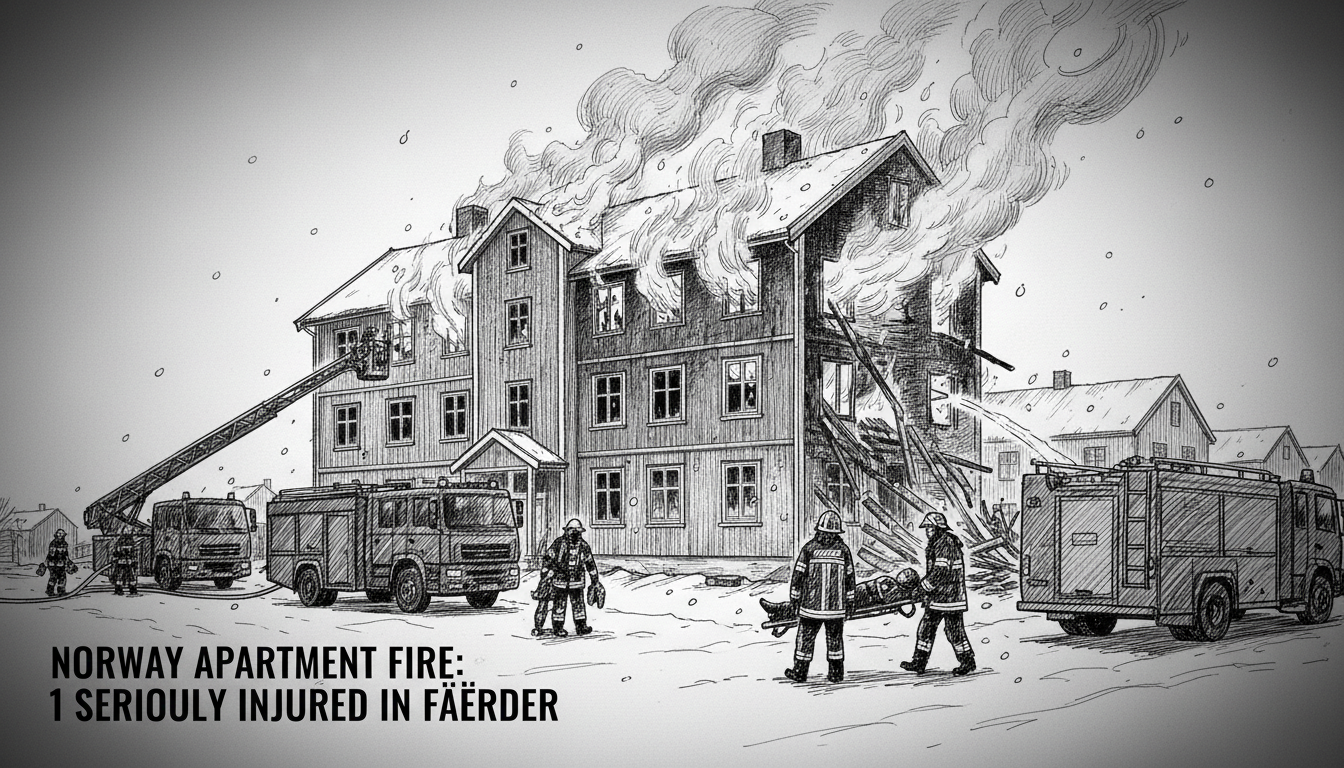
Norway fire crews battled intense flames and heavy smoke in a Færder municipality apartment block overnight, leaving one resident with serious injuries. The blaze, reported extinguished at 2:15 AM, has rendered three apartments uninhabitable and triggered a local government response. The incident raises immediate questions about safety in multi-unit dwellings along the Oslofjord.
Emergency services responded to reports of a significant fire in the residential building. Firefighters encountered open flames and dense smoke, conditions that complicate rescue efforts and increase risk. A municipal representative was dispatched to the scene, a standard procedure for incidents with substantial displacement or damage. The identity and precise condition of the injured individual have not been disclosed, respecting medical confidentiality protocols.
Emergency Response and Immediate Aftermath
Local fire departments in Vestfold county managed the containment operation. Their swift response likely prevented a more extensive catastrophe. The confirmation of the fire's extinguishment at 02:15 provides a clear timeline for the emergency phase. With three units declared unfit for occupancy, the municipality's social services must now engage to provide temporary housing assistance for the displaced residents. This process is a critical, often overlooked, component of disaster management.
The structural integrity of the affected section of the building will be a priority for investigators. Fire damage can compromise load-bearing elements and create hidden hazards. Norwegian building codes are stringent, but the effectiveness of passive fire protection measures like compartmentalization is only proven during actual events. The coming days will involve detailed inspections to determine the full scope of the damage and the safety of the remaining units.
Fire Safety in Norwegian Multi-Unit Dwellings
This fire in Færder casts a spotlight on universal residential safety standards. Norwegian law mandates frequent fire safety inspections and the installation of working smoke detectors in all homes. In apartment blocks, the responsibility is shared between individual owners, housing cooperatives, and property management companies. Experts consistently stress that early warning from smoke detectors is the single most important factor in preventing injury and death.
“A fire in a multi-unit building presents unique challenges,” said a veteran fire safety engineer, who spoke on condition of anonymity as they are not directly involved in this investigation. “The spread of smoke through ventilation shafts or common areas can endanger many more people than just those in the unit of origin. This is why modern codes emphasize fire-resistant materials and self-closing doors. The priority is always to contain and suppress.”
The location in Færder, a coastal municipality formed from the merger of Tjøme and Nøtterøy islands, may also influence the response narrative. While well-equipped, island communities can sometimes face logistical challenges with resource deployment compared to mainland urban centers. However, Vestfold's integrated emergency service network is designed to mitigate such geographical factors.
The Path Forward for Residents and Community
For the displaced families, the immediate future is uncertain. While insurance will cover material losses, the psychological impact of a traumatic, late-night evacuation can be lasting. Community support networks in smaller municipalities like Færder often become vital in these situations. Neighbors and local volunteer organizations frequently mobilize to provide clothing, meals, and other essentials.
The serious injury reported is a somber reminder of the human cost of such incidents. It will undoubtedly be the focus of the internal review. Authorities will examine the fire's origin, the timeline of the victim's discovery and evacuation, and the medical response provided. All findings contribute to improving national emergency protocols.
Local government officials are now tasked with a dual mandate: supporting the victims and conducting a transparent review. “Our first thoughts are with those affected by this fire,” a municipal spokesperson said in a brief statement. “We are providing all necessary assistance and will work closely with the fire authority to understand what occurred.” This public commitment is standard but essential for maintaining community trust.
A Broader Look at Prevention and Policy
While Norway boasts a strong fire safety record, each incident prompts reevaluation. National statistics on residential fires are tracked meticulously, with causes often linked to electrical faults, cooking accidents, or improperly maintained heating sources. Prevention campaigns targeted at these common causes run consistently across media platforms.
The aftermath of the Færder fire will see a push for renewed vigilance. Fire departments often offer free home safety checks, and this event may spur more residents to request them. For housing cooperatives, it may trigger reviews of emergency evacuation plans and the inspection records of common property. This trickle-down effect of tragedy is a key component of improving overall public safety.
The investigation's conclusions could have implications beyond this one building. If a specific systemic flaw is identified—related to building materials, alarm systems, or ventilation—it may inform amendments to national building codes. Such iterative improvements are how safety standards evolve. For now, the community is left to recover, and the questions linger in the cold Oslofjord air: Could this have been prevented, and what must change to ensure it doesn't happen again?