
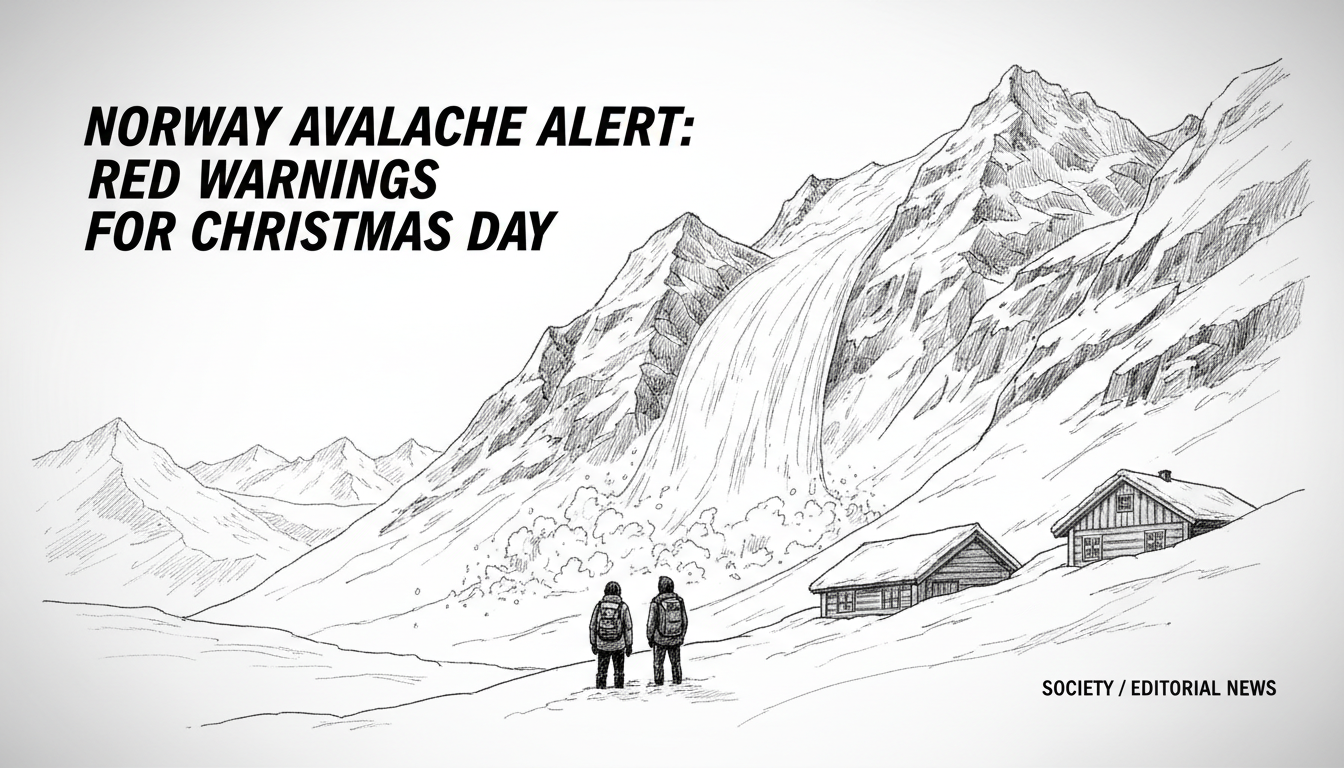
Norway's avalanche forecast blinks red for Christmas Day across several northern regions, with experts warning of a dangerous combination of heavy snowfall, rain, and strong winds. The Norwegian Water Resources and Energy Directorate (NVE) has upgraded its warning to the second-highest level, Faregrad 4, for Nord-Troms, Lyngen, Indre Troms, and Ofoten. The stark public advice from the Varsom forecasting service is unequivocal: avoid avalanche terrain.
This elevated risk transforms a traditional holiday period into one of heightened vigilance for residents and emergency services in Northern Norway. The warnings come as a mild weather system moves across the region, bringing significant precipitation that destabilizes the snowpack. Avalanches may release spontaneously, even in lower-lying areas typically considered less hazardous.
A Dangerous Holiday Forecast
The Christmas period in Norway is often associated with skiing and outdoor recreation, but this year's conditions demand extreme caution. The Varsom service reports that significant avalanche danger exists across nearly all of Northern Norway on Christmas Eve, setting the stage for a perilous Christmas Day. For other avalanche regions in the north, an orange warning—Faregrad 3, or 'considerable' danger—is in place.
"The clear recommendation is to avoid avalanche terrain," stated the Varsom forecast, a directive aimed at both local residents and any visitors to the region. The specific areas under the red-level warning are known for their steep, complex mountain landscapes. Lyngen is famous for its dramatic alpine peaks rising directly from the fjords, while Ofoten and Nord-Troms contain similarly challenging terrain where snow can accumulate on precarious slopes.
Understanding the Avalanche Scale
The Norwegian avalanche danger scale runs from 1 (low) to 5 (very high). A Faregrad 4 warning signifies 'high' danger. At this level, triggering is very likely even from low additional loads, such as a single skier or snowboarder. Natural avalanches are probable, and large avalanches may occur. The snowpack is poorly bonded and unstable.
According to NVE statistics, most avalanche fatalities in Norway occur in the backcountry during recreational activities. The most common trigger for avalanches that involve people is the victim themselves. This underscores the critical importance of heeding official warnings and possessing proper safety knowledge, especially during periods of elevated risk forecast by authorities.
The Role of Varsom and NVE
The Norwegian Water Resources and Energy Directorate (NVE) maintains the Varsom.no platform as the national center for avalanche, flood, landslide, and watercourse warnings. It is an essential tool for public safety, providing daily, region-specific forecasts compiled by professional avalanche experts. These forecasts integrate complex data on snowpack structure, recent weather, and future meteorological models.
For mountain municipalities and counties, these forecasts guide local safety decisions and preparedness. The red warning for Christmas Day triggers specific protocols for road authorities, who may close mountain passes, and for local emergency management teams. It also serves as a crucial information source for the Norwegian Trekking Association (DNT) and its members, who often venture into the mountains during the holidays.
Expert Analysis of the Conditions
Avalanche experts point to the specific weather sequence as the primary cause for concern. A period of cold weather and snow accumulation is now being followed by a rapid influx of mild, wet air with strong winds. This combination is a classic and potent recipe for widespread instability.
"Rain and strong wind are major factors," explained an NVE avalanche forecaster familiar with the situation. "Rain adds significant weight to the snowpack, while wind transports snow and creates thick, heavy slabs on leeward slopes. These slabs can rest on weaker layers of snow from earlier in the season, creating a widespread propagation potential." The forecaster emphasized that during Faregrad 4, the danger is not confined to obviously steep slopes. So-called 'triggering zones' can be located in flatter terrain, with fractures propagating from below to release snow from steeper slopes above.
Historical Context and Safety Imperatives
Norway has a long and sometimes tragic history with avalanches, which have claimed lives and destroyed communities throughout the centuries. This history has driven the development of one of the world's most advanced forecasting and mitigation systems. Modern forecasting, however, cannot eliminate risk entirely—it must be paired with informed public behavior.
Safety experts reiterate the fundamental rules during high danger: stay off and out from under steep slopes. They advise checking Varsom.no daily, carrying standard safety equipment—transceiver, probe, and shovel—and knowing how to use it. More importantly, they stress the ability to make conservative terrain choices, even if it means altering or canceling planned trips. The social pressure of a group during a holiday outing must not override clear danger signs.
The Broader Impact on Northern Communities
The red avalanche warning casts a shadow over Christmas celebrations in affected regions. While the direct threat is to those in the mountains, the alert impacts community life. It affects decisions about travel between villages, the operation of mountain cabins, and the plans of local outdoor clubs. For search and rescue volunteers (Redningsselskapet and Norsk Folkehjelp), the warning means being on standby, ready to respond if calls come in despite the public warnings.
The economic impact is also felt, albeit secondary to safety. The Christmas holiday is a peak period for mountain tourism. Lodges, guides, and equipment rental services see increased activity. A prolonged period of high avalanche danger can lead to canceled tours and a quieting of the normally vibrant winter landscape, as responsible operators will not guide clients into dangerous terrain.
Looking Beyond Christmas Day
The forecast for the days following Christmas remains uncertain and heavily dependent on the evolution of the weather system. Avalanche conditions can change rapidly, but the effects of a major loading event from rain and snow can persist in the snowpack for days or even weeks. Even if the danger level is downgraded, the memory of these weak layers will remain in the snowpack, creating a persistent slab problem that requires continued caution.
This event serves as a stark annual reminder of the powerful natural forces at play in Norway's dramatic landscape. The country's beauty is inextricably linked to its dangers. The sophisticated warning system represents a hard-won layer of protection, but its effectiveness ultimately depends on the choices made by each individual who enters the winter mountains. As the red warning flashes on screens across Norway this Christmas, the message is one of respect for nature's power—a call to prioritize safety and ensure the holiday season does not turn to tragedy.
Will this severe warning be enough to keep people out of harm's way, or will the temptation of fresh holiday snow prove too strong? The answer lies in the decisions made in countless homes and cabins across Northern Norway.