
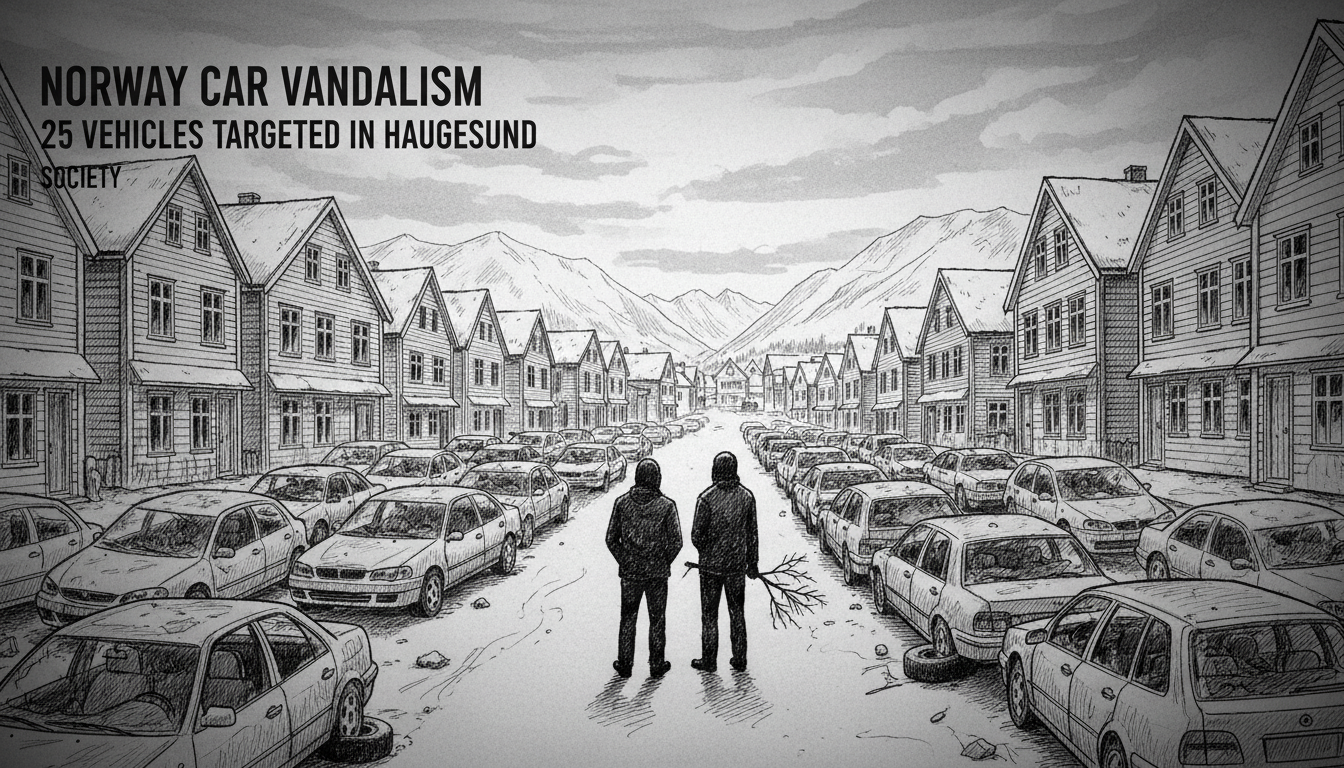
Norway car vandalism incidents have shaken a quiet coastal community after targeted attacks on 25 vehicles. Police in Haugesund responded to reports of extensive damage in two garage facilities on Flathauggata early Sunday morning. The vehicles were deliberately sprayed with fire extinguisher contents, covering them in a corrosive chemical powder.
"The cars are sprayed with fire extinguisher apparatus," said operations manager Victor Fenne-Jensen of the Southeast Police District in a statement. "There is video footage of the vandalism. It is likely minors or children behind the damage." The incident has left residents dealing with costly clean-up and repairs, raising concerns about youth crime and property security in the area.
A Community's Sense of Security Damaged
Haugesund, a city of 38,000 known for its maritime heritage, is confronting an attack that feels both random and deeply personal. The vandalism occurred in enclosed garage facilities, spaces residents typically consider secure for their property. This breach of private, covered parking areas adds a layer of intrusion to the financial damage. Local authorities are examining the surveillance footage mentioned by police, hoping it provides clear identification of those responsible.
The chemical powder from fire extinguishers can cause significant and lasting damage to automotive paint and finishes. Owners now face expensive detailing bills, potential repainting, and concerns about long-term corrosion. For many, a car is a major financial investment and essential for daily life, particularly in regions with limited public transport options. The psychological impact of such a violation—the sense that private property is not safe—can often linger longer than the physical mess.
Understanding the Motivations Behind Destructive Acts
Criminologists and youth social workers often analyze such acts of property destruction. Vandalism by young people can stem from multiple factors, including boredom, peer pressure, a cry for attention, or expressions of underlying frustration. Haugesund, while a prosperous region due to its offshore energy and maritime sectors, is not immune to the social challenges facing youth anywhere.
"Acts of vandalism on this scale are rarely just about mischief," says Kari Nilsen, a sociologist specializing in youth and community issues, who provided general analysis for this report. "When a large group targets private property so destructively, it often points to a lack of constructive outlets, a desire for notoriety within a peer group, or deeper feelings of disconnection from the community. The use of fire extinguishers suggests a degree of planning and access, moving beyond simple spray paint."
Local community leaders emphasize the importance of preventative measures. These include increased community patrols (often volunteer-based), better lighting in residential areas, and, crucially, providing engaging after-school and weekend activities for teenagers. The goal is to address potential root causes—idle time and a lack of positive engagement—rather than just increasing punishment after the fact.
How Norway's Crime Context Frames the Incident
To understand this event, it is helpful to view it within the national context. Norway consistently reports some of the lowest crime rates in the world. According to recent statistics from the Norwegian Council for Crime Prevention (Kripos), most categories of theft and property crime have seen a general decline over the past decade. However, isolated incidents of vandalism can disproportionately affect a small community's sense of safety.
National data shows that a significant portion of vandalism offenses are committed by individuals under the age of 18. This aligns with the police assessment in Haugesund. The response typically focuses on restorative justice principles, especially for first-time young offenders. This can involve mediation with victims, community service, and personal accountability, aiming for rehabilitation over pure punishment.
The table below summarizes key recent trends in relevant crime categories, illustrating the broader landscape:
| Crime Category | Recent Trend (National) | Typical Offender Profile |
|---|---|---|
| Vandalism | Stable to slight decrease | Predominantly young males under 18 |
| Theft from Vehicles | Significant decrease over 10 years | Varied |
| Overall Property Crime | Long-term declining trend | Varied |
The Path Forward for Haugesund Residents
For the affected car owners, the immediate path involves insurance claims and repairs. Most comprehensive vehicle insurance policies in Norway cover vandalism, but policyholders still face deductibles and the inconvenience of being without their vehicles. The police investigation will rely heavily on the video evidence from the garage complexes. Clear footage could lead to quick identification, especially if the perpetrators are known to local authorities from previous minor incidents.
The community response will be critical in the coming weeks. Will this event lead to calls for more surveillance and stricter policing? Or will it catalyze a broader conversation about youth facilities, community centers, and programs aimed at engaging teenagers in positive ways? Haugesund has a strong tradition of community cohesion, often seen in its famous annual film and music festivals.
Local politicians are likely to face questions about resource allocation for both youth services and police visibility. Balancing a supportive, preventative approach with the legitimate demand for security and accountability is a challenge familiar to municipalities across the Nordic region. The true test will be whether this act of destruction becomes a forgotten statistic or a catalyst for constructive change.
A Look at Prevention and Restorative Justice
Nordic countries are often cited for their focus on rehabilitation and restorative justice. In cases involving minors, the Norwegian system typically seeks solutions that repair harm and reintegrate the young person. This could mean the offenders—if identified and convicted—would be required to directly apologize to the victims, participate in mediation, and potentially work to compensate for the damage through supervised work.
This model aims to break the cycle of crime by fostering empathy and responsibility. It contrasts with purely punitive systems. Success depends heavily on the willingness of victims to participate and the capacity of the social services to manage the process effectively. For the 25 car owners in Haugesund, facing bills and inconvenience, the idea of meeting young perpetrators might be challenging. Yet, evidence suggests such encounters can be powerful for both sides.
Preventatively, cities across Scandinavia have invested in "youth houses," municipally funded spaces where teenagers can socialize, pursue hobbies, and access informal mentoring. Ensuring such facilities are accessible, appealing, and well-staffed is a constant budgetary consideration. A single night of vandalism causing tens of thousands of kroner in damage can make a compelling argument for investing more in these preventative measures.
The incident on Flathauggata is a stark reminder that even in societies with low crime, no community is completely insulated from acts of senseless damage. The response from Haugesund’s police, its municipal leaders, and its residents will now determine whether this event leaves a lasting scar or becomes an opportunity to strengthen the social fabric that usually keeps such incidents at bay. Can a city proud of its Viking king heritage channel that communal spirit to protect its modern citizens and guide its youth?