
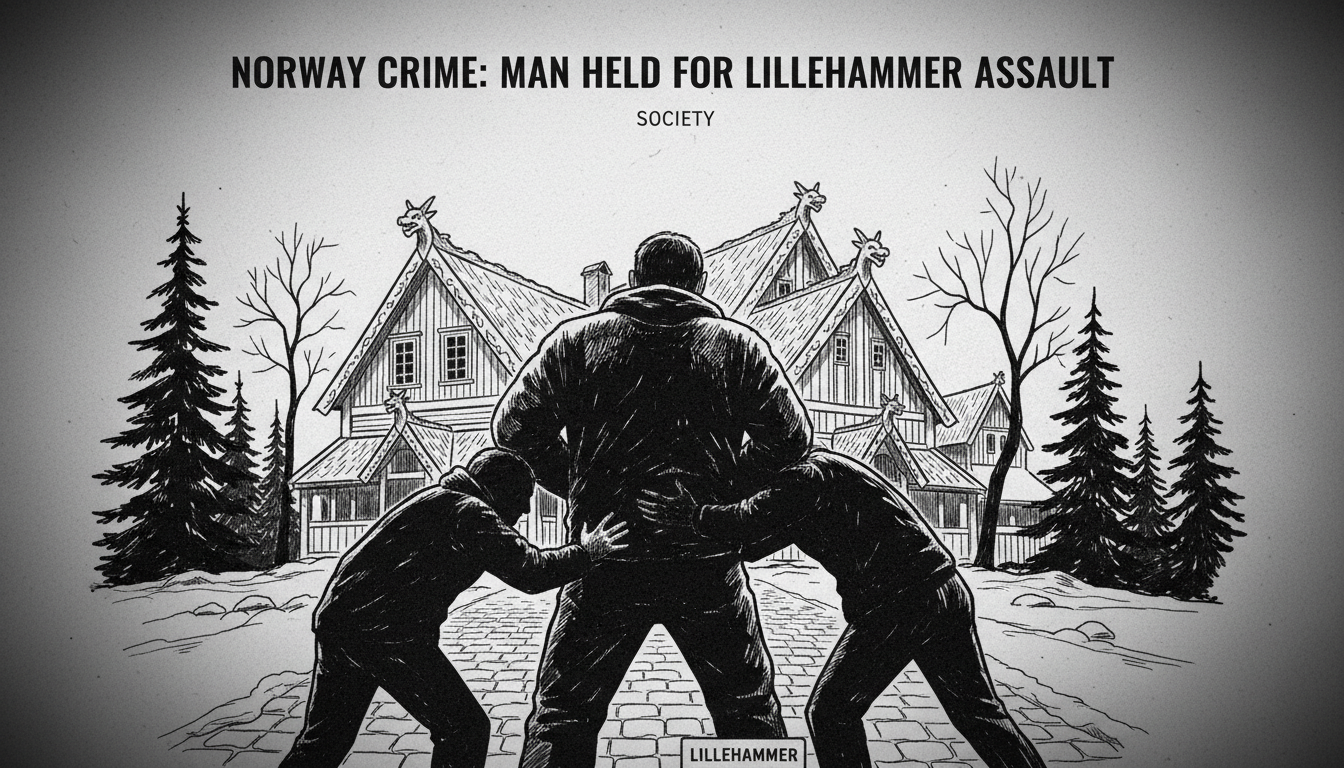
Norway's low-crime reputation faces a stark reminder after a serious violent incident in the Olympic town of Lillehammer. Police have charged a man in his 40s following an assault where an object was used as a weapon, leaving another man injured. Witnesses discovered the victim and alerted emergency services in the early hours, setting off a police investigation in the normally tranquil Innlandet county.
Operasjonsleder Vidar Flokenes from Innlandet Police District confirmed the suspect is known to police from prior incidents. "An object was used and a person has sustained injury," Flokenes said in a statement. He declined to specify the nature of the object used. Neither the suspect nor the victim has been formally interviewed yet, indicating the investigation remains in its preliminary stages. Both individuals involved are men.
A Peaceful Town Confronts Violence
The incident occurred in Lillehammer, a town of 28,000 people globally celebrated for hosting the harmonious 1994 Winter Olympics. The town symbolizes Norwegian civic pride and peaceful international cooperation. Its idyllic setting by Lake Mjøsa and its well-preserved wooden architecture project an image of serene stability. This latest violent episode disrupts that narrative, forcing residents to confront the reality that no community is entirely immune to crime.
Local crime statistics for Lillehammer are consistently below national averages, which are already among the world's lowest. Norway's homicide rate sits at approximately 0.5 per 100,000 inhabitants. Most police work in towns like Lillehammer involves property crime, traffic control, and public order maintenance rather than serious violence. The use of an object as a weapon in this assault elevates its severity and potential legal consequences.
The Police Response and Investigation
Innlandet Police District, responsible for a vast region of forests, mountains, and small towns, has mobilized its resources. The presence of witnesses who immediately contacted emergency services provides investigators with a crucial starting point. Police are now working to establish the relationship between the two men, the sequence of events, and the motive behind the altercation.
The fact that the suspect is known to police from previous encounters will shape the investigation. It suggests possible patterns of behavior or prior conflicts that detectives will examine closely. Norwegian police procedure in such cases is methodical, focusing on securing forensic evidence, conducting thorough interviews, and building a case that can withstand judicial scrutiny. The priority now is the victim's medical condition and a formal statement from him.
Expert Analysis on Crime in Safe Societies
Criminologists note that while Norway enjoys exceptional public safety, isolated violent incidents are inevitable. "The goal is not an impossible zero-crime society, but one with robust prevention, swift response, and a fair judicial system," says Dr. Anette Thomassen, a sociologist at the University of Oslo who studies Nordic crime trends. "Even in the safest countries, individual conflicts, personal crises, or substance abuse can lead to violence. The effectiveness of the response is what matters."
Experts point to Norway's focus on rehabilitation and mental health services as a long-term violence prevention strategy. However, they acknowledge that acute incidents require immediate policing and legal resolution. The Lillehammer case will test the local system's capacity to manage a serious crime while maintaining public confidence. The community's reaction will be telling, as trust in law enforcement remains high across Norway.
Lillehammer's Identity Beyond the Headlines
For residents, this incident is an unwelcome intrusion. Lillehammer's economy relies heavily on tourism tied to its Olympic heritage and its reputation as a safe, picturesque destination. The town hosts international events and welcomes visitors to its ski jumps, museums, and scenic trails. Community leaders are likely keen to emphasize that this is an isolated event, not indicative of a changing safety landscape.
Local media will balance reporting on the police investigation with efforts to avoid sensationalism. Norwegian press ethics generally discourage excessive detail that could prejudice a legal case or unnecessarily alarm the public. The focus will remain on factual updates from authorities and respect for the legal process involving both the accused and the victim.
The Broader Context of Norwegian Justice
This assault case enters a legal system known for its emphasis on proportionality and rehabilitation. Sentences for violent crime in Norway, while serious, are typically shorter than in many other countries, with a strong focus on reintegration. The use of a weapon in the commission of an assault is an aggravating factor that prosecutors will highlight.
The case also touches on ongoing national discussions about police resources outside major urban centers. Innlandet is a large district with dispersed populations. Ensuring adequate investigative capacity for serious but rare crimes in such areas is a constant logistical challenge. This incident may prompt local political questions about whether rural police forces have the specialist support they need.
A Community Waits for Answers
As the investigation continues, the people of Lillehammer are left waiting for answers. The specific location of the incident has not been disclosed, but the news has undoubtedly spread through the small town. The well-being of the victim is the immediate concern, followed by a collective desire for a clear and just legal outcome.
Norway's crime statistics suggest such serious violence is uncommon, especially in smaller communities. This rarity makes individual cases more shocking when they occur. They serve as reminders that societal safety is maintained through constant vigilance, functional institutions, and community cohesion. The true test for Lillehammer is not that an incident happened, but how its systems of justice, policing, and community support perform in response.
Will this event become a footnote in the town's history, or will it spark deeper conversations about safety and social services in rural Norway? The answer depends on the investigation's findings and the community's resolve to uphold the peaceful spirit that defines its international image.