
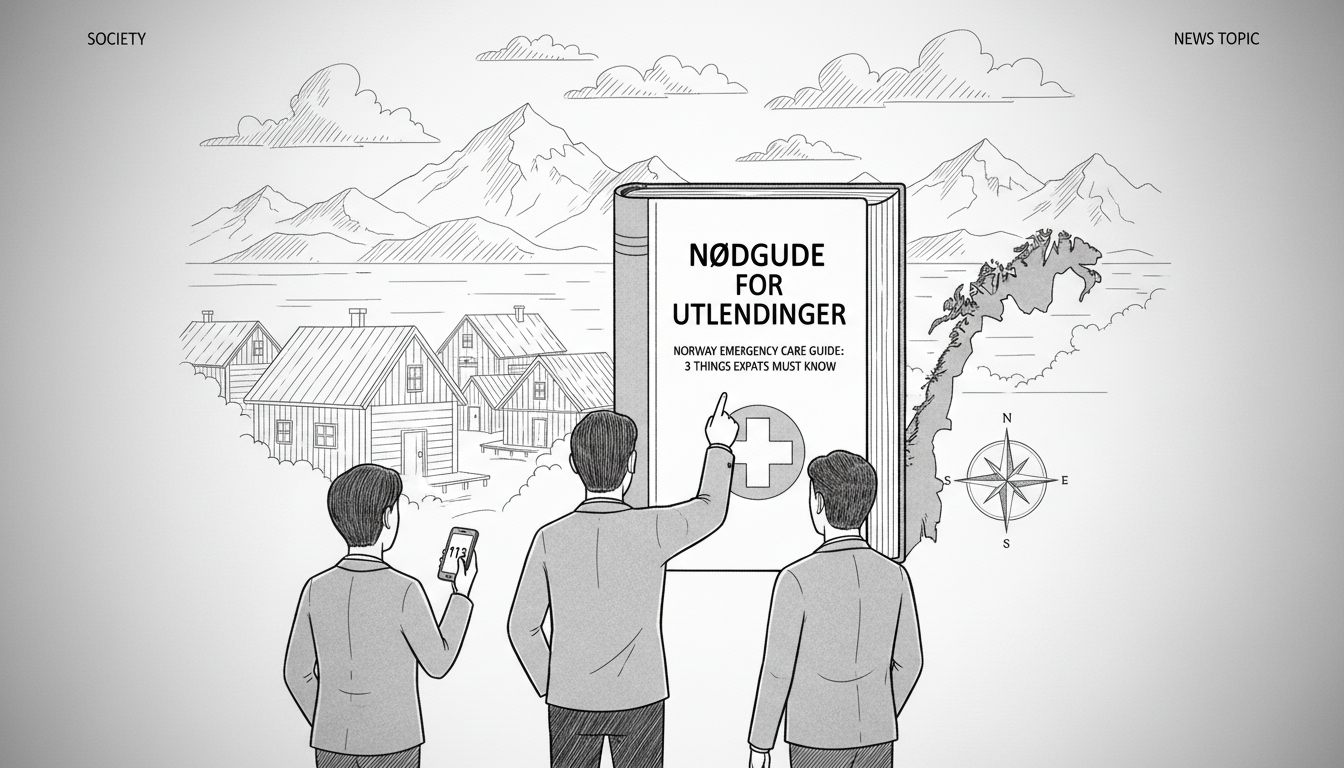
Norway emergency medical care is a world-class system that can surprise newcomers with its efficiency and cost structure. For expats, understanding its rules is not just about convenience—it’s a financial necessity. A simple misstep, like visiting the wrong clinic, can turn a minor injury into a major bill. This guide explains how the system works, what it costs, and how to navigate it safely.
A System Built on Triage and Trust
When you dial 113 in Norway, your call is answered at an Emergency Medical Communication Centre (EMCC). The operator doesn’t just dispatch an ambulance. They use a standardized protocol called the Norwegian Index for Emergency Medical Assistance (NIMA) to triage your situation. This system categorizes calls based on urgency, from life-threatening (Response Level 1) to non-urgent (Response Level 5).
For a critical heart attack, an ambulance will be dispatched immediately, often arriving in major cities like Oslo or Bergen in under 10 minutes. For a sprained ankle, the operator may provide advice and refer you to a municipal emergency room or a fastlege (GP) the next day. This prioritization ensures resources reach those in most critical need first. "The index is our roadmap," explains a former EMCC operator. "It removes guesswork and ensures consistent, medically sound responses across the country."
Ambulances are operated by municipal health services or contracted private companies like Falck Norway. In remote areas, the Luftambulansetjenesten (Air Ambulance Service) plays a crucial role, with helicopter bases strategically located to reach isolated communities. This tiered response network aims to provide all residents, regardless of location, with access to emergency care.
The Cost Paradox: Free for Some, Expensive for Others
This is where expats can face unexpected shocks. Norway’s healthcare is funded through taxation and the National Insurance Scheme (Folketrygden). For residents formally registered in the National Population Register, emergency treatment at a public hospital is free. This includes the ER visit, surgery, and hospital stay. The system is designed so that medical need, not wealth, determines care.
However, for non-residents and tourists, the same care comes with a full price tag. An ambulance trip averages 2,500 NOK (approx. 215 EUR). A standard emergency room consultation can cost 3,000 NOK or more. Intensive care can exceed 15,000 NOK per day. These bills are sent directly to the patient.
The critical gap for many new expats is the registration period. Moving to Norway and obtaining a personal number (fødselsnummer) can take 4 to 6 weeks. During this limbo, you are not covered by the public system. "I see this weekly," says a consultant at Gjensidige insurance. "A new employee breaks a leg playing football before their paperwork is complete. They are liable for the entire cost. Comprehensive private insurance from day one is non-negotiable."
Dental care operates under completely different rules. The public system offers limited coverage for adults, primarily for acute pain relief or certain surgical procedures. A severe toothache on a weekend typically means a visit to a private emergency dentist, with fees starting at 2,000 NOK. Many expats secure supplemental dental insurance through their employer or private providers.
Navigating the Practicalities: When to Call and Where to Go
Knowing when to call 113 is the first crucial decision. Use it for immediately life-threatening conditions: chest pain, difficulty breathing, severe bleeding, sudden confusion or stroke symptoms, major trauma, or unconsciousness. Be prepared to state your location clearly and describe the symptoms. All operators speak English.
For non-life-threatening issues—a deep cut needing stitches, a suspected broken bone, a high fever—you have other options. Many municipalities run Legevakt, municipal emergency rooms that handle urgent but not critical cases. Waiting times can be long for minor issues. Private emergency clinics like Volvat or Aleris in major cities offer faster service for a fee, with consultation costs from 1,500 NOK.
Carrying a European Health Insurance Card (EHIC) or its UK replacement, the GHIC, is vital for EU/EEA citizens. It covers medically necessary care during a temporary stay. However, it is not a substitute for comprehensive insurance for residents, as it may not cover all costs or medical repatriation.
Expert Analysis: Strengths Under Pressure
Healthcare analysts consistently rank Norway's system highly for equity and outcomes. "The principle is that your health should not depend on your wallet," says a professor of health policy at the University of Oslo. "The emergency response infrastructure is robust, highly trained, and integrated."
Yet, experts point to mounting challenges. An aging population increases demand. Rural areas face longer ambulance response times and a shortage of specialized care, sometimes relying on long helicopter transfers to urban centers. There is also an ongoing political debate about cost containment and efficiency within the publicly funded model.
For expats, these systemic pressures are less visible than the immediate need to navigate the rules correctly. The system’s fairness is predicated on formal residency and correct use of its tiers. Misunderstanding can lead to frustration—like waiting at a public Legevakt for a minor issue—or financial strain from an uninsured bill.
Securing Your Safety Net: The Insurance Imperative
The single most important action for any new arrival is to arrange valid health insurance before landing. Employer-sponsored policies are common, but verify the coverage details, including the start date and whether it covers the registration gap. Individual plans from major Norwegian insurers like Tryg or Gjensidige are tailored for expatriates.
Keep insurance documents and your ID (or passport number if unregistered) easily accessible. In an emergency, treatment will not be withheld, but identification and insurance details will be requested promptly for billing.
Norway’s emergency medical care offers outstanding care within a logical, principle-driven framework. For expats, the task is to learn that framework quickly. Understand the triage system, respect the distinction between urgent and critical, and, above all, ensure you are financially covered from your very first day. The system is designed to protect everyone, but it requires you to know the rules of the game.
Will your first call to 113 be a story of seamless care or a lesson in costly confusion? The difference lies in preparation.