
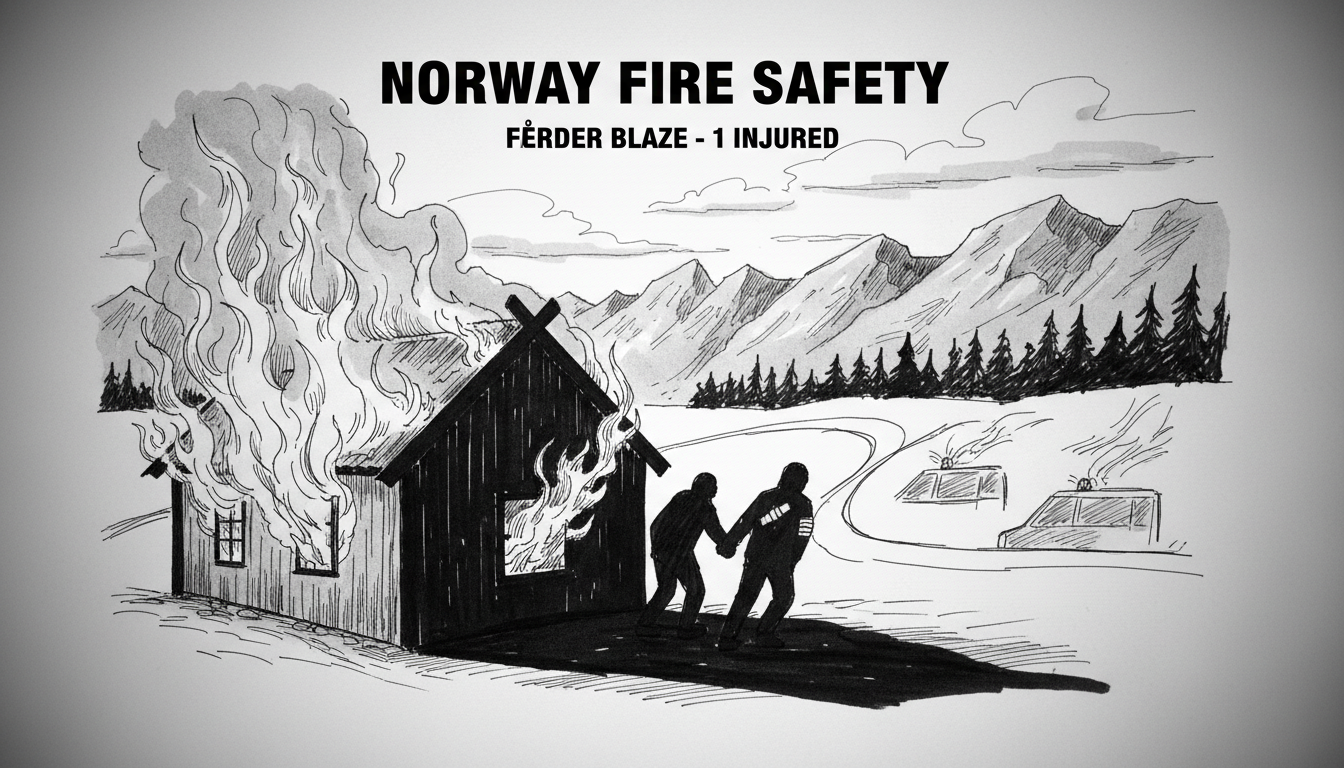
Norway fire safety protocols faced a real-world test early this morning when a residential building in Færder municipality became engulfed in flames. One person suffered serious injuries and three apartments were left uninhabitable after the fire, which required a significant emergency response to bring under control.
Operational commander Sigurd Edvardsen from the South-East Police District confirmed the serious injury in a statement. Firefighters reported having control of the blaze by 1:59 AM, but heavy smoke continued to pose challenges. Open flames were observed coming from one apartment in the building, leading to the rapid evacuation of residents. The cause of the fire remains unknown and is under investigation.
A Community Awakened by Emergency
The fire disrupted the quiet of the Vestfold municipality, located on the western shores of the Oslofjord. Færder, formed in 2018 from the merger of Tjøme and Nøtterøy, is an area known for its coastal communities and residential neighborhoods. Incidents like this strike at the heart of such communities, where safety in the home is a fundamental expectation. The evacuation of three apartments underscores the rapid spread and destructive potential of residential fires, even when contained to a single unit.
Emergency services responded with multiple units. Their work through the night ensured the fire did not spread further, preventing a worse outcome. The injured individual received immediate medical attention. The psychological and physical impact on displaced residents will be substantial, as they face the loss of their homes and belongings.
The National Context of Building Fires
This incident is not an isolated event in a national context. According to the Directorate for Social Security and Emergency Preparedness (DSB), Norway reported 3,272 building fires in 2022. Residential buildings account for a significant proportion of these fires. Each statistic represents a personal tragedy, a family displaced, and a community resource stretched. The Færder fire adds to this annual tally, prompting a fresh look at prevention measures.
Norwegian building codes are stringent, designed with fire safety as a priority. Regulations cover materials, compartmentalization to prevent spread, and mandatory escape routes. However, the effectiveness of these codes depends on the building's age and the diligence of maintenance. Older structures, built before current codes were enacted, may have inherent vulnerabilities. Experts consistently stress that codes are a baseline, and active safety measures are crucial.
Expert Analysis on Prevention and Response
"A fire in a residential building is one of the most dangerous scenarios for inhabitants and responders," said a fire safety engineer with knowledge of Nordic building standards, who requested anonymity as they were not directly involved in the incident. "The close quarters, presence of personal belongings which can fuel flames, and the potential for panic make evacuation critical. This incident highlights why regular checks of smoke detectors, accessible fire extinguishers, and clear, practiced escape plans are non-negotiable."
The expert pointed out that while new buildings have integrated safety systems, the existing housing stock requires constant vigilance from owners and residents. "The human element is key. Do people test their smoke alarms monthly? Do they know not to prop open fire doors? These simple actions save lives," they added. The unknown cause in the Færder case will be a central focus for investigators, as determining the origin is essential for learning and future prevention.
The Road to Recovery for Displaced Residents
For the residents of the three uninhabitable apartments, the immediate crisis has transitioned into a difficult recovery phase. They will likely rely on municipal support, insurance, and community assistance to find temporary housing and begin replacing lost possessions. The seriously injured person faces a challenging physical recovery. The emotional toll on all involved, including neighbors and first responders, can be long-lasting.
Municipal authorities in Færder will now be tasked with supporting these citizens while also examining the broader implications. This may involve checking similar buildings in the area for safety compliance or launching public information campaigns about fire prevention. The local fire service will also debrief on their response, looking for lessons that could improve future operations.
A Sobering Reminder for Home Safety
The Færder fire serves as a stark, sobering reminder that safety cannot be passive. It comes in the wake of other residential fires across Norway in recent years, each prompting similar discussions. National safety agencies like DSB continuously advocate for public awareness, but individual action is the final layer of defense.
Residents across Norway are encouraged to use this incident as a catalyst to review their own home safety. Testing smoke detectors, planning escape routes with family, and understanding how to use a fire extinguisher are simple steps with profound potential. For policymakers, it reinforces the need to ensure building regulations keep pace with new materials and living patterns, and that support exists for updating older properties.
As the investigation in Færder continues, the community will begin to heal. The questions raised, however, about how a modern society protects its citizens from one of humanity's oldest threats, remain urgent and universal. The blend of robust regulation, professional emergency response, and personal responsibility forms the only reliable firebreak against tragedy.