
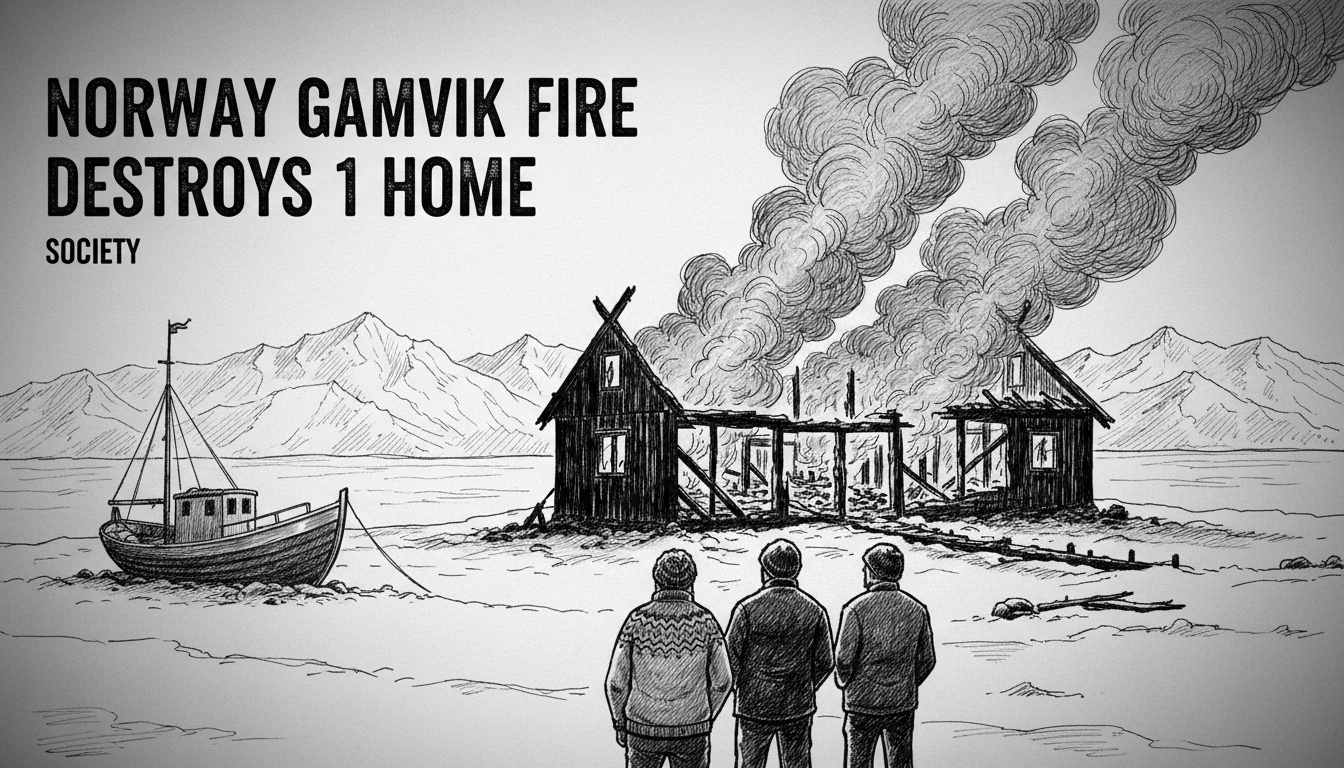
Gamvik, Norway, a municipality of just 1,100 residents, has been struck by a house fire that completely destroyed a home. Emergency services responded to the blaze in this remote Arctic community, with police stating it remains unclear if anyone was inside when the fire began. Operasjonsleiar Theodor Weberg-Ellingsen of the Finnmark Police District confirmed no risk of spreading to other buildings.
The Incident in Nord-Finnmark
Police and fire units arrived at the scene in Gamvik commune after reports of a house burning down. Initial assessments indicate the structure is a total loss. Authorities are investigating the cause, but have not released details on potential occupants or the time the fire started. This incident highlights the fragility of housing in isolated regions where every home loss is deeply felt.
Gamvik is located on the Nordkinn Peninsula in Troms og Finnmark county. This area is known for Europe's northernmost mainland point, Kinnarodden, and experiences harsh Arctic climates. The scattered settlements here face unique vulnerabilities, especially during the dry season when fire risks can escalate.
Arctic Emergency Response Challenges
Responding to fires in communities like Gamvik tests Norway's emergency frameworks. Distances are vast, with limited roads and often reliance on sea or air support. Finnmark Police District covers an enormous area, and response times can be significantly longer than in southern urban centers like Oslo.
Local fire departments in northern Norway are typically volunteer-based, with constrained resources. This incident in Gamvik required coordination across sparse infrastructure. Experts point out that such events underscore the need for specialized Arctic response strategies, including equipment that can operate in extreme cold and remote terrain.
Fire safety regulations in Norway are stringent, mandating smoke alarms and regular inspections for most buildings. However, older homes, common in historic fishing villages, may not meet current standards. Retrofitting these structures in remote areas is costly and logistically complex.
Community Impact and Resilience
The loss of a home in a small community like Gamvik resonates beyond property damage. With a population of approximately 1,100, every household is integral to the social fabric. Neighbors often rely on each other for support, especially during crises where external help is hours away.
Local officials have not yet commented on displacement or assistance for affected residents. In similar past incidents, communities have rallied with temporary housing and donations. The psychological impact of such events in close-knit Arctic towns can be profound, exacerbating feelings of isolation.
Norway's government has programs for northern development and disaster relief, but accessing these funds can be slow. Storting members from northern constituencies frequently advocate for increased emergency preparedness funding. They argue that climate change, leading to drier conditions, could increase fire risks in the north.
Expert Analysis on Fire Prevention
Fire safety experts emphasize that prevention is critical in remote areas. Jan H. Larsen, a researcher at the Norwegian Institute for Urban and Regional Research, said in a statement, 'In regions like Finnmark, proactive measures are essential. This includes public education on fire risks, subsidizing alarm systems, and ensuring buildings are constructed with non-combustible materials where possible.'
He noted that while Norway's overall fire death rate is low, incidents in remote areas often result in higher property loss due to delayed response. The Gamvik fire serves as a reminder that national safety standards must be adapted to local realities. For instance, older wooden homes, prevalent in coastal Norway, require regular maintenance to reduce hazards.
Data from the Directorate for Civil Protection shows that building fires in northern Norway have decreased over the past decade, but each event strains local capabilities. Investments in satellite communication and all-terrain vehicles have improved responses, but gaps remain.
Policy Implications and Future Steps
This fire will likely renew discussions in the Storting about allocating resources to northern emergency services. Recent debates have focused on oil and gas industry safety in the Barents Sea, but rural community protection deserves equal attention. Energy policies often dominate, yet everyday risks in places like Gamvik need consistent funding.
Norway's Arctic policy includes dimensions on security and infrastructure, but domestic safety nets require strengthening. As the country balances offshore energy projects in the Barents Sea with onshore community needs, incidents like this highlight disparities. Specific fjords and villages along the Finnmark coast lack the rapid response networks of southern cities.
Looking ahead, community drills and better equipment storage in key locations could help. Some experts propose establishing regional fire response hubs in towns like Mehamn or Honningsvåg, which could serve wider areas including Gamvik. Such hubs would require cross-municipal cooperation and state support.
The Gamvik fire is a stark reminder of the vulnerabilities faced by Norway's northernmost citizens. While the nation excels in oil field safety and maritime operations, domestic emergency response in the Arctic frontier remains a challenge. How will Norway ensure that its remote communities are not left behind in safety planning? The answer may define the resilience of the High North for years to come.