
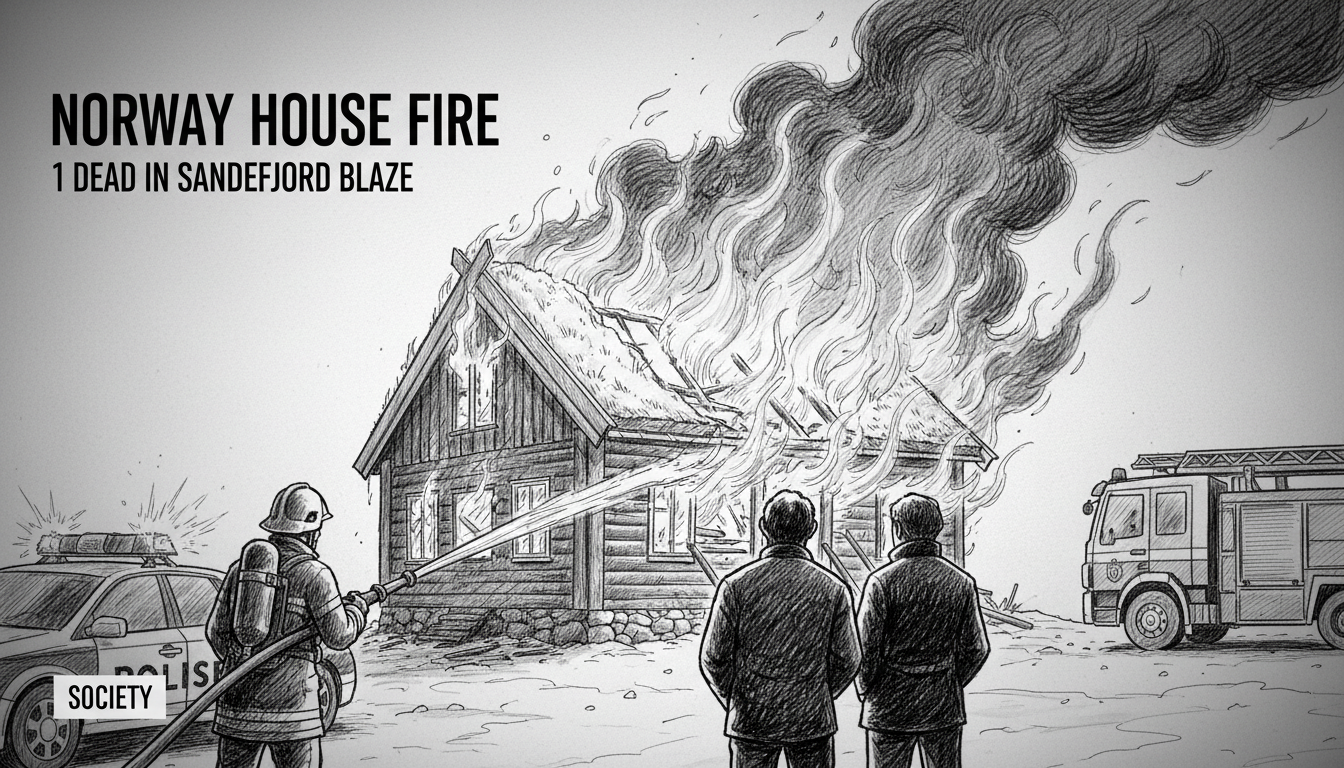
Norway police are investigating a fatal house fire in Sandefjord after one person was found dead in a detached home early Saturday. The next of kin have been notified, and forensic technicians have completed a detailed examination of the charred scene. This tragic incident in the coastal town has shifted focus to the critical, and often overlooked, issue of residential fire safety across the country.
A Quiet Night Shattered
The fire broke out in the single-family home during the night leading into Saturday. Police have released few details about the victim, respecting the family's privacy during their notification and initial grief. The work of the forensic technicians, or kriminalteknikere, is a standard but vital procedure in any fatal fire. Their meticulous scene analysis helps establish the fire's origin, path, and potential cause. This scientific groundwork forms the foundation of the police investigation, which will seek to determine if the blaze was accidental or suspicious.
Local police districts in Norway hold primary responsibility for investigating fires, particularly those involving fatalities. Their findings are essential not only for potential legal proceedings but for public safety. Understanding how and why a fire started can lead to improved building codes, public awareness campaigns, and the prevention of future tragedies. The investigation in Sandefjord will follow this rigorous protocol, likely taking weeks as evidence is analyzed and reports are compiled.
The Unseen Danger in Norwegian Homes
While Norway boasts some of the world's strictest building and safety regulations, residential fires remain a persistent threat. Detached wooden homes, common across Norwegian suburbs and coastal towns like Sandefjord, can be vulnerable to rapid fire spread if safety measures fail. Fire safety experts consistently point to two fundamental, life-saving tools: working smoke detectors and a practiced escape plan.
"A smoke detector is your first and most crucial line of defense," explains a veteran fire safety instructor from the Norwegian Directorate for Civil Protection (DSB). "It buys you the precious seconds needed to get out. But a detector is useless if its battery is dead or it's not tested regularly." Investigators will certainly check if smoke detectors were present in the Sandefjord home and if they were operational. The time of night the fire occurred—when residents are most likely asleep and vulnerable—heightens the importance of early warning systems.
Escape plans are the second pillar. Knowing two ways out of every room and having a designated meeting point outside can prevent panic and confusion in a smoke-filled emergency. For single occupants, the risk is compounded, as there is no one else to raise the alarm or assist in escape. This isolation factor is a key consideration in safety advocacy, emphasizing the need for interconnected alarms or community check-in systems for those living alone.
A Community in Mourning
Sandefjord, a historic whaling port turned tranquil coastal municipality in Vestfold county, is a community where such events feel profoundly personal. The news of a fatal fire in a neighborhood home sends ripples through the tight-knit town. While police have not released the address, the presence of forensic vehicles and investigation crews would have been a somber sight for neighbors, transforming a quiet residential street into a scene of official tragedy.
This incident serves as a stark, unwelcome reminder of the quiet danger that exists behind every door. It disrupts the sense of security and peace that defines Norwegian home life. The grief of the bereaved family is now private, but the public consequence is a renewed scrutiny of our own domestic safety. It prompts the silent, uncomfortable questions we often avoid: When did I last test my smoke alarm? Do my children know how to get out if the main exit is blocked?
Beyond the Immediate Investigation
The police investigation will seek answers for the family and the legal record. However, the broader conversation extends to national prevention. Data from DSB and the Norwegian Fire Protection Association shows that most fatal fires in Norway start in homes, often due to electrical faults, unattended cooking, or improper use of candles and fireplaces. The winter months, with increased indoor activity and heating, typically see a rise in incidents.
Prevention efforts are multifaceted. They include public service campaigns reminding citizens to check their electrical appliances, never leave cooking unattended, and ensure proper installation and maintenance of wood-burning stoves. Building regulations continue to evolve, with increased focus on fire-resistant materials in new constructions and renovations. Yet, the oldest part of Norway's housing stock, comprising charming but sometimes outdated homes, presents an ongoing challenge.
For renters, the responsibility is shared with landlords, who are legally obligated to ensure properties are equipped with functional safety equipment. Tenants must maintain these devices and report faults. This shared responsibility model is effective only with vigilance from both parties.
A Call for Vigilance
The Sandefjord fire is a single, heartbreaking event. It is also a catalyst. It forces a moment of collective pause in a nation otherwise focused on energy security, Arctic policy, and economic forecasts. The most immediate threat to a Norwegian citizen may not be an international market shift, but a silent spark in their own living room after they've gone to sleep.
As the police in Vestfold continue their methodical work, the most fitting tribute to the victim is a nationwide increase in awareness and action. Testing a smoke alarm takes thirty seconds. Discussing a fire escape plan over dinner takes five minutes. These simple acts are the direct legacy of every fatal fire—a legacy written not in official reports, but in the proactive steps taken by millions to ensure it doesn't happen again. The ultimate question posed by this tragedy is not just 'what happened in Sandefjord?' but 'what will you do in your own home today?'
The investigation continues, with police stating the case is under further investigation. No additional details regarding the victim or potential cause are expected until forensic reports are finalized.